

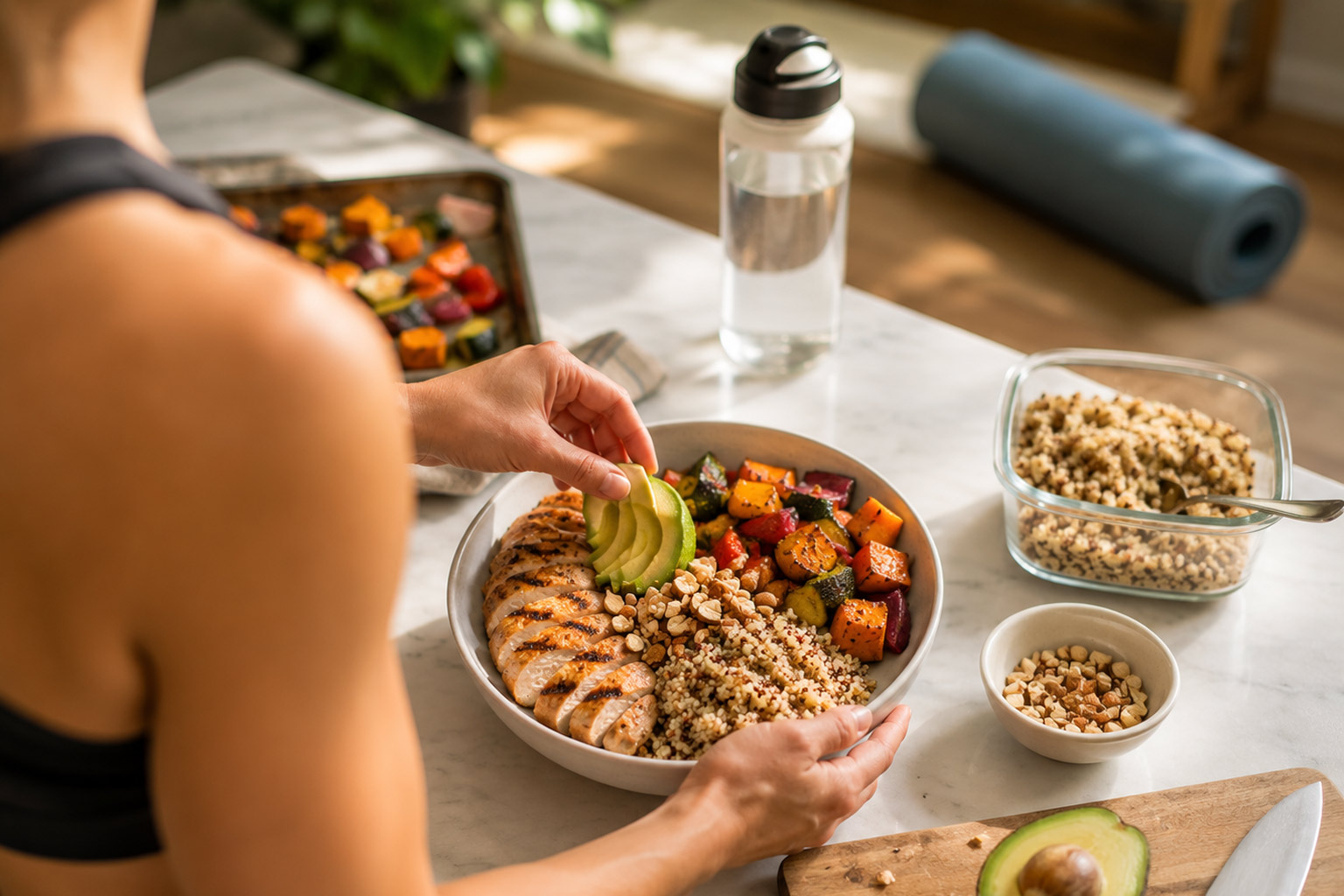
Fueling home workouts starts with a few consistent choices rather than complicated rules. Small, repeatable meal patterns can help maintain energy across the day and support recovery. This article outlines practical building blocks you can apply to breakfasts, lunches, dinners and snacks. Follow these ideas to simplify meal decisions and keep workouts consistent and productive.
Core Macronutrient Balance
Every meal should include a source of protein, carbohydrates and healthy fats to stabilize blood sugar and support muscle repair. Protein helps recovery and satiety, carbohydrates provide the immediate energy needed for effort, and fats slow digestion to extend fuel availability. Aim for portion sizes that match your training load and daily activity. Choosing whole-food sources makes it easier to meet micronutrient needs alongside macronutrients.
Focus on lean proteins like eggs, dairy, legumes or lean cuts, paired with whole grains and vegetables. Include a small portion of unsaturated fats such as olive oil, avocado or nuts to improve meal satisfaction. These combinations reduce mid-session energy dips and help manage hunger between workouts and other daily tasks.
Timing and Portion Habits
Meal timing should be practical: eat regular meals and small snacks around workout times rather than strict schedules. A balanced meal 1.5–3 hours before exercise or a light snack 30–60 minutes prior works for most people depending on personal tolerance. After training, prioritize a protein-rich snack or meal within an hour to support recovery and glycogen replenishment. Consistent portion control across the day prevents energy crashes and supports steady performance at home.
Use simple cues to guide portions: a palm-sized protein, a cupped-hand of carbs, and a thumb of fats for most meals. Adjust these based on how hard or long your workout is that day. Habitual portions reduce decision fatigue while keeping energy manageable.
Practical Meal Templates
Rely on repeatable templates to simplify meal prep and shopping decisions and to make consistent nutrition easy to follow. Examples include: whole-grain toast with eggs and greens, a grain bowl with beans, greens and seeds, or yogurt with fruit and a handful of nuts. These templates scale up or down and suit quick home-cooked or batch-prepared options.
- Breakfast: eggs, whole grain, fruit, small fat source.
- Lunch/Dinner: lean protein, vegetables, whole grain or starchy vegetable, drizzle of healthy fat.
- Snack: fruit or veggie + protein or dairy + small nut portion.
Rotate a few templates through the week to maintain variety without complexity. Batch-cook staples like grains, roasted vegetables and proteins to assemble meals quickly before or after workouts.
Conclusion
Simple meal building blocks make steady energy and recovery more achievable for home training. Adopt basic templates, focus on balanced macronutrients, and keep portions consistent. Small, repeatable habits create reliable results over time.










