

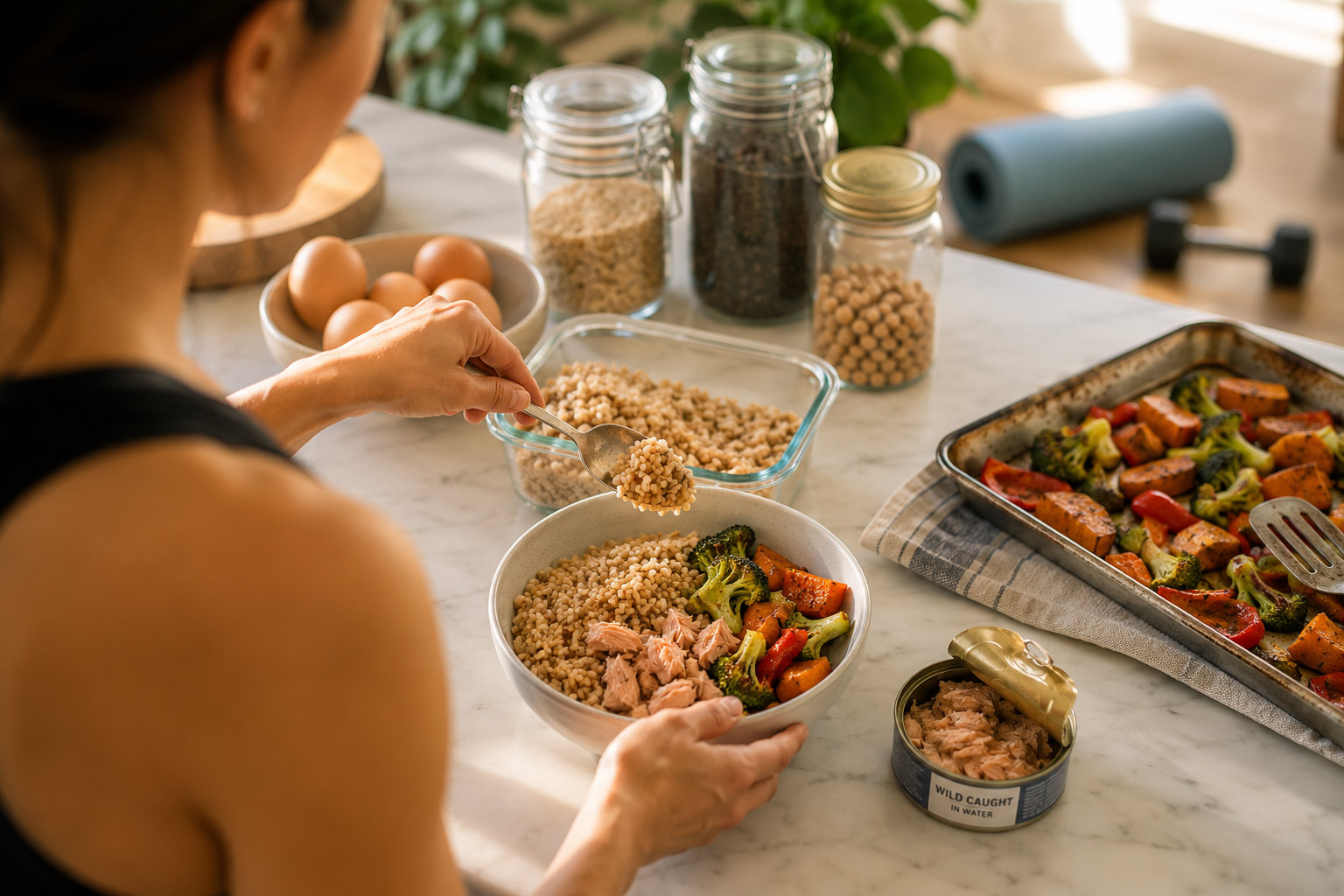
Simple, repeatable meal templates make it far easier to support regular home workouts without overcomplicating your kitchen routine. When you focus on a few flexible patterns instead of strict plans, daily meals can reliably deliver energy, recovery, and satiety. This approach reduces decision fatigue and frees time for training, sleep, and work. Over time those small, consistent choices compound into better performance and steadier progress.
Why simple templates work
Templates reduce friction by narrowing choices while preserving variety through ingredient swaps. They emphasize balance—protein, carbohydrate, and produce—so meals become predictable in effect even if the exact menu changes. That predictability helps you time food around sessions and prevents under- or over-fueling. Most people sustain simple rules far longer than complex meal plans.
Adopting a handful of go-to plates lets you prep in batches and shop efficiently. Consistency builds confidence, which keeps you on track for both short workouts and longer training blocks.
Building a three-part plate
A reliable template is the three-part plate: a lean protein, a starchy or whole grain carbohydrate, and a vegetable or fruit component. Start each main meal with a protein portion that suits your goals and appetite, then add a carbohydrate source to support energy, followed by fiber-rich vegetables to aid digestion and fullness. Portions can shift by training intensity: larger carb portions on heavier training days, smaller ones on light days. Use sauces, herbs, and simple dressings to keep flavors interesting without extra work.
- Protein: eggs, canned fish, tofu, lean meats, legumes
- Carbs: rice, potatoes, whole-grain pasta, oats
- Produce: leafy greens, roasted veg, fresh fruit
These building blocks let you assemble a meal in minutes and adapt to whatever is in the fridge. Over time you’ll learn which combinations support energy best for your sessions.
Snack and timing strategies
Short workouts often need only a small pre-session snack, while longer or intense sessions benefit from a fuller pre-meal. Aim for 20–40 grams of carbohydrate plus a little protein 30–90 minutes before longer sessions, and keep snacks lighter when training is brief. Hydration and salt can matter just as much as calories for performance and feeling sharp.
- Pre-work options: banana with nut butter, yogurt and fruit, rice cake with hummus
- Post-work options: cottage cheese and fruit, a shake with milk and berries, a grain bowl with protein
Use these timing rules as flexible guidelines and adjust based on how your body responds. Consistent patterns make it easier to match food to effort across the week.
Meal prep and pantry staples
Batch-cooking proteins and grains, and keeping a stocked pantry, dramatically shortens daily meal assembly time. Cook a couple of base ingredients on the weekend and combine them with fresh produce and simple dressings throughout the week. That reduces waste and makes it easy to eat well when time is tight.
- Staples: canned beans, frozen vegetables, whole grains, olive oil, spices
- Quick fresh items: salad greens, lemons, yogurt, eggs
With a small set of staples and a few finished components, you can prepare balanced meals in under ten minutes. The result is more consistent fueling and less stress around training days.
Conclusion
Adopting simple, repeatable meal templates helps you consistently support home workouts with minimal fuss. Focus on a three-part plate, sensible snack timing, and basic meal prep to keep energy reliable. Small habits sustained over time will deliver the biggest gains for training and daily life.










