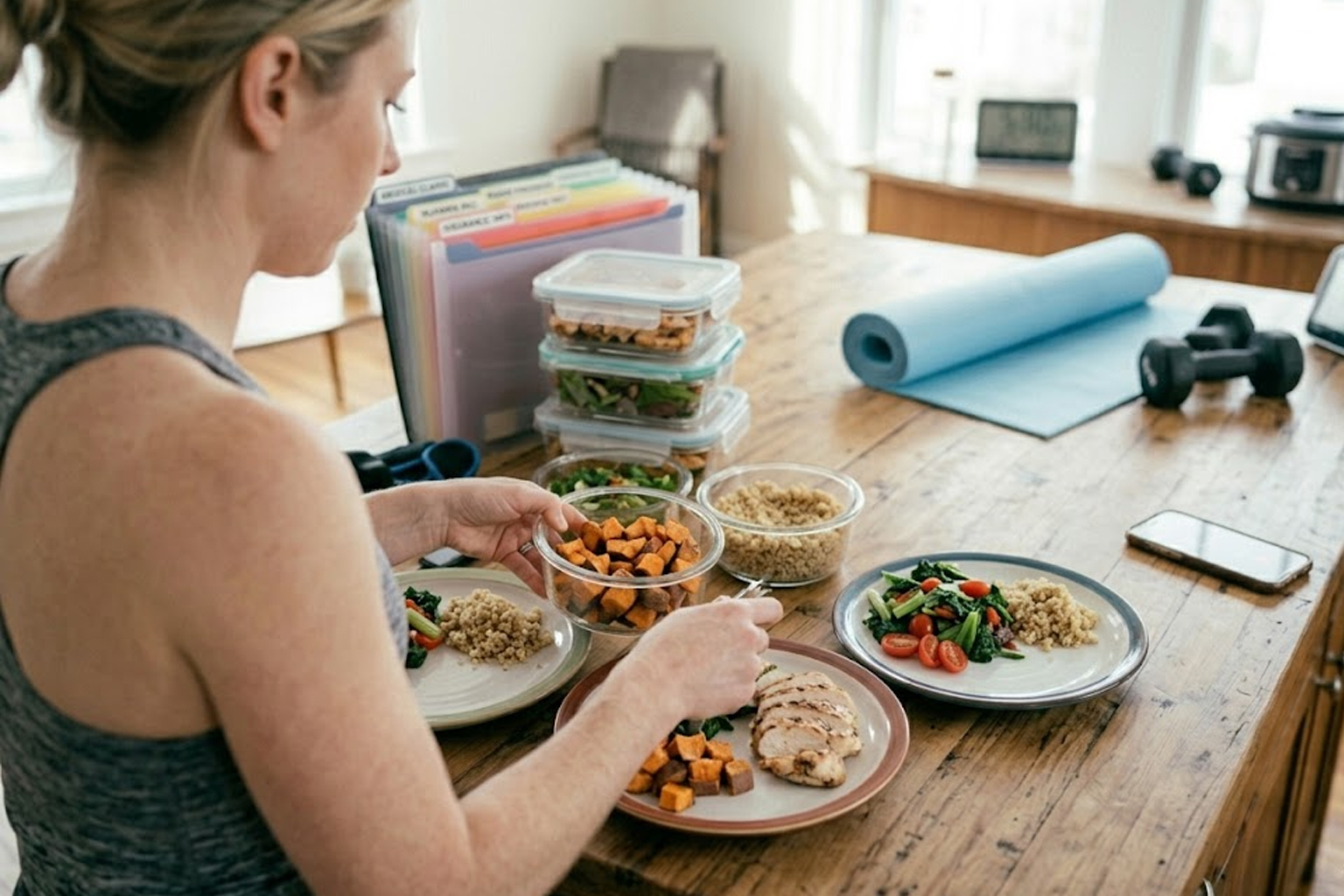
Small, consistent meal choices make short home workouts feel more effective and less exhausting.
Aim to combine a lean protein, a starchy whole grain or tuber, and a variety of vegetables on most plates.
These three parts balance steady energy, muscle repair, and micronutrients without a lot of fuss.
This article outlines practical timing, portions, and simple examples you can repeat each day.
Fundamental Plate Components
A reliable plate centers on protein to support recovery and satiety, carbohydrates to sustain effort, and vegetables for fiber and vitamins.
Protein options include eggs, dairy, legumes, fish, poultry, or plant-based alternatives depending on preference. For carbohydrates choose whole grains, sweet potatoes, or other starchy vegetables that digest at a steady pace.
Aim for colorful vegetables to add volume and micronutrients without excess calories. Portion sizes can then be tuned to your goals and training intensity.
Meal Timing and Portions
Timing meals around short workouts doesn’t require rigid windows, but a consistent pattern helps maintain energy and reduce fatigue.
A modest meal 1.5–3 hours before a session gives usable energy; if you train sooner, choose a small, carb-focused snack 30–60 minutes out. After training, prioritize a protein-containing meal within a couple of hours to support repair.
Spacing meals evenly across the day prevents sharp energy dips and makes it easier to monitor hunger and recovery. Hydration and small snacks can smooth performance between meals.
Quick Meal Examples
Keep a handful of repeatable meals you can assemble in under 15 minutes to remove decision fatigue and ensure consistent fueling.
Examples include scrambled eggs with spinach and whole-grain toast, yogurt with fruit and oats, a chickpea and quinoa salad, or a tuna and sweet potato plate. Rotate variations of these themes to keep variety without extra planning.
Batch cooking grains and roasted vegetables makes fast assembly even easier on busy days. Focus on combinations rather than exact recipes to stay flexible.
Practical Prep Habits
Set aside one or two weekly prep sessions to cook base items so assembly is rapid on workout days and choices remain consistent. Roast a tray of mixed vegetables, cook a pot of grains, and portion proteins like beans, grilled chicken, or tofu into containers to cut midday decisions.
Keep frozen fruit, single-serve yogurt, and quick carbs like whole-grain wraps for fast options. Label portions and rotate dressings or spices to avoid repetition.
A short shopping list focused on staples limits impulse buys and keeps the kitchen functional. The small prep investment pays back with more reliable meals and less stress around training.
Conclusion
Consistent, simple plate patterns are the fastest way to support short at-home workouts.
Build a small menu of reliable meals and pair them with sensible timing to maintain energy and recovery.
Over time these habits make training feel easier and more sustainable.