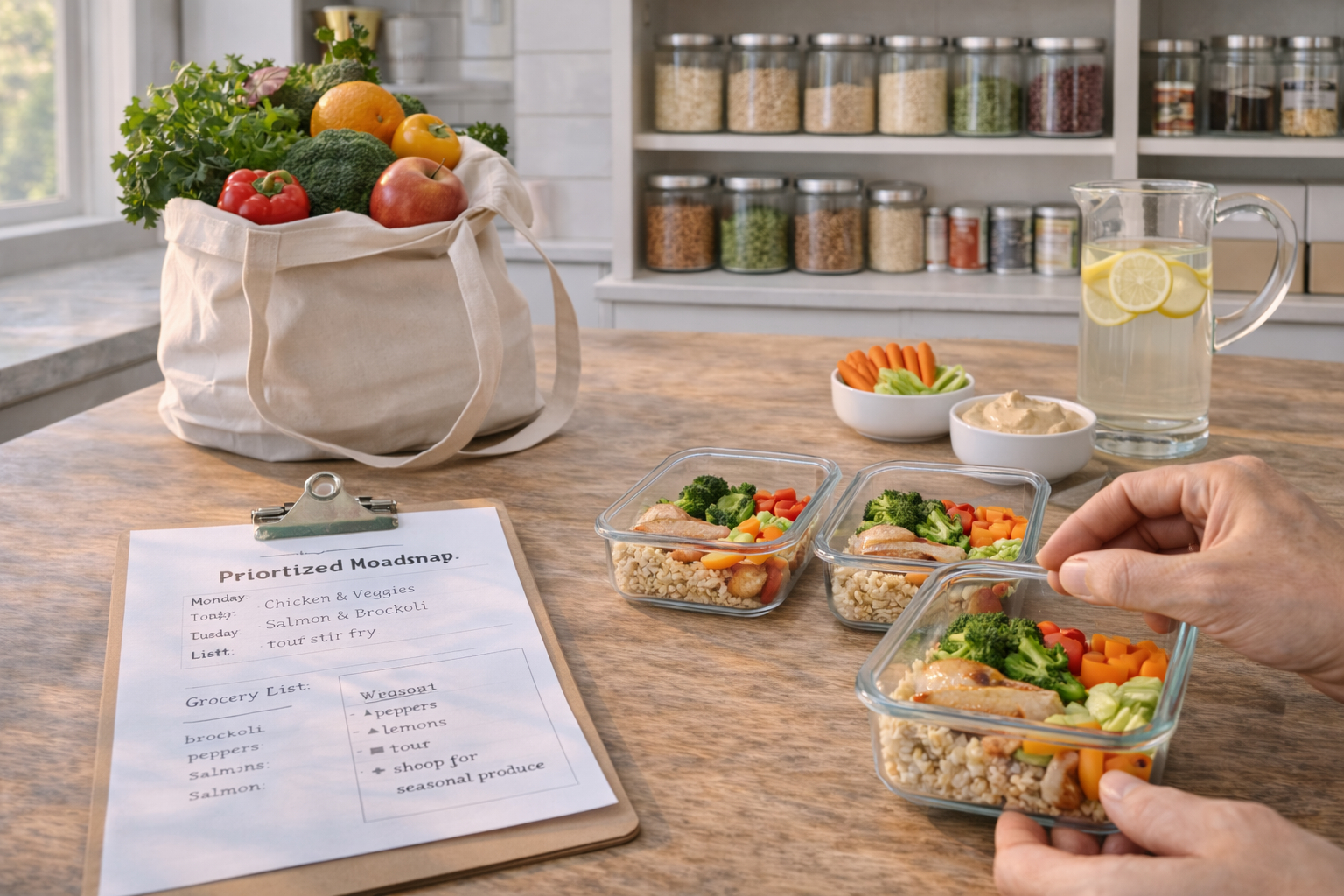
Small, consistent habits in the kitchen shape long-term health.
This article outlines practical, sustainable strategies you can use at home.
Focus is on planning, shopping, and simple cooking techniques that fit busy routines.
These ideas are adaptable across different tastes and schedules.
Plan Balanced Weeknight Meals
Start by building meals around vegetables, lean proteins, and whole grains. Think in terms of proportions rather than strict rules to keep meals satisfying and varied. Use a short weekly plan to reduce impulse choices and waste. A modest list of go-to recipes speeds decision-making and shopping.
- Aim for half the plate vegetables
- Include one protein source at each meal
- Choose whole grains or starchy vegetables
Over time you can swap ingredients to keep menus interesting. This approach helps maintain nutrition without adding stress.
Smart Grocery and Pantry Choices
A well-stocked pantry supports healthier meals and quicker prep. Keep core items like canned beans, whole grains, olive oil, and simple spices on hand. Read labels for added sugars and sodium to make better choices when buying processed foods. Buying seasonal produce or frozen vegetables can stretch your budget and maintain variety.
- Rotate staples weekly to avoid spoilage
- Favor minimally processed packaged items
- Buy versatile ingredients to mix into multiple meals
Organizing your pantry by category saves time and prevents duplicate purchases. These small changes lower barriers to cooking at home.
Quick Home Cooking Techniques
Simple techniques make home cooking faster and more enjoyable. Batch cook grains and proteins, and repurpose leftovers into bowls, soups, or wraps. Use one-pan or sheet-pan meals for easy cleanup and balanced nutrients. Learning a few basic seasonings transforms plain ingredients into appealing dishes.
- Roast a tray of mixed vegetables
- Sear proteins then finish in the oven
- Use aromatics like garlic, lemon, and herbs for bright flavor
When cooking feels achievable, you’ll do it more often. Small investments in technique multiply into daily wins.
Mindful Snacking and Beverage Choices
Snacking mindfully keeps energy steady between meals and prevents overeating later. Choose snacks that pair protein with fiber, such as yogurt with fruit or hummus with vegetables. Limit sugary drinks and opt for water, infused water, or unsweetened tea to reduce empty calories. Pack portable options for busy days so choices match your intentions.
- Combine protein and fiber for lasting fullness
- Prepare single-serve portions to avoid overeating
- Keep water visible and accessible throughout the day
Small snack swaps and beverage habits add up over weeks and months. They support steady energy, better appetite control, and more balanced meals.
Conclusion
Adopting a few reliable home food habits improves nutrition and reduces stress.
Start small, plan ahead, and use simple cooking methods to stay consistent.
Consistency over perfection leads to lasting benefits.