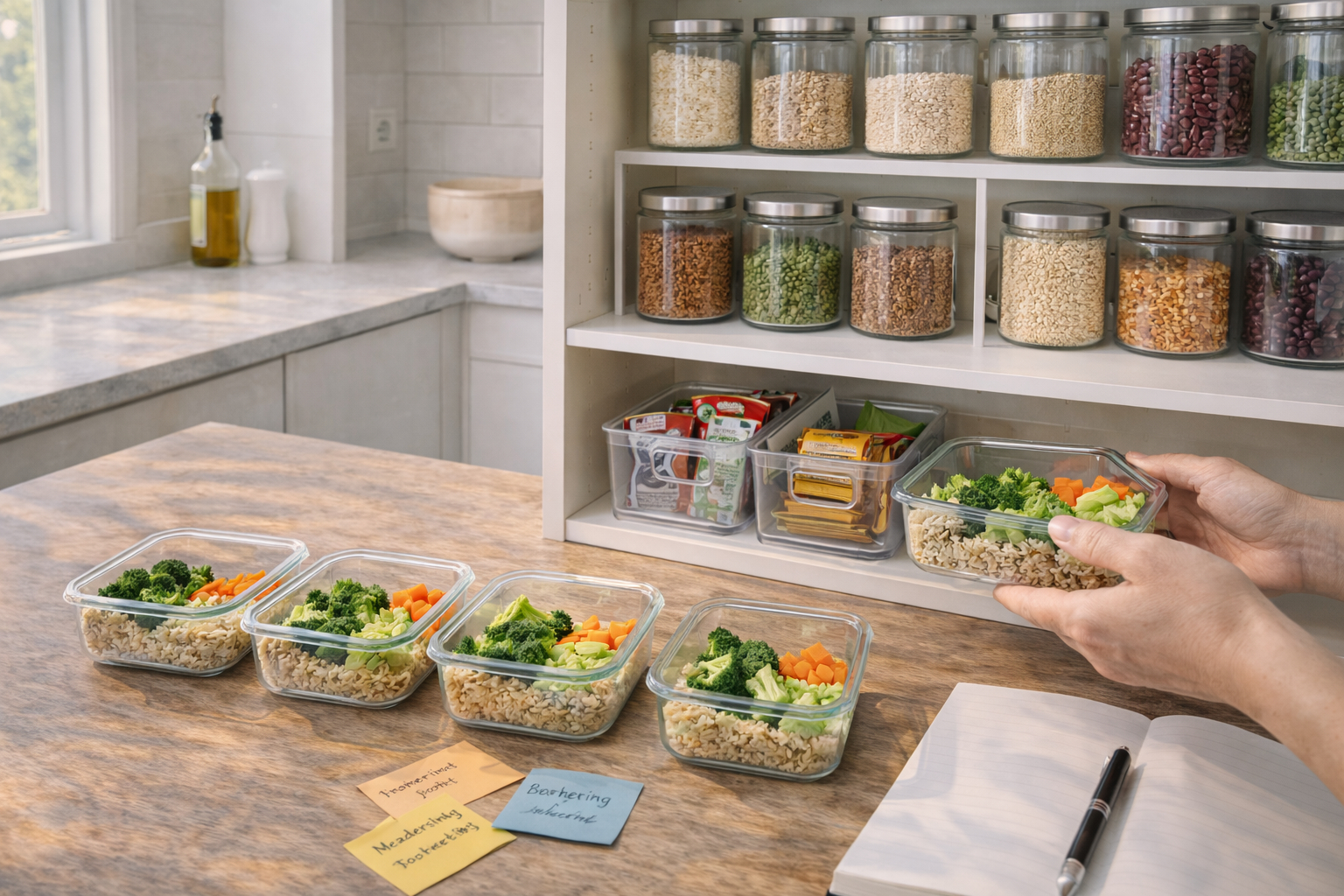
A well-organized pantry makes healthy home meals easier and faster to prepare.
Small habits in how you store, label, and rotate ingredients can change weekly eating patterns.
This article outlines practical pantry strategies, flexible menu planning, and quick cooking habits that reduce waste and boost nutrition.
Use these ideas to build routines that fit a busy household without sacrificing flavor.
Organize Your Pantry for Smarter Choices
Start by grouping items by use: baking, grains, canned goods, snacks, and breakfast items.
Clear containers and shelf risers improve visibility so you see what you have at a glance.
Label dates and adopt a simple rotation system to use older items first and cut down on spoilage.
An inventory list on a smartphone or a small whiteboard helps with shopping and meal decisions.
- Keep frequently used staples at eye level.
- Store baking supplies together for quick access.
- Use clear bins for loose packets and snacks.
Prioritize keeping staples stocked and visible to make balanced meals more likely.
Consistent maintenance takes a few minutes each week but pays off in time and money saved.
Plan Flexible Weekly Menus
Plan a weekly menu with flexibility: assign themes for nights and swap proteins or sides based on what’s available.
Base menus on pantry staples plus a few fresh ingredients to minimize last-minute shopping.
Batch cook grains and proteins so you can assemble different meals through the week.
When you plan around what you already have, the fridge stays organized and choices become simpler.
- Build meals around a cooked grain, a protein, and two vegetables.
- Allow one or two nights for creative leftovers or pantry bowls.
A flexible plan reduces decision fatigue and keeps meals varied.
It also helps you use perishable items before they go bad.
Quick, Healthy Cooking Habits
Adopt quick techniques like sheet-pan meals, one-pot dishes, and stir-fries to turn pantry staples into nutritious dinners.
Prep simple components—washed greens, chopped vegetables, cooked grains—so assembly takes minutes.
Use spices and acid such as lemon or vinegar to elevate flavors without extra work.
Keep healthy convenience items like canned beans, frozen vegetables, and whole-grain pasta on hand for fast meals.
- Mix and match proteins with different spices for variety.
- Use frozen vegetables to cut prep time.
- Cook a double batch of grains to use across several meals.
Small cooking habits free up time while increasing the range of home-cooked options.
Over time these shifts become the default, making nutritious eating the easier choice.
Conclusion
Organizing your pantry and planning flexibly are practical ways to improve home meals.
Combine simple prep and quick cooking methods to stay consistent and reduce waste.
Start with one change this week and build from there.