Eating well while training at home doesn’t require complicated rules or expensive ingredients. Small, consistent choices across the day add up to better energy, sharper focus, and faster recovery. This article outlines straightforward meal and snack ideas that support common at-home workout goals without demanding major lifestyle changes. Read on for easy, flexible strategies you can adapt to your schedule and taste.
Smart Meal Timing
Timing meals around workouts helps maximize performance and recovery even when training at home. Aim for a balanced meal two to three hours before exercise that includes carbohydrates for energy and moderate protein to reduce muscle breakdown. If you need a shorter option, a small snack 30 to 60 minutes before activity can sustain effort without causing discomfort. Hydration also matters: consistent fluid intake throughout the day prevents fatigue and supports metabolic processes.
Plan meals with your training schedule in mind and treat timing as a simple framework rather than a rigid rule. Experiment within these windows to discover what leaves you feeling strongest and most focused.
Macro-Focused Plates
Construct plates that combine lean proteins, whole grains or starchy vegetables, and colorful vegetables for fiber and micronutrients. Protein sources such as eggs, yogurt, legumes, or lean poultry help with muscle repair, while whole grains or potatoes restore glycogen. Vegetables add volume and nutrients without many calories, improving satiety and digestive health. Including a modest portion of healthy fats like olive oil or nuts supports hormone balance and helps you feel satisfied between meals.
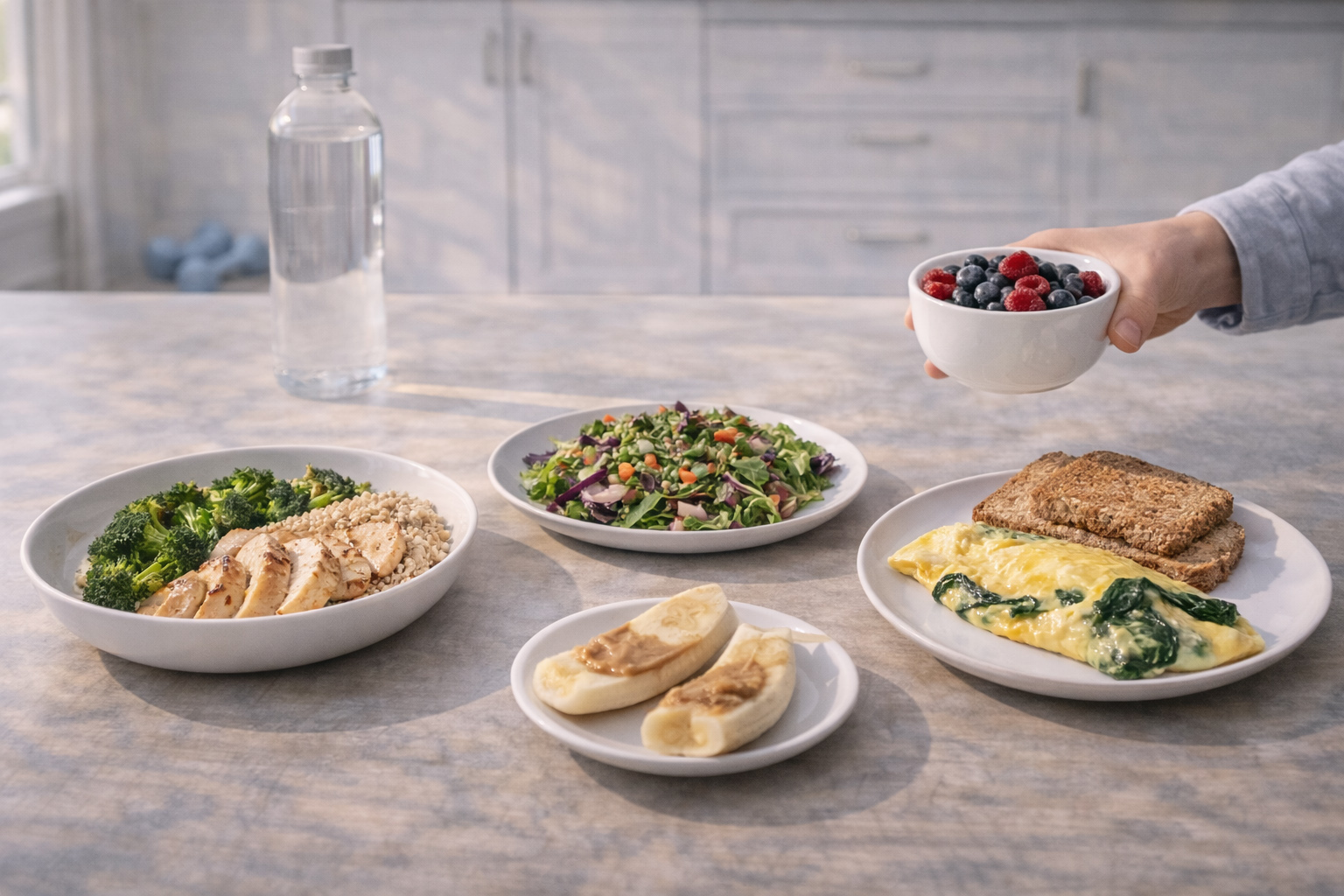
- Example: Grilled chicken, quinoa, roasted broccoli, and a drizzle of olive oil.
- Example: Lentil salad with mixed greens, cherry tomatoes, and a yogurt dressing.
- Example: Omelet with spinach, mushrooms, and a slice of whole-grain toast.
Focus on whole foods and simple combinations that are easy to prepare; consistency beats perfection for long-term progress.
Quick Snacks and Recovery
Between meals, choose snacks that combine carbs and protein to stabilize blood sugar and speed recovery after workouts. Options like a banana with nut butter, Greek yogurt with berries, or whole-grain crackers with cottage cheese are portable and require little prep. After strength or longer sessions, prioritize a snack or meal within an hour to support muscle repair and reduce soreness. Keep staples on hand so you can refuel quickly without breaking your routine.
Recovery also benefits from sleep and gentle mobility work; nutrition complements these elements rather than replacing them. Small adjustments to snack choices can yield noticeable differences in energy and performance.
Conclusion
Small, consistent nutrition habits support at-home training more than intermittent extreme diets. Prioritize balanced plates, sensible timing, and convenient recovery snacks to maintain energy and progress. These practical steps make healthy eating sustainable alongside your workout routine.