Consistent, simple eating patterns make home workouts easier to schedule and sustain.
Focusing on balanced plates and predictable timing reduces energy dips and guesswork.
Small, repeatable habits free cognitive load so you can prioritize movement over meal stress.
This article outlines approachable meal templates, timing tips, and light prep strategies.
Why Consistent Meals Matter
Regular, balanced meals stabilize blood sugar and help maintain steady energy during training sessions. When meals include a source of protein, some carbohydrates, and healthy fats, recovery and focus improve across the day. Skipping meals or relying on irregular snacks often produces uneven energy and weaker workouts. Consistency also supports better appetite awareness and reduces late-day overeating.
Adopting a dependable eating rhythm doesn’t require strict dieting or fancy ingredients. Small changes like adding a portion of protein or storing pre-washed veggies shorten decision time. Over weeks, those modest changes compound into more reliable energy for at-home training.
Simple Plate Templates
Using a handful of repeatable plate builds makes meal planning practical and scalable. Each plate focuses on a protein source, a quality carbohydrate, and a vegetable or fruit to supply micronutrients and fiber. Keeping portions in familiar ranges helps you match energy needs to training intensity without meticulous measuring. This approach removes friction and makes it easier to prepare meals quickly.
- Breakfast: Greek yogurt, mixed berries, oats and a few nuts.
- Lunch: Grilled chicken, quinoa, mixed salad greens with olive oil.
- Dinner: Baked fish, roasted sweet potato, steamed broccoli.
Rotate these builds with seasonal produce and pantry staples to maintain variety. Simple swaps keep meals interesting while preserving the underlying balance that supports performance.
Practical Timing and Prep
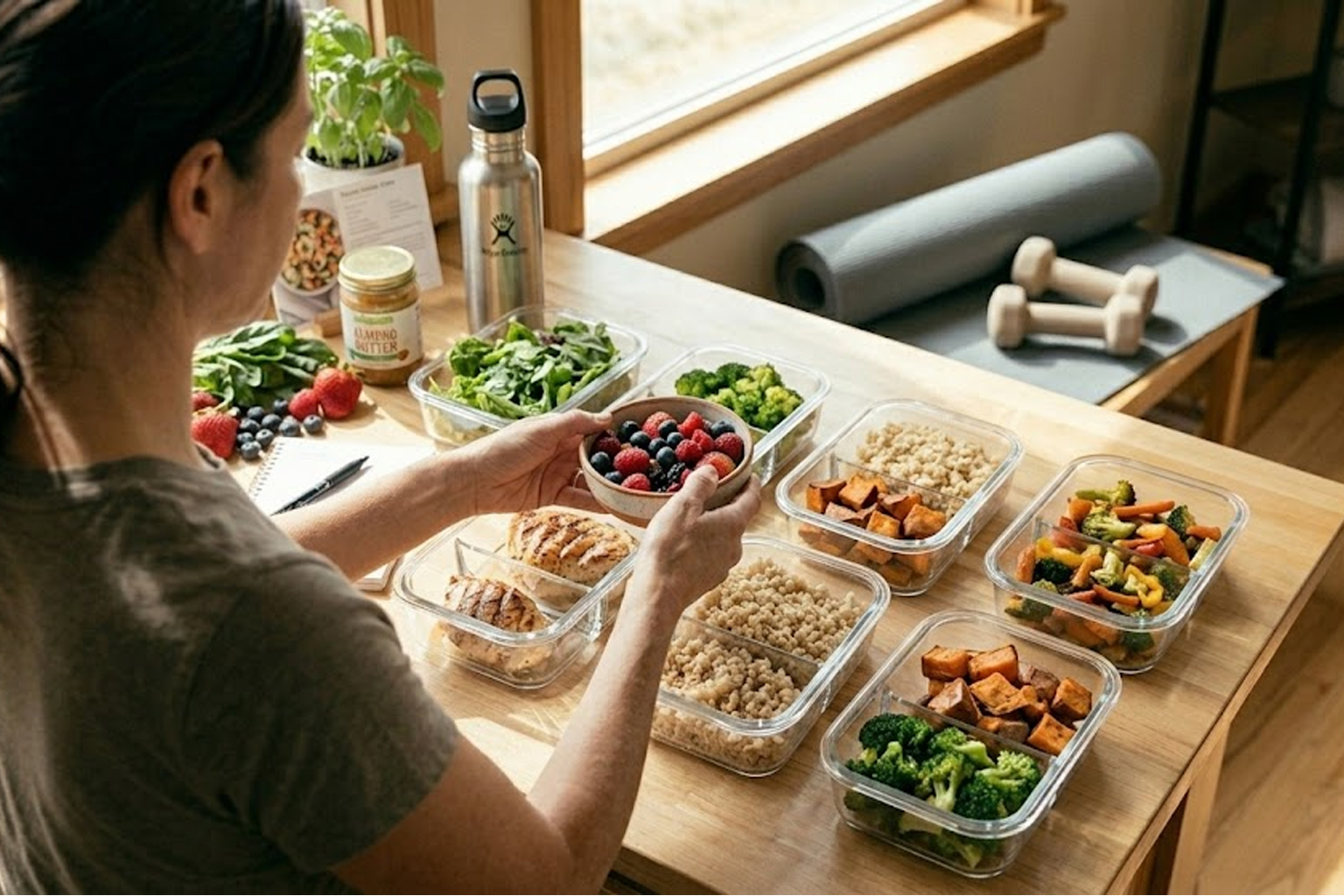
Plan meals around your most active parts of the day to ensure fuel is available when you need it most. If you train in the morning, a light snack before and a balanced meal after helps performance and recovery. For evening sessions, prioritize an adequate midafternoon meal to avoid low energy. Weekly batch-cooking and portioning reduce daily prep time and make it easier to stick with the plan.
Store ready-to-eat components like cooked grains, roasted vegetables, and lean proteins in clear containers. That visibility encourages use and speeds up assembly of balanced plates. Small, consistent steps are more sustainable than big, occasional overhauls.
Conclusion
Choose a few simple plate templates and repeat them across the week to maintain steady energy.
Pair predictable timing with modest prep to reduce mealtime decision fatigue and support workouts.
Small, consistent fueling habits lead to clearer, more productive home training sessions.