Consistent meals make short at-home workouts more productive and sustainable. A simple framework prioritizes protein, vegetables or fruit, and steady carbohydrates spread through the day. Small changes to timing and portions often yield better energy than drastic diet shifts. This article outlines practical meal templates, snack timing, and preparation tips for everyday training.
Why a meal framework matters
A predictable eating pattern stabilizes blood sugar, supports recovery, and reduces energy slumps before sessions. For most home workouts under an hour, the focus should be on getting moderate protein and accessible carbs rather than heavy meals. When meals are too large or high in fat immediately before exercise, discomfort and fatigue can follow. A framework removes decision fatigue and makes it easier to hit daily protein and vegetable targets.
Start with three balanced meals and one or two small snacks tailored to your schedule. Small, repeatable choices compound into consistent performance improvements.
Simple meal templates to follow
Templates reduce thinking and speed up preparation. Aim for plates that combine a palm-sized portion of protein, a fist of vegetables or fruit, and a cupped handful of whole grains or starchy vegetables. Adjust portions for calorie needs and session timing; workouts earlier in the day may benefit from a slightly larger carb portion. Hydration and a small sodium source can also help for sweaty sessions.
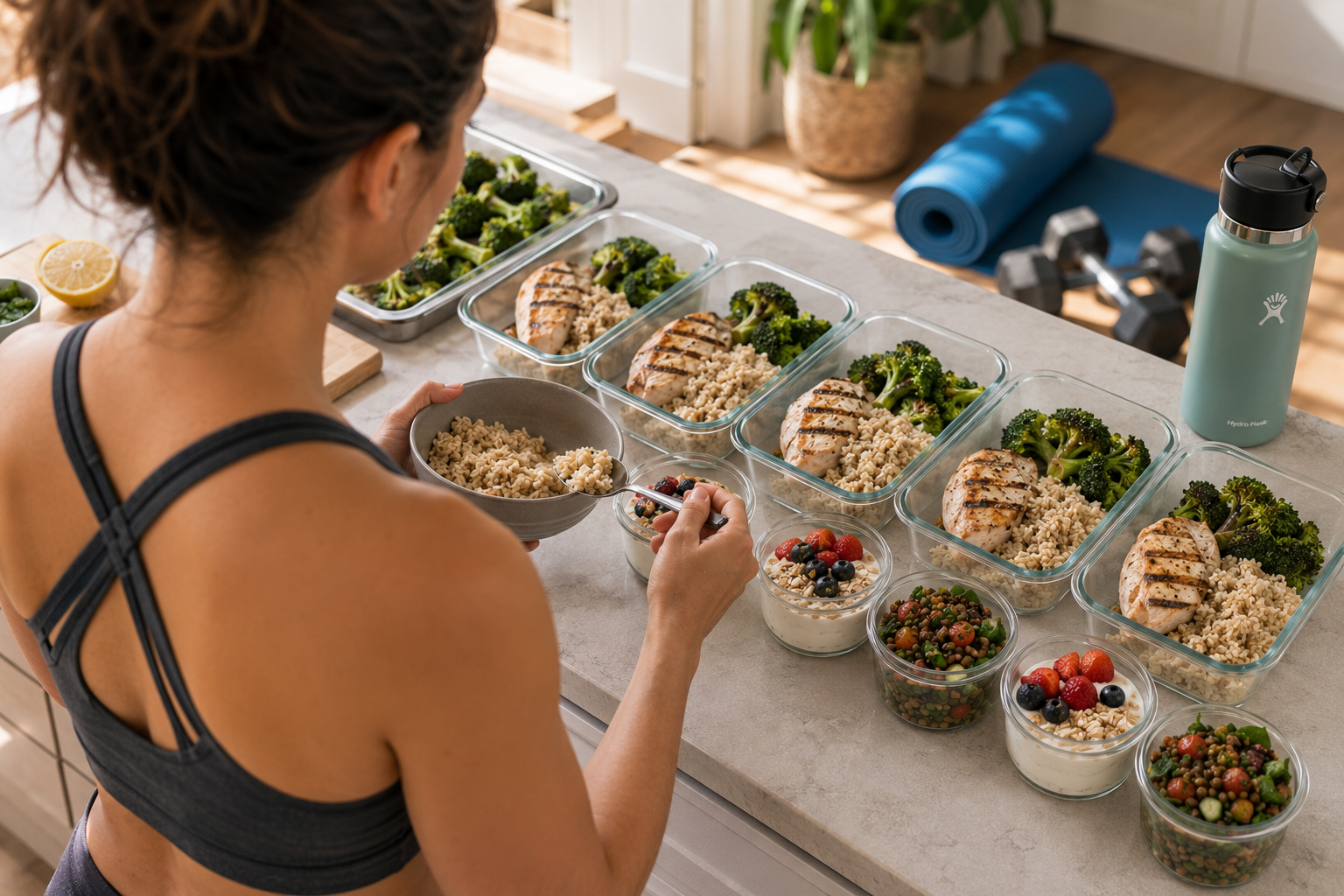
- Grilled chicken, brown rice, roasted broccoli, olive oil drizzle.
- Greek yogurt, berries, oats, and a spoonful of nut butter.
- Lentil salad, mixed greens, quinoa, lemon-tahini dressing.
- Scrambled eggs, sautéed spinach, sweet potato cubes, salsa.
Rotate these templates across the week to keep variety manageable. They adapt well to vegetarian or meat-based preferences.
Snack timing and portion guidance
Snacks bridge the gap between meals and sessions without overdoing calories. Choose 150–250 calorie snacks that mix protein and carbs if eaten within 60–90 minutes before exercise. After workouts, prioritize 20–30 grams of protein with some carbs to aid recovery. Avoid large, greasy snacks that can weigh you down during a session.
Track how different snacks feel and adjust timing accordingly. Simple rules often beat complex timing strategies.
Meal prep habits that increase consistency
Batch cooking staples like grilled proteins, roasted vegetables, and cooked grains reduces daily friction. Pre-portion containers that mirror your templates so reheating is straightforward and portions stay sensible. Keep a short list of go-to ingredients and a basic seasoning rotation to prevent boredom. Even twenty minutes twice a week can provide multiple ready meals.
Store meals in clear containers so you choose quickly. Consistent prep increases the likelihood you’ll follow the framework.
Conclusion
Adopting a simple meal framework helps you show up for home workouts with steady energy and better recovery. Focus on balanced plates, small pre-session snacks, and minimal weekly prep to make the habit sustainable. Over time, consistency in these areas supports stronger workouts and steady progress.