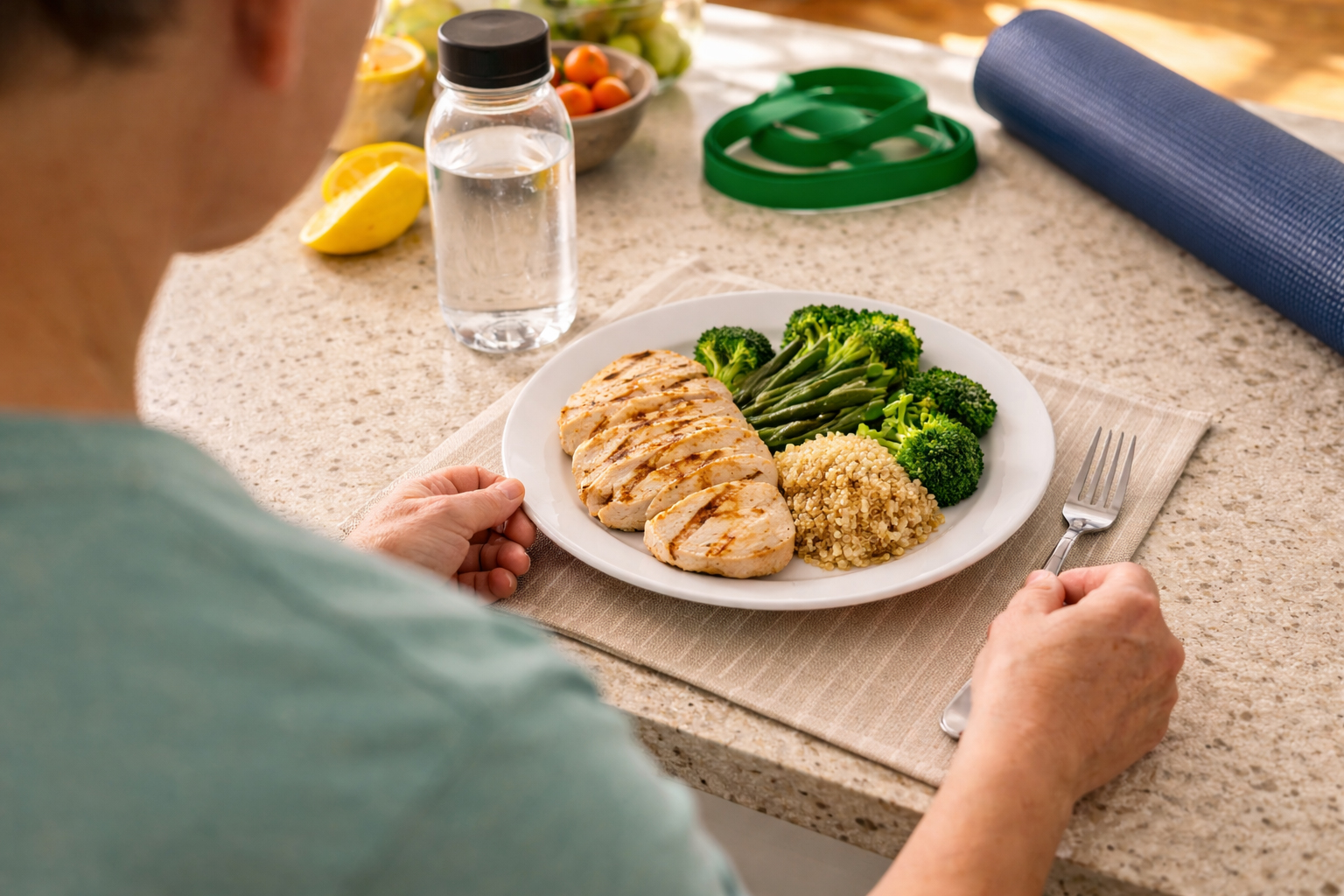
Small, consistent meal habits can noticeably affect energy, strength, and recovery for people training primarily at home. You don’t need complex menus; prioritizing protein, fiber, and mindful portions goes a long way. This article outlines practical plate choices and timing strategies that fit busy schedules and compact kitchens. Use these ideas to simplify meal decisions and support steady progress.
Focus on building a sustainable pattern rather than chasing perfection. The tips below are adaptable to different tastes and training routines.
Prioritize Protein and Fiber on Every Plate
Protein supports muscle repair and keeps you feeling satisfied between sessions, while fiber stabilizes blood sugar and aids digestion. Aim to include a lean protein source and a fiber-rich vegetable or whole grain at each main meal. Practical choices include eggs or yogurt for breakfast, beans or grilled chicken for lunch, and fish or tofu for dinner. These components help maintain energy for workouts and reduce cravings later in the day.
Start by pairing familiar favorites with one high-fiber side. Small swaps, like white rice to quinoa or adding a side salad, make a measurable difference.
Time Meals to Match Workout Intensity
When you train at home, timing matters: a light carbohydrate and protein meal or snack 60–90 minutes before exercise often improves performance for most people. For short, lower-intensity sessions, a small snack is usually sufficient; for longer or higher-intensity workouts, prioritize a more substantial pre-workout plate. Post-workout, focus on a recovery meal with protein and carbs within two hours to support repair and replenish glycogen. Hydration before, during, and after sessions also influences energy and recovery.
Experiment with timing on rest and training days to find what feels best. Consistency beats perfection, so standardize a routine that you can follow most days.
Smart Pantry Staples and Simple Swaps
Stocking a few versatile staples saves time and supports better choices when life gets busy. Keep canned beans, freezer vegetables, whole grains, nuts, and a lean protein option on hand for quick builds. Simple swaps—Greek yogurt instead of sugary yogurt, whole-grain wraps instead of refined breads, or fruit for processed sweets—nudge the diet toward steady energy. These items reduce decision fatigue and make balanced meals easier to assemble.
Plan one or two go-to meals you can rotate during the week. That predictability helps maintain nutrition without extra effort.
Snack Strategies That Aid Recovery
Effective snacks bridge the gap between meals without undermining appetite for main plates. Combine protein with a carbohydrate or fiber source—such as nut butter on whole-grain toast or cottage cheese with fruit—to support recovery and steady energy. Keep portions moderate and pair snacks with water to avoid mistaking thirst for hunger. Thoughtful snacks can also prevent overeating at the next meal and keep energy levels stable for evening workouts.
Use snacks strategically around training times and choose whole foods when possible. Small, consistent choices accumulate into meaningful progress.
Conclusion
Small, repeatable plate habits improve energy, recovery, and performance over time.
Focus on protein, fiber, and simple timing that fits your schedule.
Build a few reliable meals and snacks to support steady home-training gains.