Consistent eating patterns are a simple way to improve energy and recovery when you train at home. Small adjustments to meal composition and timing can deliver noticeable differences in performance and mood. This article outlines practical, sustainable tactics that fit busy daily routines and modest kitchens. Apply these suggestions to boost energy, support strength gains, and recover more effectively.
Balance macronutrients around workouts
Place protein and carbohydrates at the center of your workout meals to support both performance and recovery. Aim for a portion of lean protein with a moderate serving of whole grains or starchy vegetables before longer sessions, which helps sustain energy. After training, prioritize protein alongside some carbohydrates to promote muscle repair and replenish glycogen stores. Including healthy fats throughout the day supports satiety and overall nutrient absorption without compromising immediate workout energy.
These simple swaps keep meals practical without demanding special groceries. Focus on portion control and variety to meet daily macronutrient needs reliably.
Snack timing and quick pre/post workout choices
Timing snacks around your sessions can prevent energy dips and speed recovery, especially when workouts happen between meals. For sessions under an hour, a small carbohydrate-focused snack 30–60 minutes before can be enough; for longer or more intense work, add a bit of protein. After exercise, a balanced snack or light meal within an hour supports muscle rebuilding and reduces overall fatigue. Hydration before, during, and after training is essential; include electrolytes if you sweat heavily or train for extended periods.
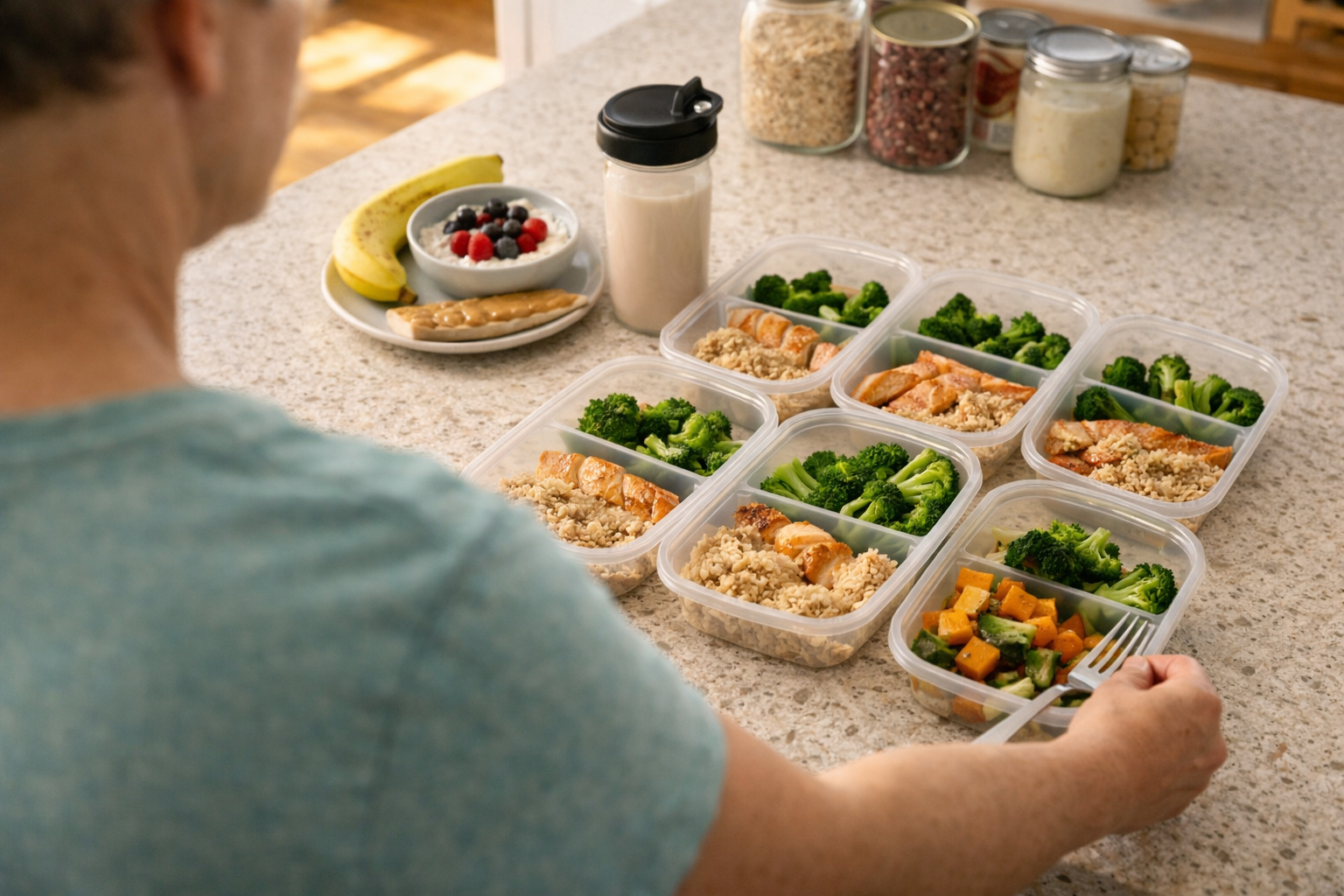
- Pre-workout: banana with a spoon of nut butter.
- Post-workout: yogurt with berries and a sprinkle of granola.
- When short on time: a protein shake with fruit.
Choose options that are portable and familiar so you’ll actually use them. Small, repeatable choices add up to consistent gains.
Meal prep habits and pantry basics
Batch cooking simple components reduces decision fatigue and ensures you have nourishing choices available. Prepare grains, roast a tray of vegetables, and portion cooked proteins into ready-to-eat containers for the week. Stock a pantry with versatile staples like canned beans, whole-grain pasta, oats, nuts, and shelf-stable proteins to build meals quickly. Fresh produce and frozen fruits or vegetables both play a role; frozen options often offer convenience without wasted food.
Keep meal prep realistic for your schedule by starting small and building routines. Over time, these habits free up mental energy for consistent training and better food choices.
Conclusion
Small, consistent changes to meal makeup and timing make home training more productive and enjoyable. Focus on practical protein, carbohydrate balance, and simple meal prep to support energy and recovery. With modest planning, everyday fueling becomes a reliable foundation for steady progress.