Consistent energy and recovery are essential for steady progress with home training routines. Small, repeatable choices at each meal can make workouts feel easier and improvements more reliable. This article outlines accessible meal rhythms—what to include, when to eat, and simple examples you can use daily. The suggestions fit busy schedules and small kitchens without complex meal prep.
Meal Composition Principles
Prioritize three components: a lean protein source, a moderate portion of carbohydrates, and healthy fats with vegetables. Protein supports muscle repair, while carbohydrates top up glycogen for higher intensity efforts and fats provide sustained energy for longer sessions. Focus on whole-food versions—eggs, legumes, whole grains, nuts, seeds, and plenty of colorful vegetables—to maximize micronutrients and satiety. Keeping portions balanced avoids mid-workout energy drops and helps recovery afterward.
Adjust portions based on workout length and intensity, adding more carbs for longer sessions and slightly more protein for strength-focused days. These tweaks help maintain progress without radical diet changes.
Timing and Portions
Aim to eat a satisfying meal two to three hours before a planned workout, and a small carb-protein snack 30–60 minutes prior if needed. After exercise, a meal or snack with protein and some carbohydrates within an hour supports recovery and replenishes energy stores. Pay attention to portion size: small, frequent meals work well for people practicing multiple short sessions, while larger meals suit single daily workouts. Hydration is part of timing—start hydrated and replace fluids lost during exercise for steady performance.
Consistency in timing trains appetite and energy patterns, making it easier to hit workout windows with readiness.
Simple Meal Examples
Practical meals combine the three components without complex recipes, and they can be assembled quickly using pantry staples. Below are a few templates to rotate through a week of training. They work across different calorie needs by adjusting portion sizes and ingredient amounts.
- Breakfast bowl: Greek yogurt or plant yogurt, oats, fruit, and a tablespoon of nuts or seeds.
- Pre-workout snack: Banana with a small handful of almonds or a slice of whole-grain toast with peanut butter.
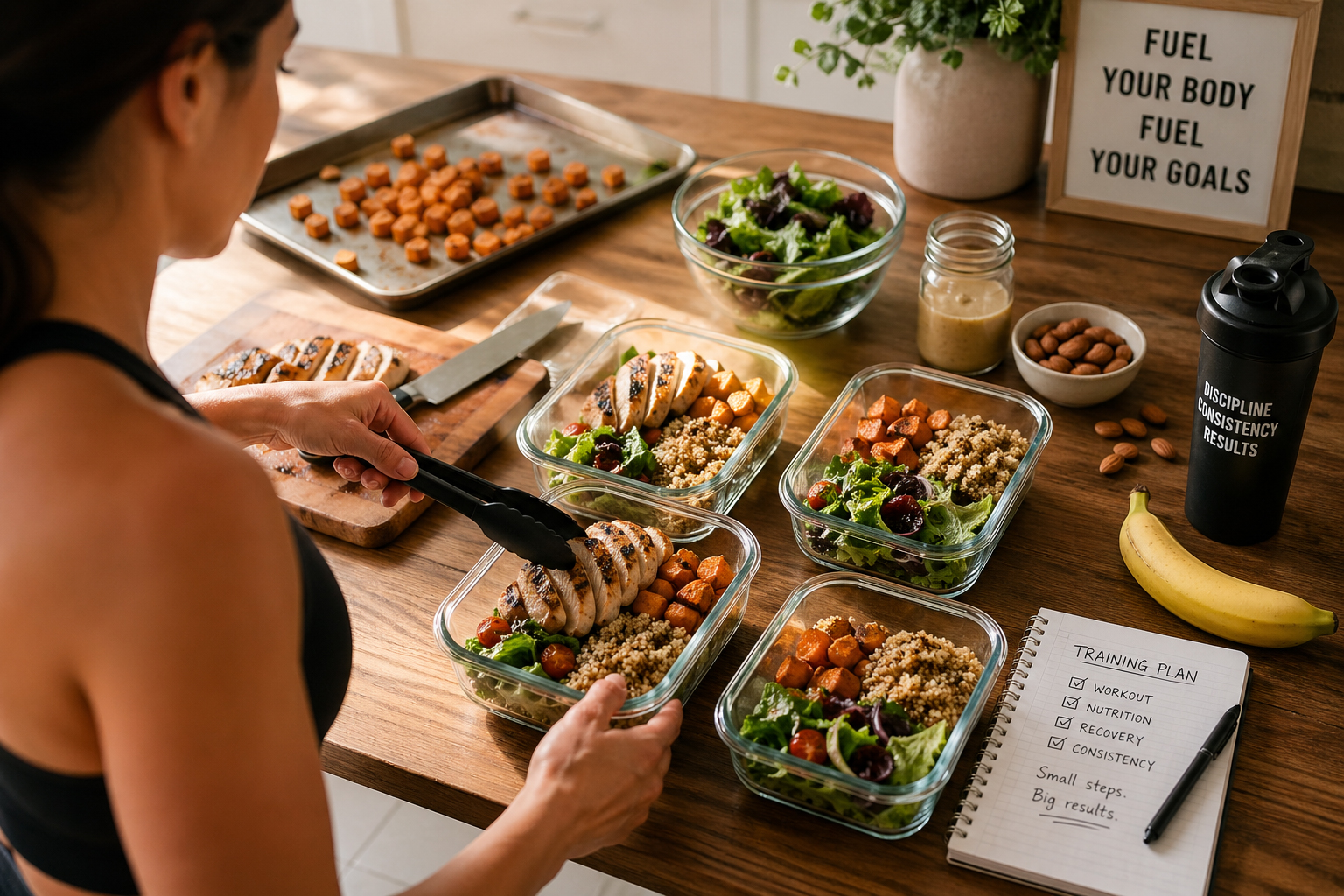
- Post-workout plate: Grilled chicken or tofu, roasted sweet potato, and a big salad dressed with olive oil.
Rotate these ideas and swap ingredients to keep variety while maintaining the same nutritional pattern.
Conclusion
Small, repeatable meal rhythms help sustain energy and support recovery for at-home training. Focus on balanced components, sensible timing, and practical swaps so food consistently aids performance. Implementing these principles makes steady progress more achievable without drastic dieting.