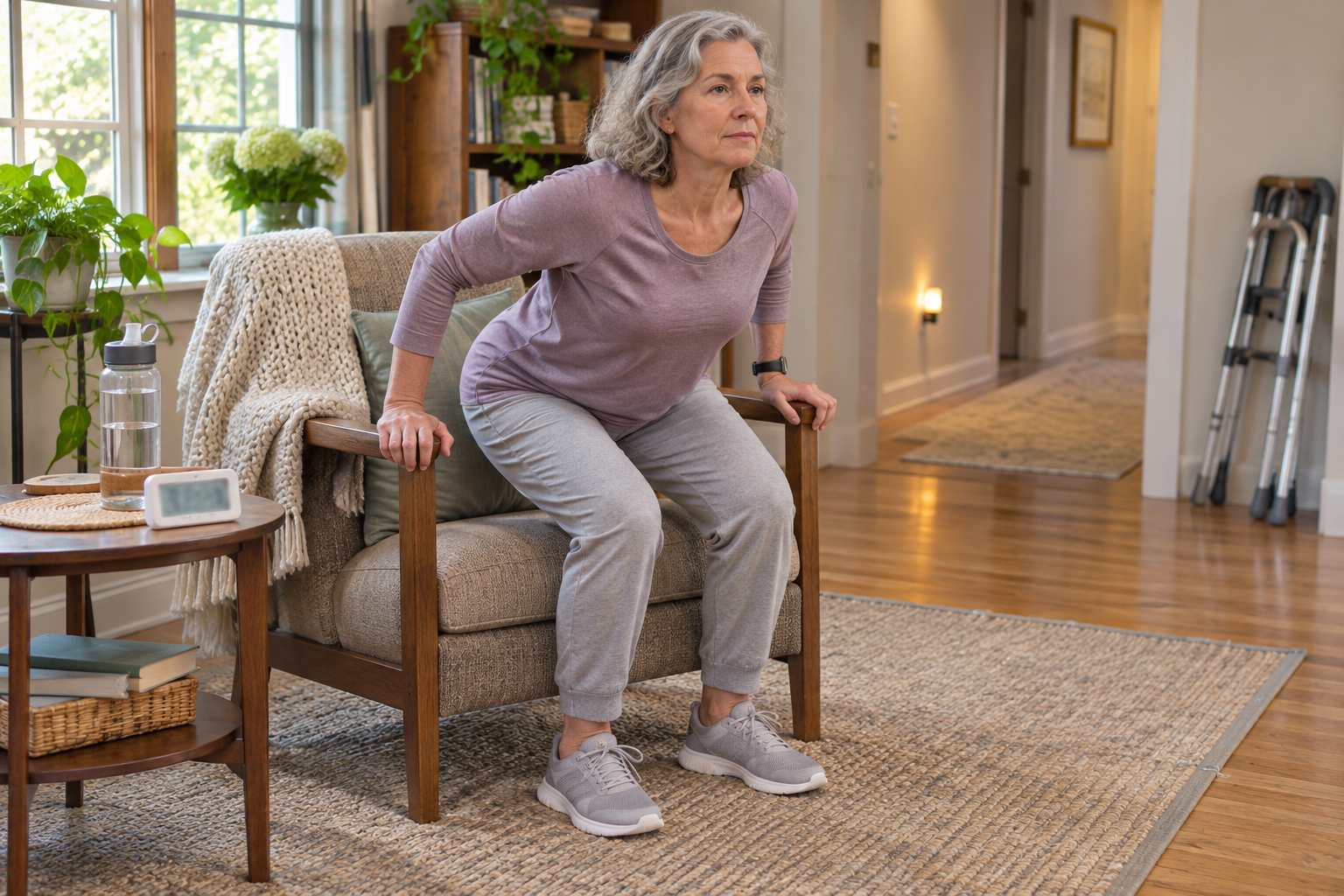
Recovering at home often means relearning how to move through ordinary tasks without overdoing it. Small, deliberate changes to how you stand, sit and rise can reduce pain and prevent setbacks. This piece focuses on practical habits and easy environmental tweaks that support steady progress. The aim is to help you feel safer and more confident while healing, with steps you can try today.
Start with small, intentional movements
Begin each day with short, focused movements that warm tissues and remind the brain how to coordinate motion. Simple sequences — ankle circles, gentle sit-to-stand repetitions, or shoulder rolls — prime muscles without provoking flare-ups. Keep each set brief: five to ten controlled repetitions, with rests between, so you can monitor comfort. Pay attention to how your body responds and adjust the pace rather than pushing through discomfort.
These tiny practices build a foundation for larger tasks like walking across the room or climbing a few steps. Consistency matters more than intensity during early recovery.
Make your home safer and easier to move in
Look at common routes you use every day and remove friction points that demand sudden balance or strength. Secure loose rugs, add stable night lighting, and keep frequently used items within easy reach to avoid awkward stretches. Consider temporary supports such as a sturdy chair with armrests in the bathroom or a non-slip mat in the shower to reduce risky transfers. Small, inexpensive changes cut down on unnecessary strain and give you reliable cues for safe movement.
When in doubt, choose the option that reduces abrupt movements and supports a steady, predictable pattern of activity.
Build short routines that support measurable progress
Rather than long workouts, aim for several short routines spread through the day that target balance, strength and mobility in functional ways. For example, practice standing on one foot while brushing your teeth, perform controlled knee bends while holding a counter, or walk for a few minutes after each meal. Track what you can do comfortably and increase repetitions or duration slowly as tolerance improves. Using simple markers — like a chair, a step or a countertop — makes exercises directly relevant to everyday tasks.
Measuring small improvements keeps motivation steady and highlights safe gains without overwhelming your body.
Conclusion
Recovery at home is about steady, manageable steps that respect how healing feels. Prioritize short, repeatable habits and sensible home adjustments to reduce risk and build confidence. Over time, those small choices add up to noticeable, lasting improvements.