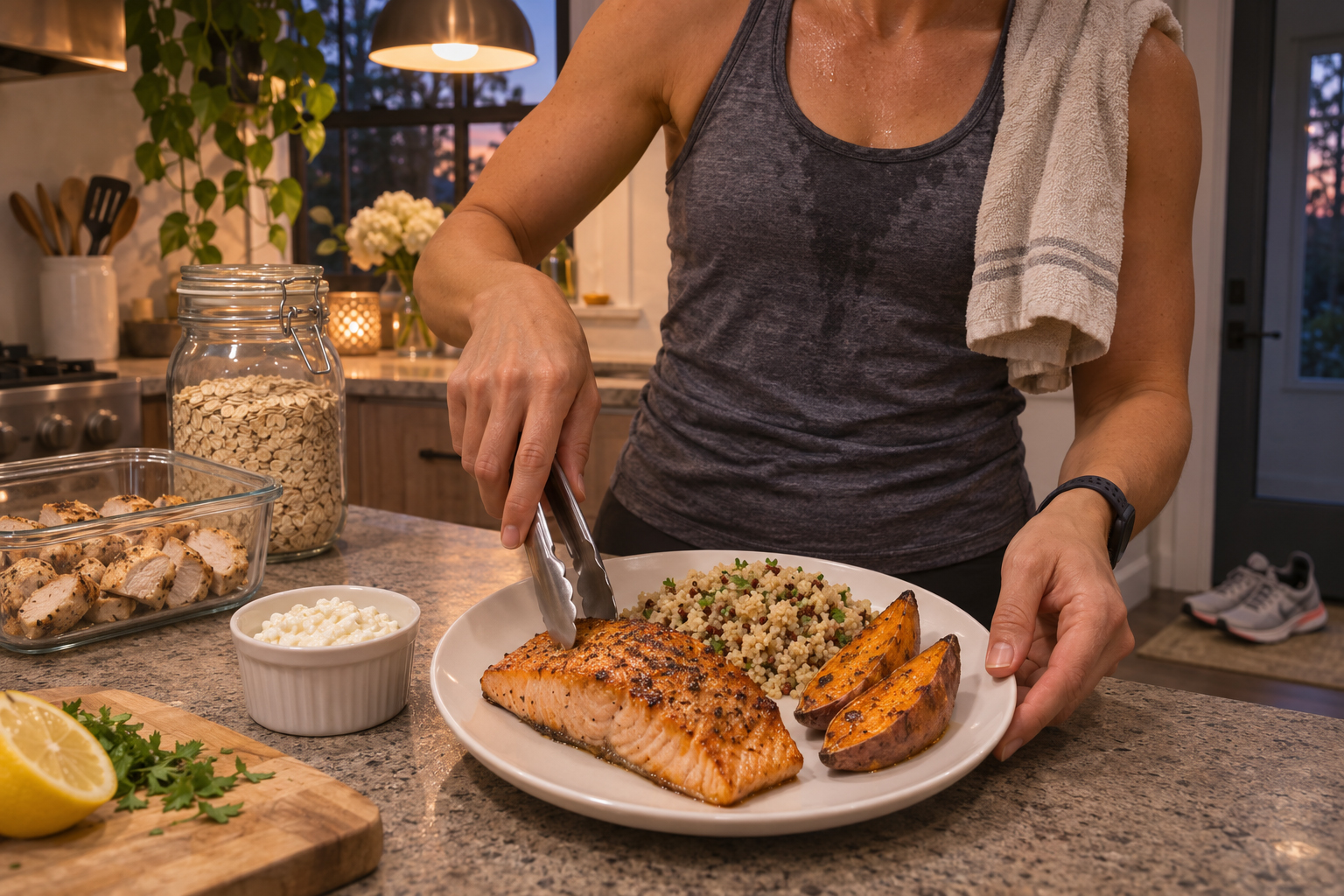
Small, intentional changes at dinner can make your evening home workouts more productive.
You don’t need elaborate recipes — two focused shifts in what you put on the plate often do the heavy lifting.
They help muscle repair, restore glycogen, and support better overnight sleep.
This article offers practical swaps and quick meal combos you can actually cook on busy nights.
Why dinner matters after an evening session
Even short resistance or cardio sessions use glycogen and cause tiny muscle damage that needs both protein and some carbohydrate to recover effectively.
Dinner is often the last meaningful feeding window before a long sleep, so it shapes overnight repair and how you feel the next morning.
Skipping protein or overloading on high-glycemic carbs can blunt recovery or disturb sleep quality.
A modest reframe of portion and ingredient choices at dinner improves repair without extra cooking time or expensive ingredients.
Think of dinner as targeted maintenance: replace habits that leave you depleted with simple swaps that restore and calm.
Small, consistent changes compound across the week and make your training more productive.
Shift 1: Make protein the dinner anchor
Start a larger portion of your plate with a reliable protein source so repair gets priority.
Aim for roughly palm-sized portions of lean or whole proteins: poultry, fish, eggs, tofu, or a portion of legumes plus a small dairy serving.
Protein around 20–40 grams at dinner supports muscle protein synthesis after an evening workout.
When protein leads the plate, carbs and fats become supportive rather than dominant.
- Grilled chicken breast or baked salmon.
- Egg scramble with cottage cheese mixed in.
- Tempeh and lentil mix for plant-forward nights.
These options are quick to prepare and store well as leftovers for repeat meals.
Keeping a cooked protein on hand shortens meal assembly to minutes.
Shift 2: Choose carbs that calm, not spike
After training, prioritize carbs that replenish without causing a big blood-sugar swing that can interfere with sleep.
Starchy vegetables, rolled oats, sweet potatoes, and modest servings of whole grains fit this goal.
They restore glycogen gradually and pair well with protein to sustain recovery overnight.
Avoid large portions of sugar-forward desserts or highly processed snacks right before bed.
- Roasted sweet potato wedges with a protein source.
- Small bowl of oats with milk and banana slices.
- Quinoa salad with vegetables and a protein.
Portion sizes matter: a cupped handful to one fist of cooked carb is typically enough for evening refueling.
Adjust volume based on workout length and how you feel the next day.
Fast plate combos that combine both shifts
Pairing a solid protein with a sleep-friendly carb makes dinner both restorative and satisfying.
Examples that come together in 15–20 minutes include seared salmon with roasted carrots and quinoa, turkey and sweet potato hash, or a tofu stir-fry over brown rice.
Batch-cook a protein and one grain early in the week and rotate quick veg sides to keep dinners varied.
A simple sauce or spice blend ties the plate together without extra work.
These combos minimize planning while maximizing recovery benefits.
They also scale easily for leftovers or lunches the next day.
Conclusion
Prioritize protein first and choose calming, restorative carbs at dinner to speed repair.
Small, consistent swaps are faster to cook and easier to sustain than dramatic dietary overhauls.
Try one shift tonight and see how your recovery feels over a week.