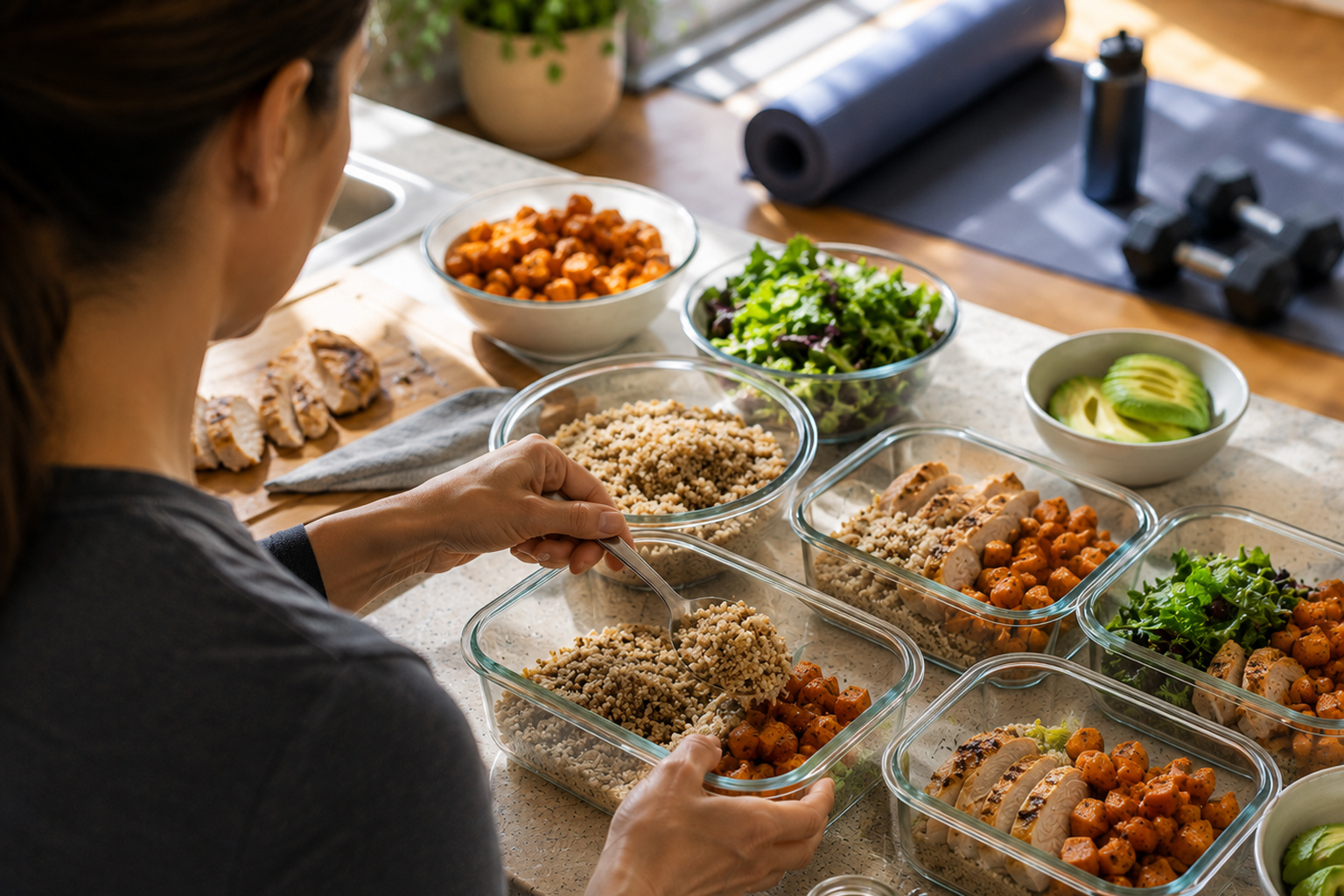
Everyday training benefits from meals that are predictable, balanced, and easy to prepare.
When you consistently combine quality protein, whole grains or starchy vegetables, healthy fats, and colorful produce you support energy, recovery, and mood.
That balance doesn’t require elaborate cooking or complex recipes; it needs reliable templates you can adapt to time and ingredients.
This article lays out simple meal frameworks, quick examples, and practical tips to keep nutrition straightforward during home training cycles.
These templates focus on nutrient density and flexibility.
Why balanced plates matter for home training
A balanced plate supplies the three macronutrient groups plus micronutrients that help sustain workouts and recovery. Protein supports muscle repair and satiety, carbohydrates restore glycogen for repeated sessions, and fats contribute to hormonal balance and longer-term energy. Including a variety of vegetables and fruits ensures vitamins, minerals, and antioxidants that support immune function and reduce fatigue risk. For home training where sessions may vary in intensity, consistency in plate composition provides reliable energy and progress.
Consistent meals reduce decision fatigue and improve adherence to training goals. Small, repeatable changes add up over weeks and months.
Core building blocks for every meal
Keep a shortlist of dependable ingredients so you can assemble meals quickly without thinking too much. Aim to include a portion of protein, a source of carbohydrate, a serving of vegetables or fruit, and a small amount of healthy fat at each main meal. Portions can be adjusted around training: slightly more carbs before or after harder sessions, more protein on strength-focused days. These core blocks let you mix and match to create variety while staying on track.
- Protein: eggs, canned fish, lean poultry, tofu, legumes
- Carbs: rice, potatoes, oats, whole-grain bread, quinoa
- Veg + fruit: leafy greens, peppers, berries, apples, broccoli
- Fats: olive oil, avocado, nuts, seeds
- Quick extras: Greek yogurt, cottage cheese, hummus
Stocking these basics streamlines meal prep and makes it easier to hit macronutrient targets. You’ll waste less food and save time.
Sample templates for training days
Breakfast template: protein + whole grain + fruit + fat — for example, oats cooked with milk, stirred with yogurt and berries, topped with nuts. Lunch template: protein + grain + large vegetable serving + dressing — such as a grain bowl with roasted vegetables and chickpeas. Dinner template: protein-forward plate with starchy side and a vegetable — grilled protein, sweet potato, and a green salad. Snacks can bridge energy gaps: a piece of fruit with nut butter or a boiled egg and whole-grain crackers.
Templates like these adapt to time constraints and ingredient availability. They also support consistent recovery across different workout loads.
Practical tips to maintain consistency
Create a short weekly shopping list built from your core blocks so you always have go-to ingredients on hand. Batch-cook one or two components—grains, roasted vegetables, or a protein source—so meal assembly is fast on busy days. Use simple seasonings and versatile sauces to prevent boredom without adding complexity. Track how meals affect your energy around workouts and tweak portions rather than overhauling whole patterns.
Small changes and a predictable routine will improve performance and make nutrition sustainable. Aim for progress, not perfection.
Conclusion
Consistent, simple meal templates make it easy to support home training progress.
Prioritize protein, carbs, fats, and produce in predictable portions for energy and recovery.
Small habits around shopping and batch cooking keep these templates sustainable long term.