Recovering mobility at home often depends as much on the environment as on exercise and patience.
A modest set of adjustments and consistent daily habits can reduce risk and speed functional gains.
This article outlines practical, low-cost steps to make living spaces safer and more supportive for recovery.
Use the guidance here to build a gradual routine and a home that encourages steady, confident progress.
Begin with a simple assessment
Start by observing common daily tasks and noting where you hesitate or feel unstable, such as stepping into a shower or rising from a chair. Identify tripping hazards, slippery surfaces, and areas with poor lighting; these are priorities to address. Consider timing activities to avoid rushing when you are most fatigued, and enlist a caregiver or therapist to highlight risks you might miss. A short, clear list of problem spots helps focus practical changes without overwhelming you or your household.
- Check hallways and stairways for clutter and loose rugs.
- Assess bathroom surfaces, shower thresholds, and grab bar needs.
- Note furniture heights and locations where balance is challenged.
Addressing the highest-risk items first creates immediate benefit and confidence. Small wins make adherence to recovery plans easier and safer.
Daily movement habits to rebuild function
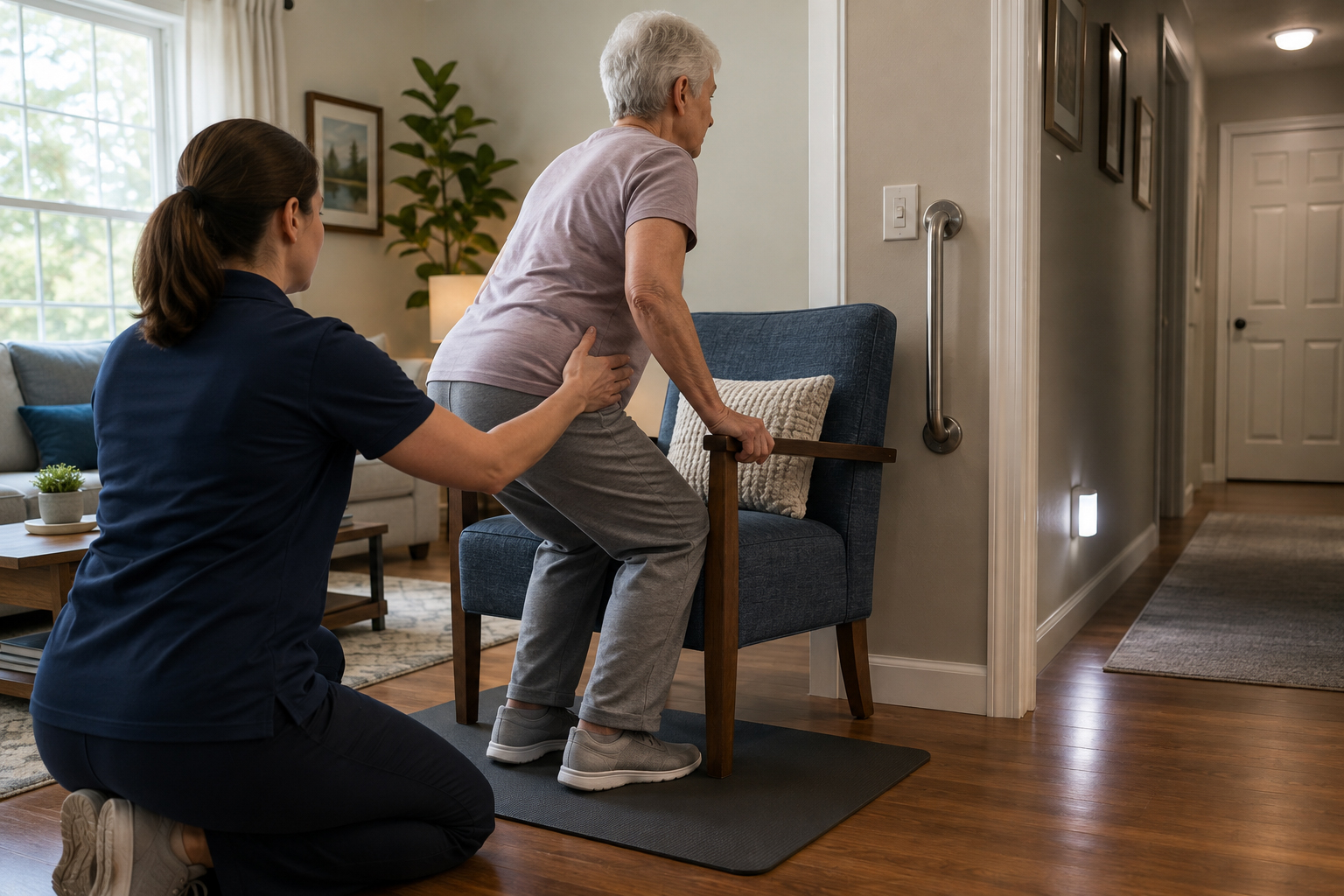
Consistent, brief practice beats occasional intensive sessions when rebuilding everyday mobility. Integrate short mobility sets into routines, such as sit-to-stand repetitions while watching a favorite show or gentle balance drills after morning hygiene. Focus on quality of movement, controlled tempo, and comfortable ranges rather than pushing into pain. Tracking progress with simple notes or a checklist reinforces habit formation and helps you celebrate steady improvement.
- Sit-to-stand: 8–12 controlled repetitions twice daily.
- Heel-to-toe walks across a hallway for 30–60 seconds.
- Seated knee extensions or ankle pumps during rest periods.
These small practices support strength and confidence without requiring special equipment. Gradually increase repetitions or complexity as movement becomes easier.
Design your home for safe, progressive practice
Make targeted changes that remove barriers and scaffold independence, such as adding non-slip mats, stable grab bars, and a sturdy chair at a supportive height. Improve lighting in transition zones and keep pathways clear to reduce unexpected challenges. Consider simple assistive items like a reacher, shower bench, or a cane only as temporary supports while strength returns. The goal is to enable practice and independence while preventing setbacks and falls.
- Install grab bars near toilets and in showers at reachable heights.
- Use motion-activated lights in hallways and stair landings.
- Choose chairs with firm seats and armrests to aid standing.
Thoughtful adjustments let you rehearse safe movement patterns in daily life. Over time, these changes can be scaled back as strength and confidence are restored.
Conclusion
Create a modest plan that combines assessment, daily practice, and targeted home changes.
Prioritize safety and gradual progression to build consistent gains without setbacks.
Small, steady improvements in a supportive environment lead to durable recovery.