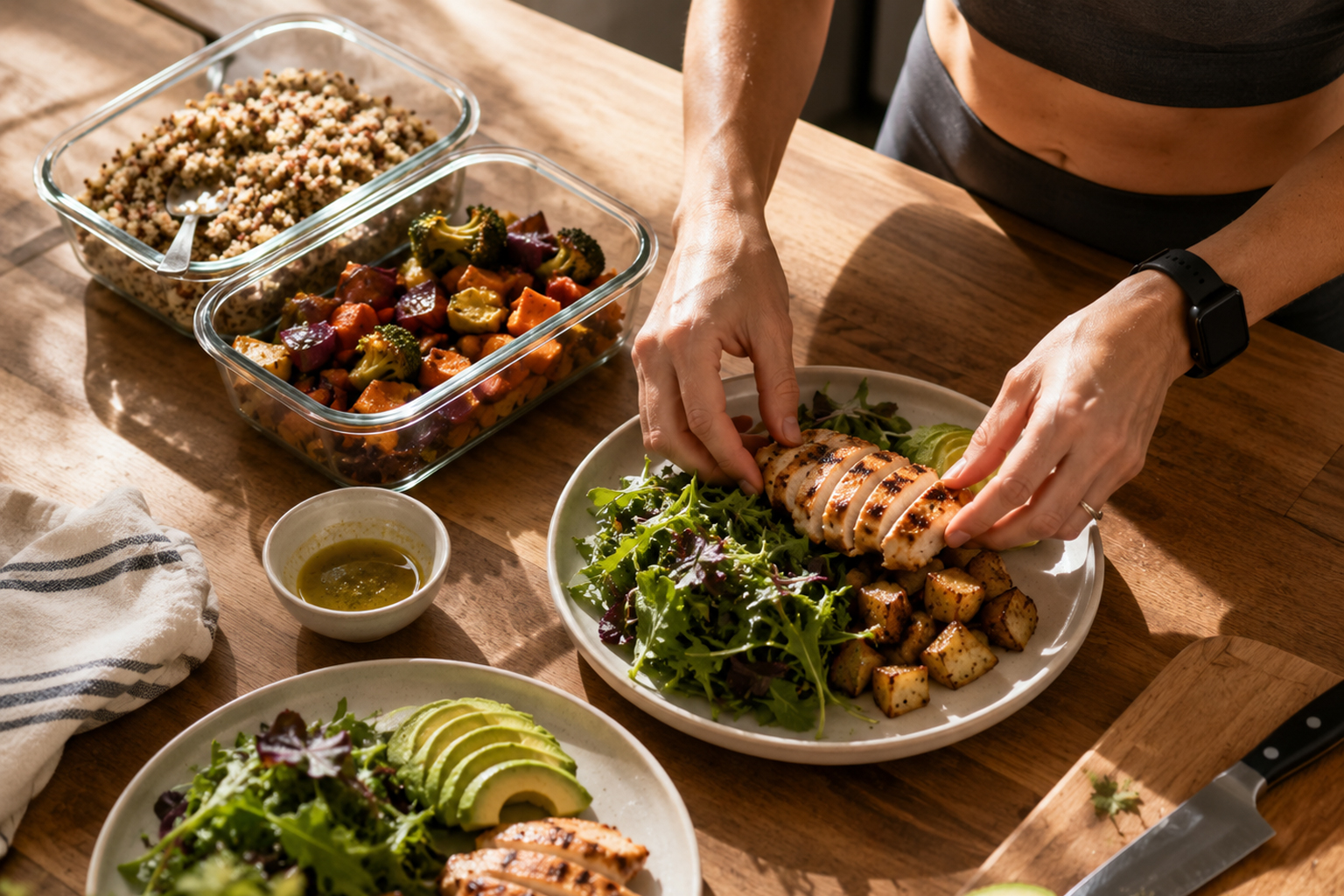
A thoughtful daily meal approach helps sustain energy, support muscle repair, and simplify life around home workouts.
Small, repeatable patterns reduce decision fatigue and make it easier to hit nutrition goals consistently.
This article outlines straightforward principles you can apply to build balanced plates that aid recovery and steady energy.
No extreme rules — just reliable combinations and habits that fit into busy days.
Prioritize Protein and Vegetables
Start meals with a clear protein portion to support muscle repair and satiety. Aim for a palm-sized serving for most meals, adjusted by activity and goals. Complement protein with a generous serving of vegetables for micronutrients, fiber, and volume. Together they form the foundation of plates that keep blood sugar steadier and recovery on track. Preparing a few go-to protein preparations simplifies weeknight cooking.
Lean or plant proteins both work when prepared simply and consistently. Rotate sources across the week to keep meals varied and nutrient-rich. Prep once, eat well multiple times.
Include Reliable Carbohydrates and Healthy Fats
Carbohydrates replenish glycogen and provide quick energy for workouts and daily tasks. Choose whole-food sources like oats, potatoes, whole grains, and fruit for sustained release. Healthy fats—nuts, seeds, avocado, olive oil—add flavor, support nutrient absorption, and moderate hunger. Balancing carbs and fats around protein creates satisfying meals that recover stores without excess. Portion sizes can be tweaked to match activity days versus rest days.
- Oatmeal with nut butter and banana.
- Roasted potato, grilled chicken, green salad.
- Whole-grain wrap with beans, avocado, and mixed greens.
Pairing these components reduces cravings and stabilizes energy between sessions. Simple swaps like swapping white bread for whole grains can have an outsized effect. Small, consistent swaps are practical and sustainable.
Practical Timing and Portioning Habits
Consistency beats perfection: regular meals that match your routine are more effective than sporadic strict diets. Have a balanced meal within two hours after exercise to support recovery when feasible. Control portions using visual cues—palm for protein, fist for vegetables, cupped hand for carbs, thumb for fats. Batch cooking staples and assembling plates quickly reduces barriers on busy days. Keep a simple log of meals for a week to spot patterns and tweak as needed.
Track how you feel and adjust portions to energy and training load. Small, sustainable changes compound into reliable progress. That habit helps refine what works for you.
Conclusion
Adopt these meal principles to maintain steady energy and support recovery.
Focus on protein, colorful vegetables, sensible carbs, and practical habits.
Over time, these simple patterns make nutrition a dependable part of your home fitness routine.