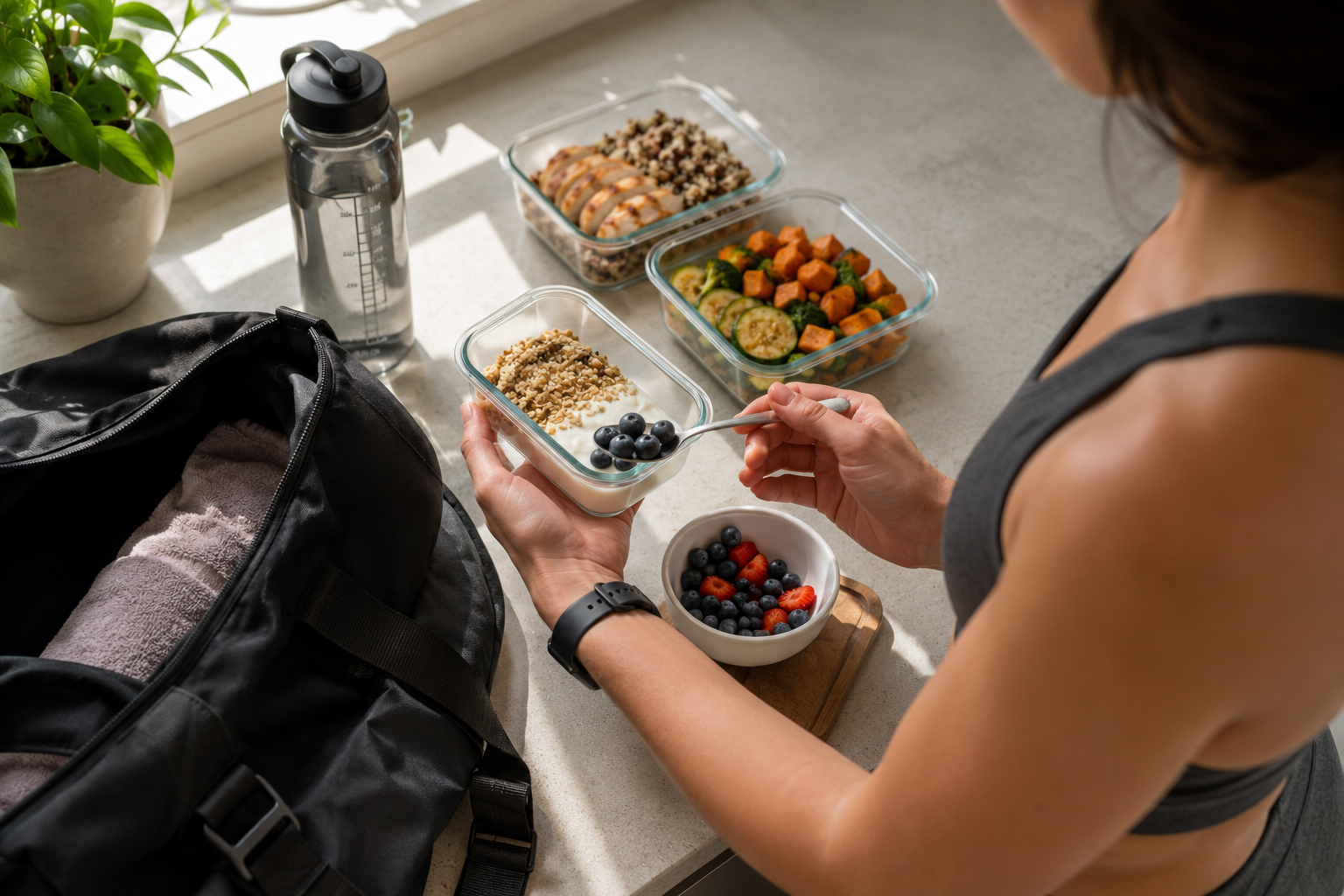
Small, consistent adjustments to everyday eating can significantly affect how you feel during short home training sessions. Focusing on portion balance, timing, and simple swaps often delivers more benefit than strict diets or complex meal plans. This piece outlines practical, sustainable shifts you can make without adding cooking time or obsessing over macros. The goal is steady energy, better recovery, and easier consistency with your exercise routine.
Why balanced plates matter for steady energy
Combining protein, fiber-rich carbohydrates, and a little healthy fat at each meal slows digestion and helps avoid mid-session energy dips. Protein supports muscle repair and satiety while fiber and whole grains maintain blood sugar stability. A small amount of fat from sources like nuts or olive oil provides lasting fuel and improves nutrient absorption. These components together create plates that support both short workouts and all-day functionality.
Adopting balanced plates is more about pattern than perfection. Start with simple proportions and adjust based on how you feel during exercise.
Quick meal templates you can use every day
Templates reduce decision fatigue and make consistent eating easier. A reliable breakfast could be Greek yogurt, a small serving of oats, and berries for carbs and antioxidants. Lunch might pair grilled chicken or beans with a whole grain and a generous vegetable salad. Dinner can mirror that structure with a different protein and a starchy vegetable like sweet potato when you need extra fuel.
- Breakfast: yogurt, oats, fruit
- Lunch: protein, whole grain, greens
- Snack option: nut butter with an apple
These templates are flexible and tolerant; swap ingredients based on preference and availability. They keep prep simple and outcomes consistent for training energy.
Practical prep and timing tips
Batch cooking grains, roasting vegetables, and pre-portioning proteins saves time and reduces barriers to eating well. Aim to eat a balanced meal 1.5–3 hours before a planned session, or a small combination snack 30–60 minutes prior if time is tight. Hydration matters too: plain water throughout the day supports performance and recovery. Small rituals—like packing a post-session snack—make it easier to recover promptly.
Implement one prep habit each week until it becomes routine. Gradual change sticks better than forcing everything at once.
Conclusion
Small, structured food changes create reliable energy for daily exercise and help recovery after sessions. Focus on balanced plates, simple templates, and minimal prep habits to make improvements manageable. Over time these shifts build resilience and make consistent training feel easier.