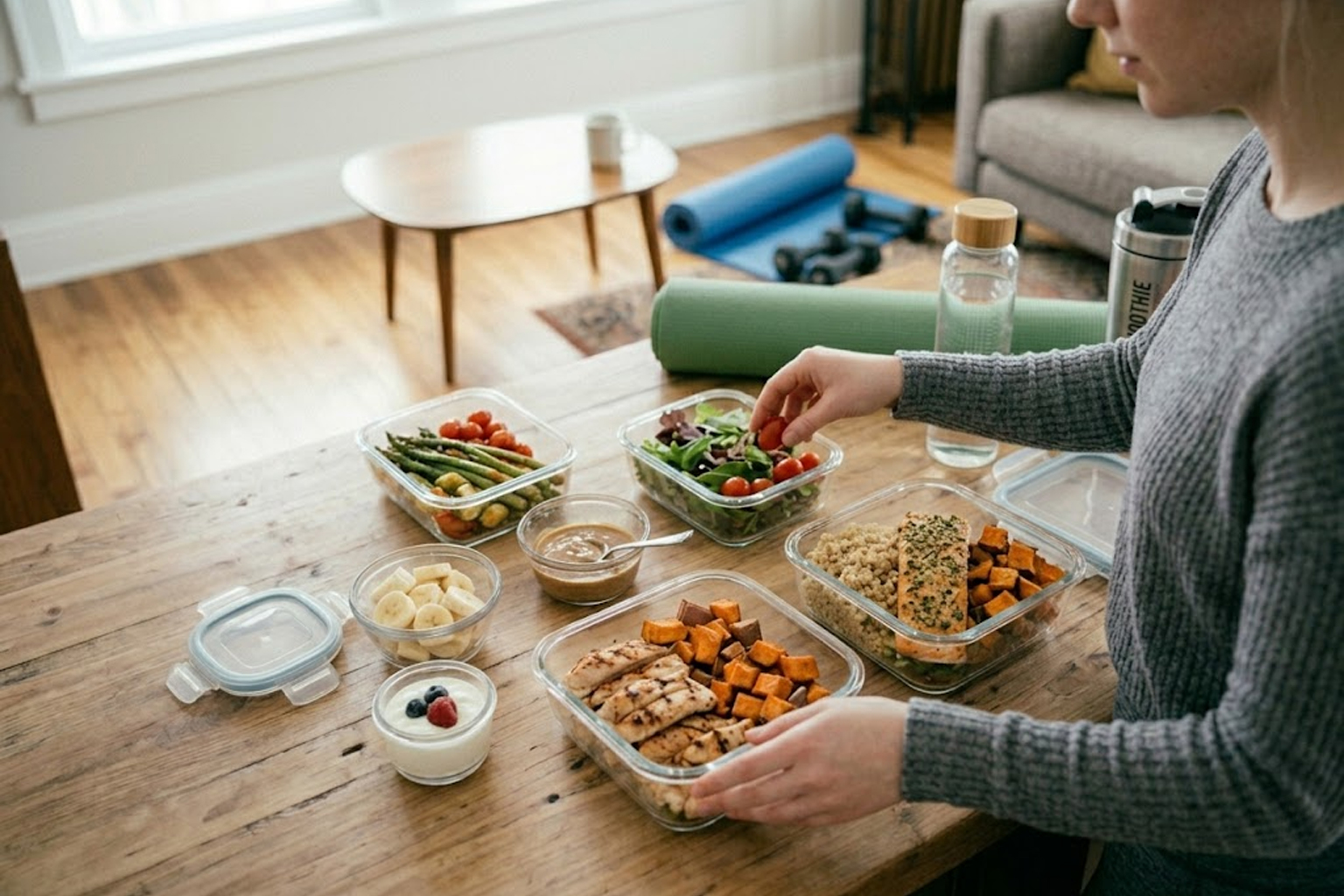
Consistent energy for at-home training starts with a predictable, simple approach to meals. Too often people overcomplicate nutrition and then struggle to maintain habits. Adopting a clear everyday eating structure makes food decisions easier and supports performance, recovery, and mood. Small, repeatable choices compound into steadier energy across the day. This article explains practical meal blocks, snack choices, timing tips, and how to adapt them to your routine.
Why a simple eating structure matters
A structure reduces decision fatigue and aligns food with your training goals. Rather than strict rules, aim for balanced components at each main meal: protein, a moderate carbohydrate, healthy fat, and vegetables or fruit. That combination supports strength, sustained stamina, and steady blood sugar. Keep portions tuned to your appetite and session intensity.
Focus on consistency over perfection; similar plates day to day work better than constant variation. Over time, you’ll learn which portions and compositions best support your sessions.
Three practical meal blocks
Break the day into three practical meal blocks that are easy to assemble and repeat: baseline meals, pre-session mini-meals, and recovery plates. Baseline meals provide the foundation— a solid protein source, whole grains or starchy vegetables, and colorful produce. Pre-session mini-meals are smaller, focused on easy-to-digest carbs and a light protein to top up energy. Recovery plates prioritize protein and a mix of carbs to refill glycogen and aid repair.
- Baseline meal: grilled chicken, quinoa, mixed vegetables.
- Pre-session mini: banana with yogurt or toast with honey.
- Recovery plate: salmon, sweet potato, greens.
Use these blocks as templates you can vary by swapping proteins, grains, and produce. Keeping the templates short speeds meal prep and reduces waste.
Snack, hydration and small adjustments
Snacks can fill gaps between meal blocks and prevent energy dips without derailing appetite. Choose options that combine carbohydrate with a bit of protein or fat—yogurt with fruit, a banana with nut butter, or a small handful of nuts and dried fruit. Hydration influences perceived energy, so sip water regularly and include a mineral source like salty snacks or electrolyte drinks when sessions are intense. Pay attention to how different foods feel during training; individual tolerance varies.
Adapt snack size to your training timing and overall calorie needs. Simple changes like trimming late-night carbs or increasing morning protein often make noticeable differences.
Timing tips for before and after sessions
Plan a small pre-workout meal 45–90 minutes before exercise: easy carbs plus a little protein. If you train first thing, shift a small recovery snack to immediately after to support muscle repair and energy restoration. After workouts aim for a balanced meal within two hours that includes protein and carbohydrate, and prioritize rehydration. Avoid heavy, greasy foods immediately before sessions; they can impair comfort and performance.
Experiment with timing in lower-stakes sessions to find the sweet spot for your body. Once established, this rhythm helps steady energy and improves consistency.
Conclusion
Establishing an everyday eating structure simplifies choices and supports consistent home training. Start with three practical meal blocks, sensible snacks, and simple timing rules you can repeat. Small, persistent changes build reliable energy and better training results.