Most home workouts depend on consistent, usable energy rather than one perfect meal.
Adopting simple meal patterns makes it easier to train regularly and recover well.
This article outlines practical food choices and timing to support at-home strength and cardio sessions.
You’ll get quick ideas for pre-workout, recovery, and weekly habits to keep energy steady.
Why Meal Composition Matters
What you put on your plate influences short-term energy and how quickly you recover after exercise. A mix of carbohydrates, protein, and a little fat helps maintain blood sugar and supports muscle repair. Timing matters too: eating very large meals immediately before training can leave you sluggish, while too little fuel limits performance. Focusing on whole foods with predictable effects makes it easier to plan around workouts.
Prioritizing variety keeps micronutrients and fiber in the mix, which supports sustainable energy. Small, consistent changes to composition beat drastic, unsustainable diets.
Quick Pre-Workout Meals
Pre-workout meals should be simple, digestible, and timed to your session. Aim for a balance of carbohydrates for immediate fuel and a moderate amount of protein to reduce muscle breakdown. If you train within an hour, favor smaller, easily tolerated options to avoid gastrointestinal discomfort. Experiment with timing and portion sizes to find what feels best for your body.
- 30–60 minutes before: banana with a spoonful of nut butter or a small yogurt.
- 1–2 hours before: oatmeal with berries and a scoop of protein or a turkey sandwich on whole-grain bread.
- If you’re short on time: a rice cake with cottage cheese or a blended fruit and protein shake.
Keep choices repeatable and portable so you can stick to them on busy days. Consistency makes it easier to judge what benefits your workouts.
Recovery Plates to Rebuild
Post-workout meals should replace spent glycogen and provide protein to support repair. Aiming for a 3:1 to 2:1 carbohydrate-to-protein ratio works well for many people doing mixed training. Include colorful vegetables or a salad to restore micronutrients and support overall health. Hydration is also crucial, so pair food with water or a light electrolyte beverage if you sweat heavily.
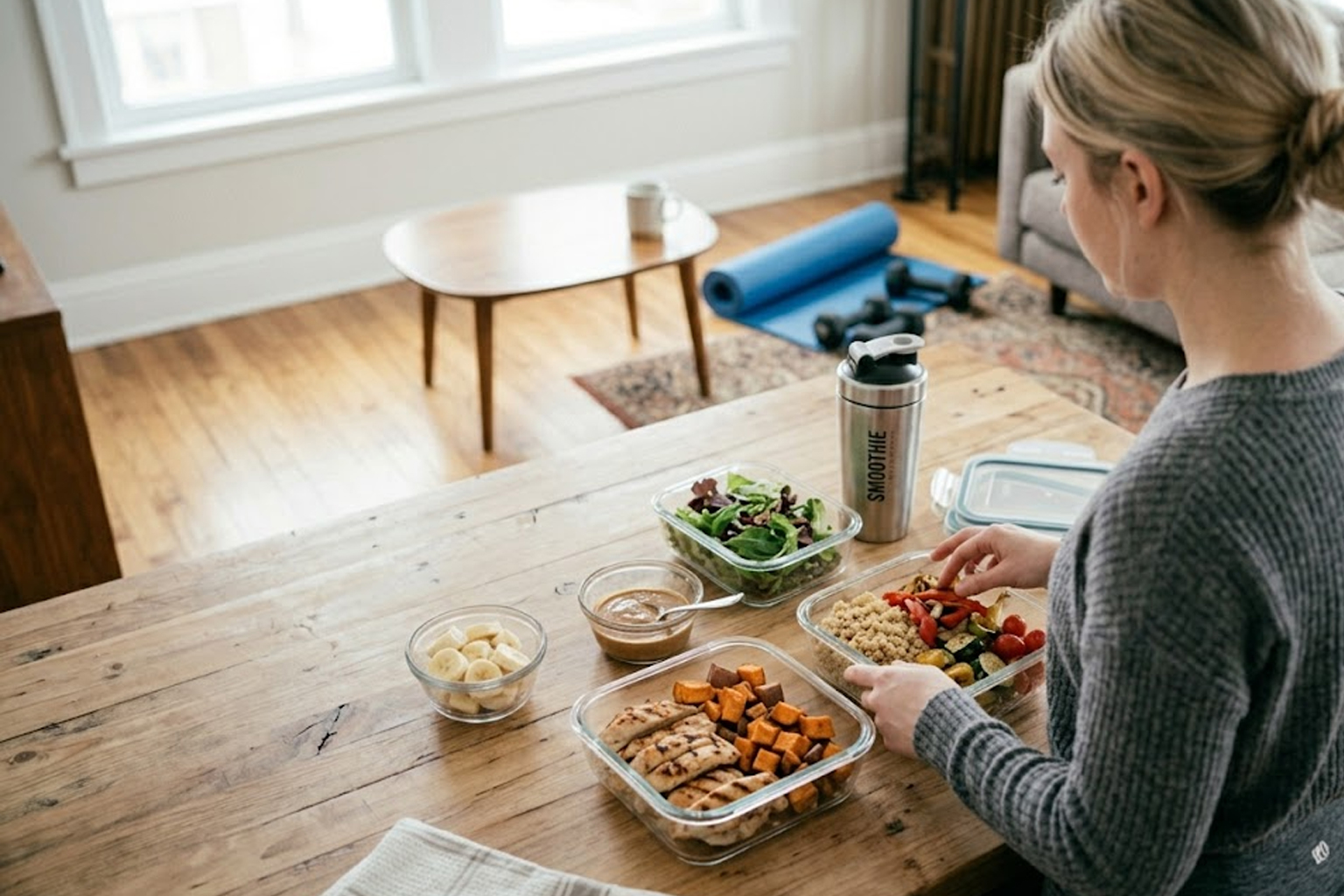
- Examples: grilled chicken with sweet potato and greens, or a quinoa bowl with beans and roasted vegetables.
- For quick recovery: a smoothie with milk, fruit, spinach, and a protein source.
Plan recovery meals within two hours of finishing exercise when possible. Small, frequent post-session snacks can help on very active days.
Weekly Habits That Make Eating Easier
Batch cooking staples like grains, roasted vegetables, and lean proteins cuts decision fatigue and keeps meals consistent. Build simple templates you rotate through so shopping and prep fit your routine. Keep a selection of quick snacks on hand to avoid skipping fuel when time is tight. Regular meal patterns reduce energy swings and support steady training progression.
Small planning efforts yield big returns in training consistency and enjoyment. Treat meals as supportive tools for your fitness goals rather than obstacles.
Conclusion
Consistent, balanced meals create the steady energy foundation that makes at-home training sustainable.
Practical pre-workout and recovery choices reduce fatigue and speed adaptation.
Simple weekly habits and repeatable templates keep healthy eating achievable over time.