Managing joint discomfort at home benefits from small, consistent actions that prioritize movement, rest and gradual load.
Micro-movements and mindful pacing can preserve mobility without provoking flare-ups and support steady improvement.
Adjustments to posture, task sequencing and gentle strength work reduce daily strain and make activity more sustainable.
This short plan outlines practical steps you can repeat at home to rebuild function and confidence in movement.
Principles of micro-movement and pacing
Micro-movements are brief, targeted motions done frequently to keep tissues pliable and nerves accustomed to safe ranges of motion.
Pacing means breaking tasks into manageable chunks so that demand matches your current tolerance rather than exceeding it.
Combine short movement breaks with low-intensity tasks to prevent stiffness and avoid long periods of immobility.
These principles reduce the risk of flare-ups while allowing gradual progression toward longer or more demanding activities.
Start each day with a few gentle mobility repetitions and build activity in small increments.
Keeping effort predictable and repeatable helps you identify boundaries without abrupt increases in pain.
Progressive loading without overload
Rebuilding strength requires progressive loading, but the key is slow increases in volume or resistance to avoid setbacks.
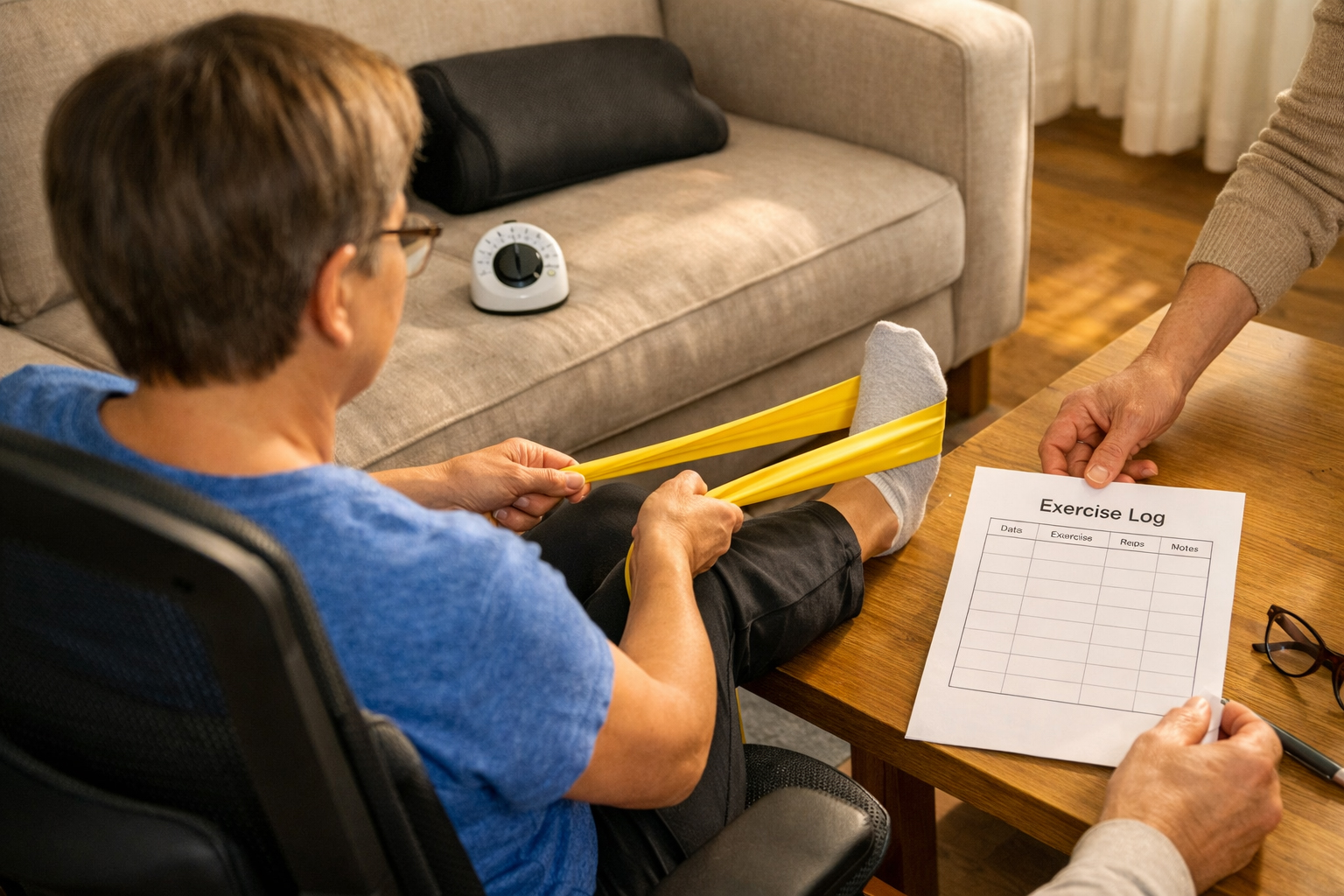
Use bodyweight, resistance bands or light household items and aim for controlled, pain-informed progression over weeks.
Track reps, sets and perceived effort so you can add a little more only when the current level feels manageable.
Progress is not linear; plan rest days and reduce intensity after a challenging session to consolidate gains safely.
Focus on quality of movement rather than heavy loading early on to reinforce healthy joint mechanics.
Small, consistent gains in tolerance add up to meaningful improvements in daily function.
Designing supportive daily ergonomics
Thoughtful ergonomics reduce unnecessary joint stress across routine tasks like sitting, lifting and grooming.
Aim for neutral spine positions, distribute load between both sides of the body and avoid prolonged awkward postures.
Rearrange common work and living areas so frequently used items sit within comfortable reach to minimize compensatory movement.
Repeatable setup changes make good posture the easy choice and reduce cumulative strain through the day.
- Adjust chair height and use lumbar support if available.
- Keep frequently used items at elbow height to reduce bending or reaching.
- Use brief standing or walk breaks every 30–60 minutes.
Small environmental tweaks compound with movement habits to protect joints over time.
Consistent posture checks and micro-rests are simple preventive measures anyone can use.
Monitoring progress and adjusting
Keep a simple log of activity, symptoms and how tasks felt to identify patterns and guide adjustments.
If pain increases beyond expected soreness or limits function for more than a few days, reduce load and consult a clinician.
Use objective markers like step count, duration of resistance work or range-of-motion milestones to celebrate gains.
Regular review helps you fine-tune pacing and choose when to safely advance exercises or daily demands.
Adaptation takes time; small, data-informed adjustments preserve progress and reduce setbacks.
Patience and consistency are the most reliable allies in home-based joint recovery.
Conclusion
Micro-movements, paced activity and modest progressive loading form a practical framework for home recovery.
Combine ergonomic adjustments with tracking to protect gains and make steady improvements in function.
With consistency and thoughtful progression, many people restore comfort and confidence in everyday movement.