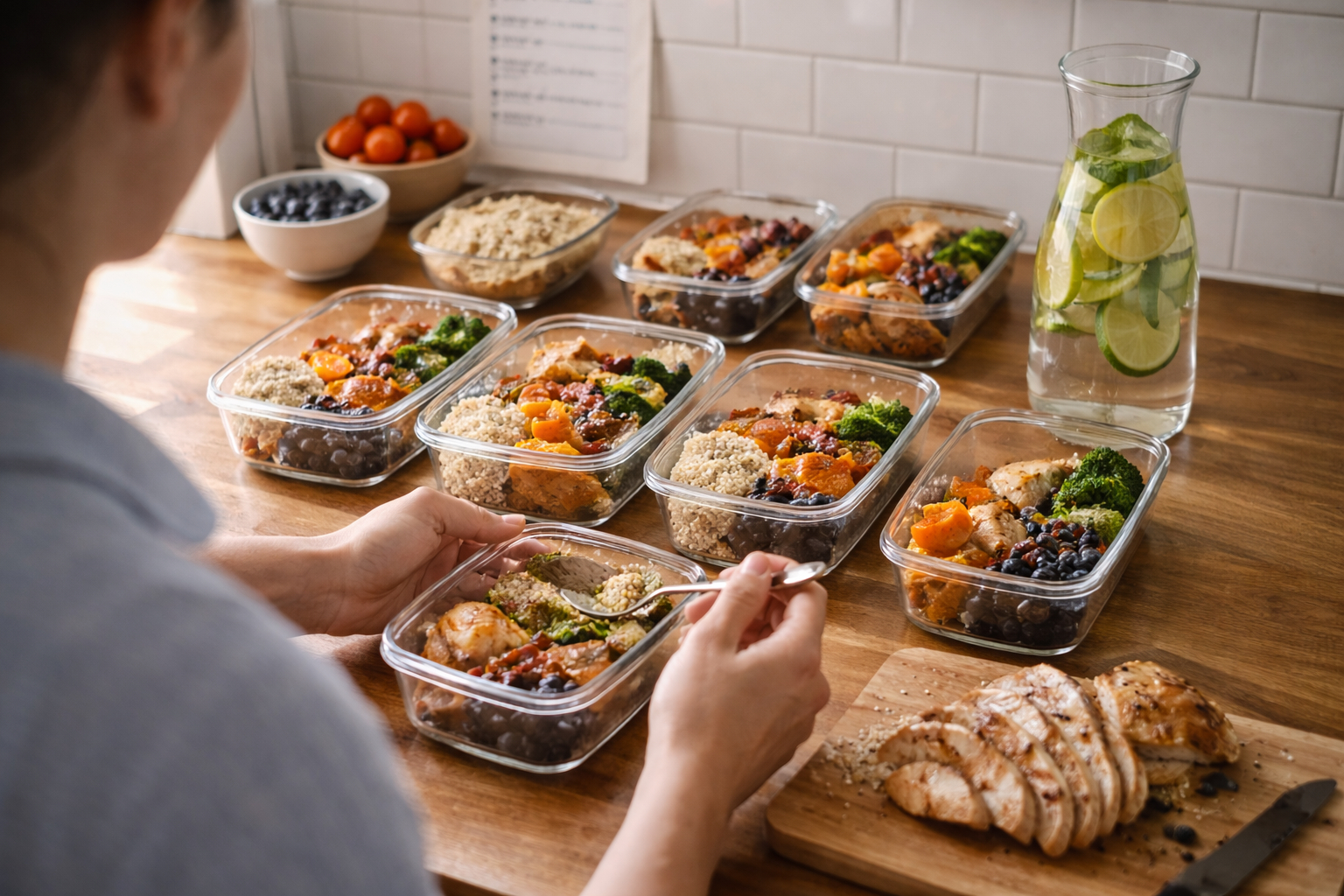
Small, consistent choices in the kitchen shape daily energy and long-term wellbeing more than occasional extremes. Focusing on balanced plates, simple preparation routines, and mindful portions makes healthy eating manageable for busy schedules. This article offers practical, low-effort approaches to upgrade everyday meals without overhauling your life. Use these habits to support steady energy, clearer focus, and more productive days.
Plan Smart, Shop Smart
Planning ahead reduces decision fatigue and prevents last-minute unhealthy choices that sap energy. A short weekly list that prioritizes whole foods, versatile proteins, and seasonal vegetables keeps your fridge stocked for quick meals. Shopping with a simple map — produce first, proteins next, then staples — speeds errands and avoids impulse buys. Over time, consistent shopping patterns save money and make nutritious meals your default.
- Build meals around a protein, a vegetable, and a whole-grain or starchy vegetable.
- Keep a rotating list of 6–8 go-to recipes for variety without thinking too hard.
- Buy flexible ingredients like eggs, canned beans, frozen vegetables, and whole-grain pasta.
These small planning shifts create a reliable supply of healthy components. They also reduce food waste and make it easier to prepare balanced plates every day.
Easy Ingredient Swaps and Portions
Simple swaps have the biggest impact when you want improved nutrition with minimal fuss. Swap refined carbs for whole grains, full-fat dressings for lighter options, and heavy sauces for herb- or citrus-based finishes. Pay attention to portion sizes: using smaller plates, pre-portioning snacks, and measuring servings once or twice a week helps reset visual cues. Small portion awareness combined with nutrient-dense choices supports steady energy and better satiety between meals.
- Choose brown rice or quinoa instead of white rice for added fiber.
- Replace sugary beverages with water flavored with fruit or herbs.
These swaps preserve flavor while boosting nutritional value. Over a few weeks, they become automatic and simplify eating well.
Quick Meal Templates for Busy Days
Templates reduce decision-making and make balanced meals achievable even on hectic days. Keep a few formats in mind: breakfast as protein + fruit + whole grain, lunch as salad or grain bowl with a protein and dressing on the side, dinner as a simple protein with two vegetables and a carbohydrate. Templates help you assemble satisfying meals from whatever is on hand and speed up prep without sacrificing nutrition. When time is limited, rely on one-pan or sheet-pan meals that combine ingredients and minimize cleanup.
- Stir-fry: protein + mixed vegetables + brown rice or quinoa.
- Sheet-pan roast: seasoned protein with root vegetables and greens.
- Grain bowl: base grain, roasted veg, fresh greens, and a protein.
Using templates reduces stress and encourages consistency. They make it easier to maintain energy-supporting eating habits day after day.
Conclusion
Adopting a few practical kitchen habits yields steady energy and clearer focus. Start with planning, smart swaps, and simple templates to make healthy eating automatic. Small changes sustained over time produce lasting benefits for daily wellbeing.