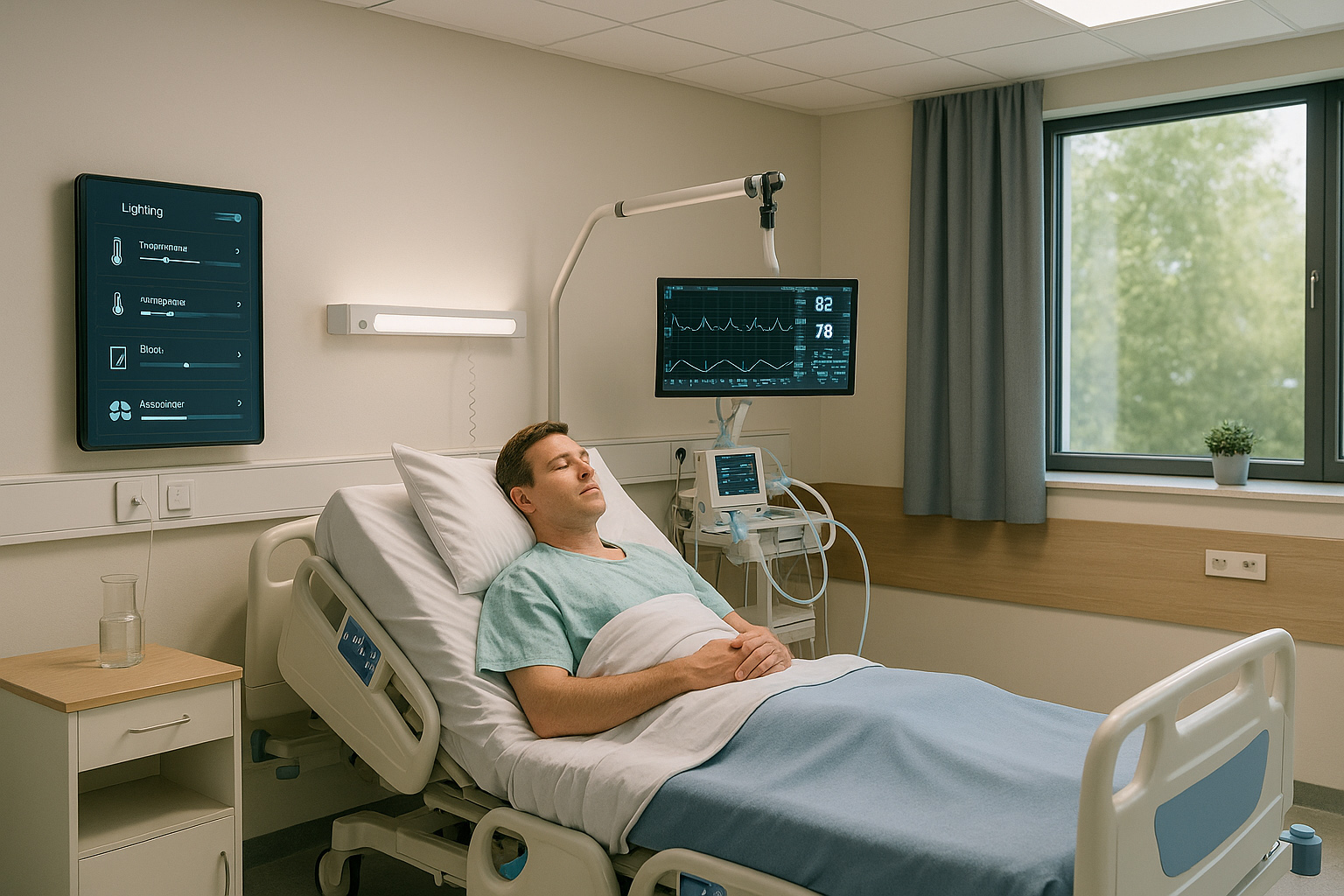
Smart hospital rooms transform the patient experience by combining intelligent technology with compassionate care. These automated environments respond to real-time needs, improving comfort, safety, and communication while supporting medical teams with faster, more accurate information. As hospitals modernize, smart rooms are becoming essential to creating efficient, patient-centered care.
A More Comfortable Patient Experience
Smart hospital rooms use sensors, voice controls, and connected devices to adjust lighting, temperature, and bed positions automatically. Patients can control their environment without needing constant assistance, which is especially helpful for those with limited mobility. Calm lighting, smooth automation, and easy access to room functions help reduce stress and make recovery more comfortable.
Real-Time Monitoring and Alerts
Sensors continuously track vital signs, movement, air quality, and equipment status to give clinicians immediate insight into patient conditions. If something changes unexpectedly, such as oxygen levels, heart rates, or fall risk-alerts are sent instantly to healthcare staff. This proactive monitoring improves response times and allows medical teams to focus on higher-value care.
Streamlined Communication and Workflow
Smart rooms integrate with hospital systems to simplify communication. Nurses receive updates on mobile devices, medication schedules are synced automatically, and doctors can access patient data from anywhere in the hospital. Automated reminders and digital whiteboards help ensure treatment plans are clear and up to date, reducing miscommunication and administrative burden.
Enhancing Safety and Operational Efficiency
Automation helps reduce preventable errors by standardizing routines like hand-hygiene alerts, room sanitation reminders, and medication verification. Smart sensors detect equipment malfunctions early, while digital logs track room usage, helping staff coordinate care more efficiently. These improvements support safer environments for both patients and providers.
Conclusion
Smart hospital rooms represent the future of healthcare environments—responsive, intelligent, and deeply patient-focused. By blending automation with human care, they enhance comfort, strengthen safety, and streamline workflows. As hospitals continue adopting intelligent room technologies, the patient experience becomes more supportive, efficient, and healing.