Recovering movement at home doesn’t require long workouts or fancy equipment — it asks for steady, intentional choices. Short, repeatable practices can rebuild strength, balance, and comfort without overloading healing tissues. Aim for movements that feel controlled and gradually increase in challenge as you get steadier. Consistency and small progressions matter more than perfection.
Start with realistic time blocks you can repeat daily, like two 10-minute windows. Track what feels easier and what still causes tension. Use those notes to guide gentle increases rather than forcing speedier gains. Keep safety top of mind: support surfaces and footwear matter.
Start Small and Build Consistency
Begin each session with a simple goal: move for a specific reason — rising from a chair, bending to reach a drawer, or walking across a room. Choose one task and repeat it slowly for quality rather than quantity. Short bursts of attention several times per day beat infrequent, long sessions that leave you sore. This approach reduces flare-ups and preserves confidence.
Consistency builds neurological patterns that translate into everyday tasks. When a movement becomes familiar, it requires less mental effort and will feel more automatic. Keep a note of small wins to stay motivated and adapt goals weekly.
Focus on Functional, Pain-Free Movement
Pick exercises that mirror daily activities so strength transfers directly to living tasks. Work on controlled transitions, balance during common reaches, and gentle weight shifts rather than isolated maximal lifts. Respect pain signals: mild, manageable discomfort that settles is different from sharp or worsening pain. If something increases sharp pain, stop and modify the motion.
- Sit-to-stand: rise slowly from a chair using armrests only as needed.
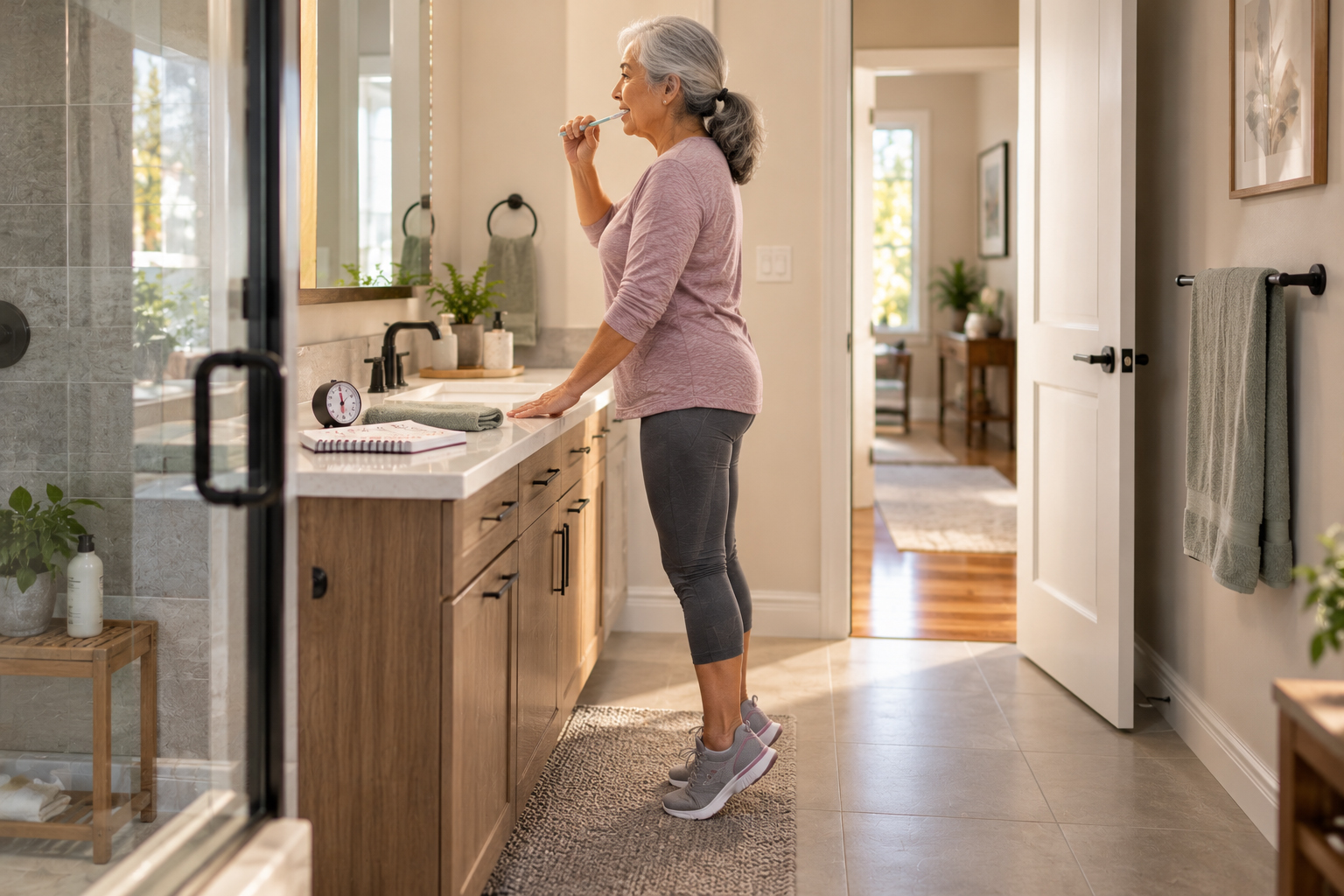
- Heel and toe raises: hold a countertop for balance and lift deliberately.
- March in place: focus on posture and even steps for 30–60 seconds.
Gradually add reps or reduce support as movements feel easier. Tracking perceived effort helps you advance safely without guessing.
Adapt Your Home and Daily Rhythm
Small environmental tweaks remove unnecessary strain: stable chairs at proper height, clear pathways, and reachable storage reduce risky reaches. Arrange frequently used items within easy reach and remove loose rugs or clutter that invite stumbles. Lighting improvements for transitions between rooms can help coordination during low-light times.
Pair movement with daily routines — stand while on phone calls, do brief balance work while brushing teeth, or perform a few controlled steps during commercial breaks. These micro-habits make recovery sustainable and less disruptive.
Conclusion
Recovery is built on small, steady choices repeated until they feel natural. Prioritize safe, functional movements and adapt your space so practice becomes effortless. Over weeks, those tiny gains add up into meaningful, lasting mobility.