Recovering comfortable, confident movement at home is rarely sudden; it comes from steady, sensible habits that respect healing. Small, repeatable actions throughout the day reduce stiffness, rebuild strength and lower anxiety about falling or reinjury. This piece outlines practical adjustments and short routines you can add to daily life without needing special equipment. The aim is to help you move more comfortably, with clarity about safety and progress.
Start modestly and build consistency before intensity. Small wins add up quickly when they are realistic and safe.
Set up a safe, inviting room
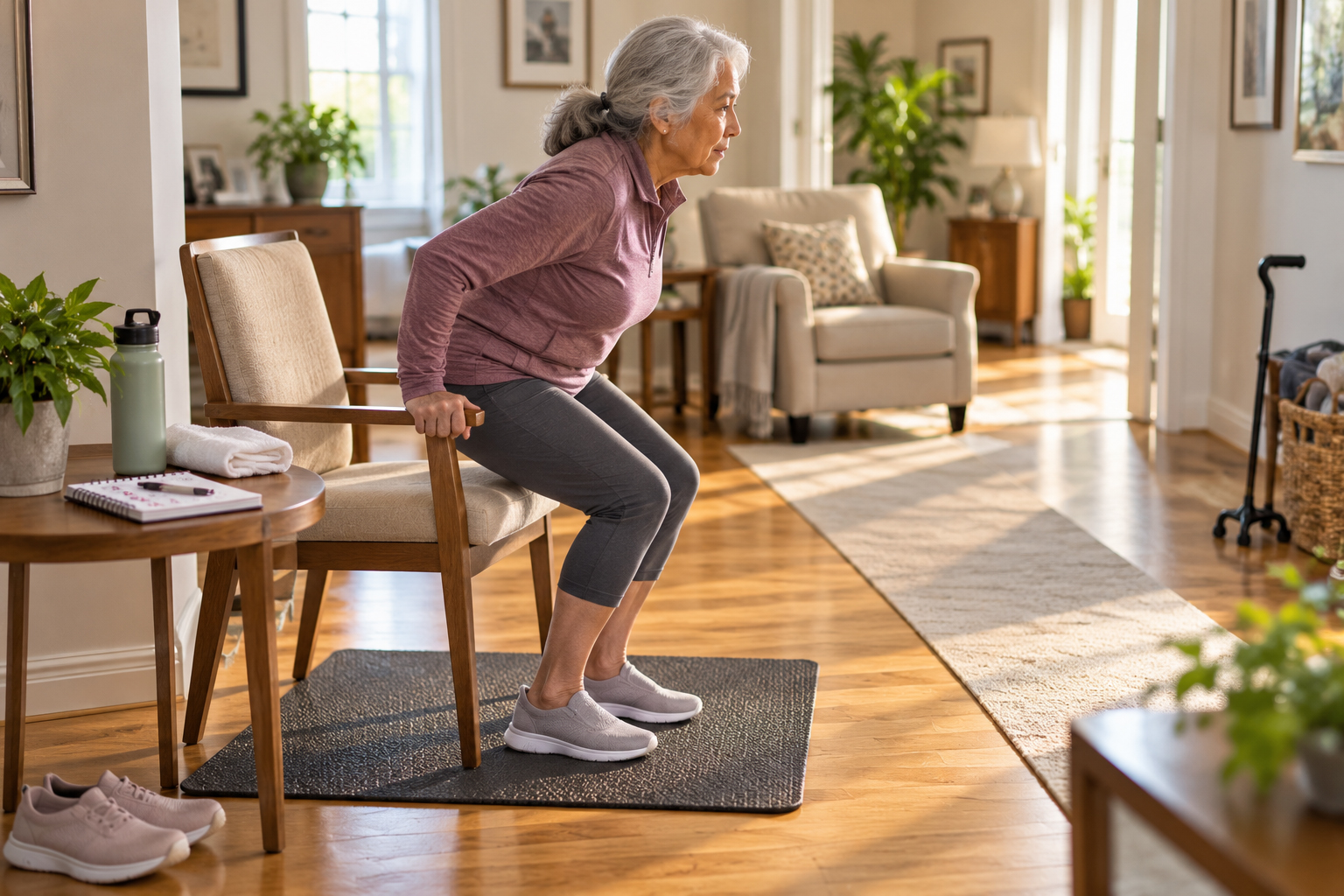
A tidy, deliberately arranged space encourages movement because it removes friction and fear. Clear a walking path, add a stable chair at a comfortable height, and place non-slip mats where you step most. Good lighting and an obvious place to rest cut down on hesitation and help maintain steady balance. Keep frequently used items within reach so you don’t stretch or twist awkwardly to grab them.
These changes are low-cost and low-effort but immediately useful. Small environmental tweaks remove barriers and make it easier to follow your routines.
Micro-practices that respect healing
Short, focused movements repeated several times each day are often more effective than one long session. Aim for brief sets of gentle mobility and strength exercises—think ankle circles, sit-to-stand repetitions, and controlled step-ups—spread across morning, midday and evening. Each session should last only a few minutes and stop if pain increases unexpectedly. Prioritize control, steady breathing and relaxed posture rather than speed or high repetitions.
Consistency matters more than intensity during recovery. These micro-practices build confidence as they become part of your routine.
How to measure progress without pressure
Track simple, meaningful markers: minutes spent moving, number of sit-to-stands, or whether you can complete a short household task without extra rest. Keep a brief daily note so you can look back and see trends instead of fixating on single-session setbacks. Celebrate small milestones, such as fewer pauses when walking or improved ease when rising from a chair.
- Time moving each day (minutes)
- Repetitions of a chosen exercise
- Tasks completed with less effort
These measures keep the focus on steady improvement rather than immediate perfection. They also flag when it might be wise to slow down and consult a professional.
Conclusion
Small, regular habits and a safer space will help restore comfortable movement over weeks and months. Focus on brief, repeatable practices that match your current abilities and track tiny improvements. Over time those modest steps add up to meaningful progress and less fear around everyday activities.