

Recovering comfortable movement at home often comes down to the small, repeatable cues you set for yourself. Rather than dramatic routines, subtle signals and consistent microprogressions let tissues adapt without triggering flare-ups. This piece outlines practical habit design principles to pace activity, protect joints, and build resilience over time. The goal is steady, sustainable improvement by shaping days around manageable prompts.
Principles of Small Signals
Small signals are intentional reminders or low-effort actions that encourage the body to move in safe, varied ways throughout the day. Examples include short standing breaks, gentle range-of-motion movements, or brief breathing resets that reduce tension. These moments reduce prolonged loading on a single posture and distribute demand across different muscles and joints. Over weeks and months, frequent low-dose movement supports circulation, lubrication of joints, and motor control without excessive strain.
Design signals by linking them to existing routines such as beverage breaks or transitions between tasks. Keep cues simple and measurable so they are easy to repeat consistently.
Daily Microprogressions and Pacing
Microprogressions mean increasing activity in very small, controlled steps that are unlikely to provoke setbacks. Start by identifying one movement goal and breaking it into modest increments such as two additional minutes of gentle activity every few days. Pacing involves balancing effort with adequate rest, using self-monitoring to guide progression rather than pushing through pain. This approach helps rebuild confidence in movement and reduces the risk of recurrent pain spikes.
Track progress with a simple log or habit app and adjust targets based on how your body responds each week. Celebrate consistency rather than intensity to reinforce long-term adherence.
Preparing Your Space for Sustainable Gains
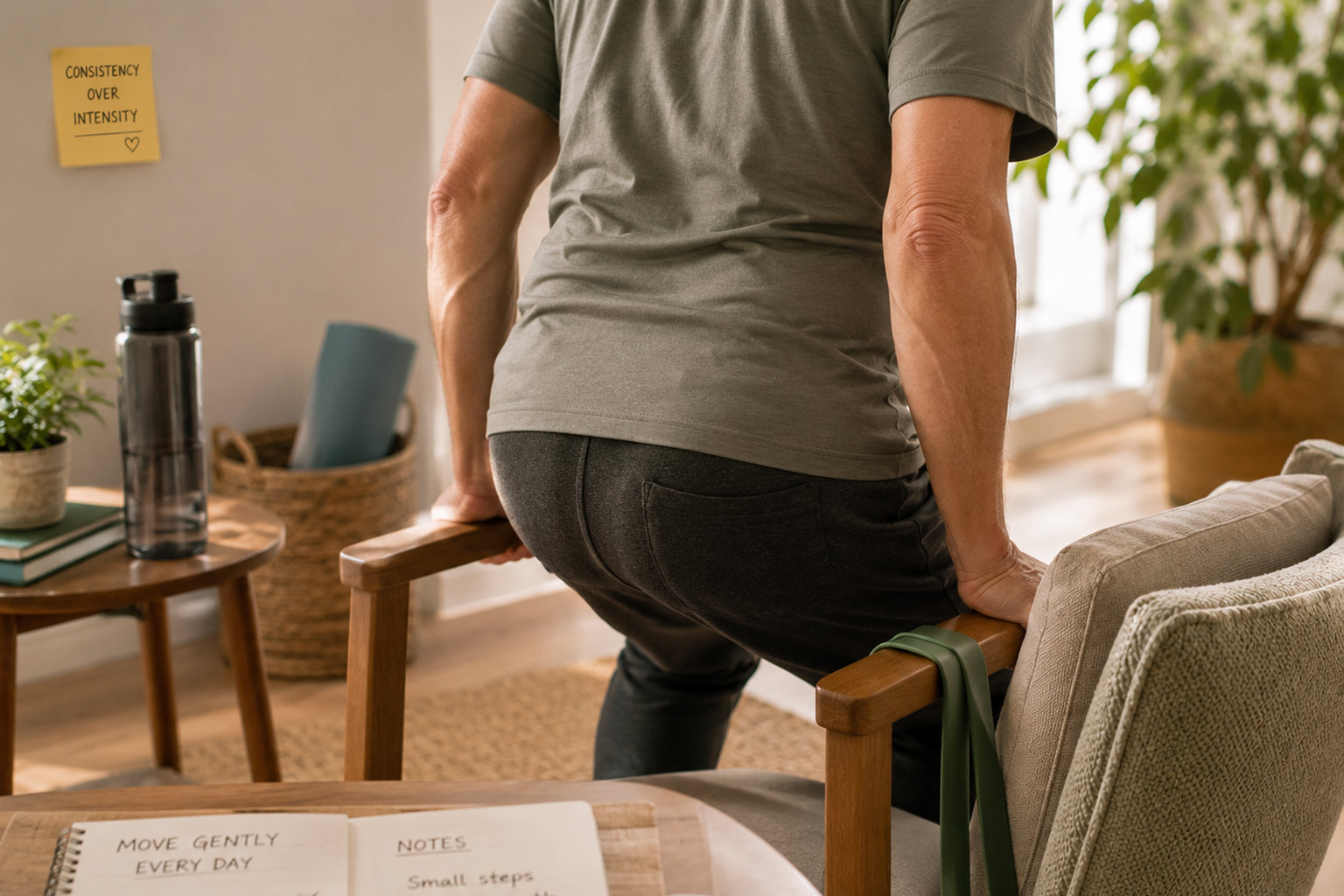
Arrange your home environment to make healthy choices easier and frictionless. Place a chair in a clear spot for seated mobility work, keep a water bottle visible to cue movement breaks, and position common items so reaching and light loading become part of daily activity. Clear pathways and stable surfaces reduce fall risk and encourage varied movement patterns during routine tasks. Good lighting and ergonomic seating further support posture and reduce compensatory strain.
- Choose one visible cue to start each day.
- Limit time spent in static postures with a simple timer.
- Keep easy-to-use tools, like resistance bands, within reach.
Small environmental tweaks remove excuses and make gentle practice a natural part of life. Over time, these changes compound into measurable improvements in function and comfort.
Conclusion
Thoughtful habit design uses small signals to encourage safe, frequent movement without overload. By pacing progress and organizing your space, you build resilience steadily and sustainably. Consistency in modest actions is the most reliable path to lasting joint comfort.










