

Managing recurring joint strain often depends more on daily routines than occasional treatments.
Small, consistent changes in how you move and arrange living spaces reduce cumulative load and lower flare-up risk.
This article outlines practical routines and environmental choices you can adopt to minimize strain while maintaining function.
Focus on simple assessments, deliberate setup, and measurable progressions that fit into ordinary days.
Assessing daily load patterns
Start by tracking common tasks that repeat through your day and note when pain or stiffness increases.
Look beyond single activities and identify cumulative patterns: standing, reaching, lifting, or holding positions for long intervals.
A brief log over several days reveals which movements accumulate strain and which setups trigger discomfort.
Use this insight to prioritize adjustments that interrupt harmful sequences and redistribute effort.
Small objective data points make it easier to choose changes that matter.
The goal is to reduce total load without giving up valued activities.
Designing movement-friendly spaces
Arrange frequently used items within comfortable reach to avoid repetitive overextension.
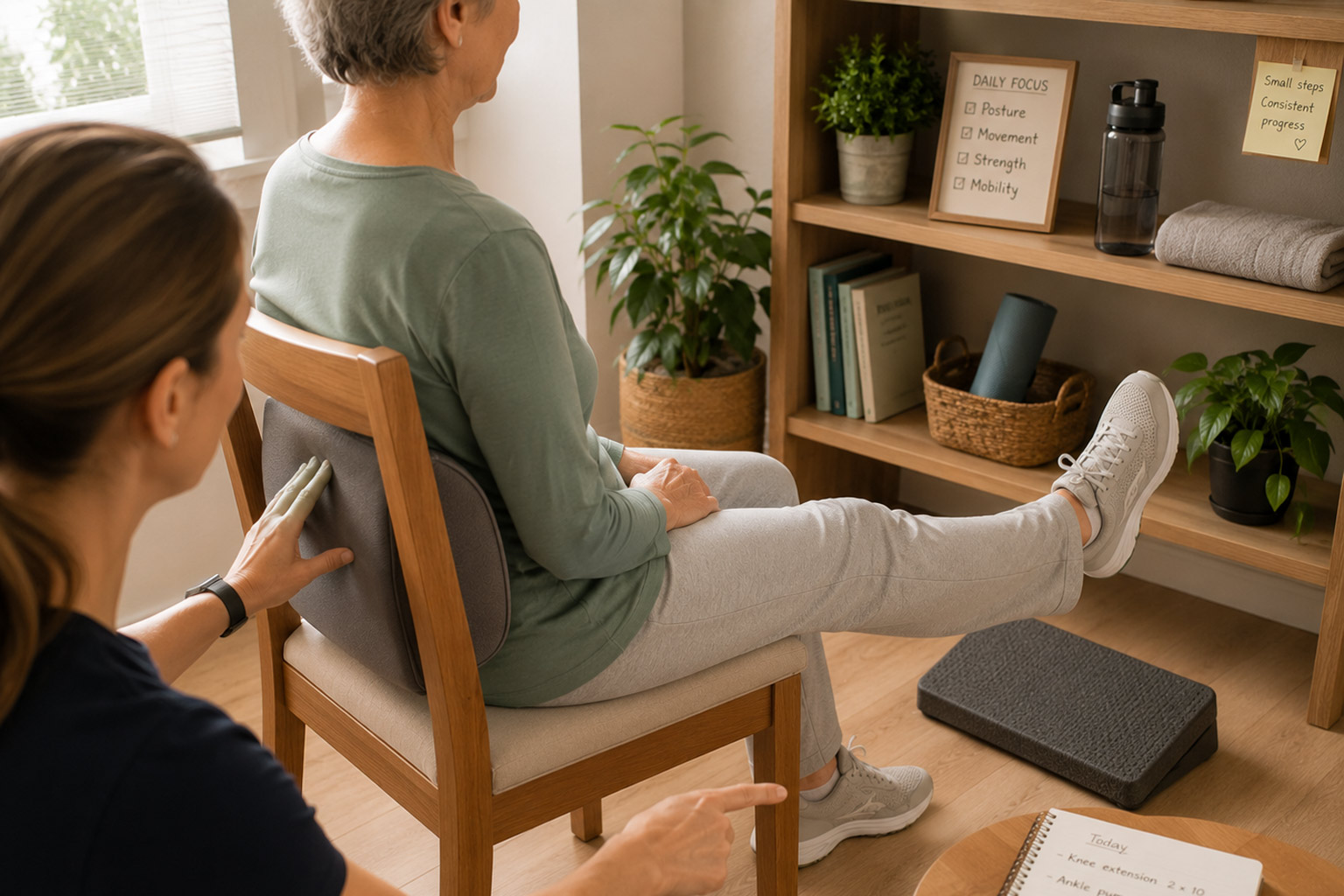
Adjust seating height, lighting, and foot support so tasks can be performed with neutral posture and minimal strain.
Consider placements that encourage micro-movements: short walks, posture resets, or task rotations every 20–40 minutes.
Environmental cues like a conspicuous water bottle or phone alarm can prompt healthy movement habits.
- Keep essentials at waist to shoulder level.
- Use a firm cushion or footrest for seated support.
- Create a clear path for short movement breaks.
Small setup changes are inexpensive and often reversible, making them easy to trial.
Iterate based on what reduces discomfort and supports your daily flow.
Progressive activity and recovery signals
Progress activity gradually, aiming for consistent small increases instead of large, sporadic jumps.
Start with short, targeted movements to build tolerance and focus on controlled technique rather than intensity.
Monitor recovery: improved tolerance, better sleep, and fewer next-day pain spikes indicate positive adaptation.
If pain increases persistently, reduce intensity or seek professional guidance to refine progression.
Balance challenge with rest by scheduling deliberate recovery windows and sleep-friendly routines.
These signals help you calibrate progress safely over weeks rather than days.
Supportive daily habits
Incorporate short warm-ups, hydration, and targeted muscle activation into daily transitions to protect vulnerable joints.
Gentle joint-specific movements before tasks increase blood flow and prime tissues for load.
Hydration, consistent sleep patterns, and attention to comfortable footwear all influence tissue resilience and recovery.
Use brief anchoring cues—like a five-minute sequence after morning routine—to make these habits automatic.
These small, repeated actions compound over weeks to reduce sensitivity and improve control.
Make habit choices that are easy to repeat and adapt to your schedule.
Conclusion
Small, consistent routine and environment changes reduce cumulative joint strain over time.
Assess patterns, adapt spaces, and progress activities with attention to recovery.
These steps foster steady improvement and help maintain long-term function.










