Reducing injuries during home workouts often comes down to a few practical, affordable adjustments.
Small changes to your space, equipment, and routine can significantly lower the chance of accidents.
This article outlines straightforward steps you can implement quickly without specialized gear or expertise.
Use these suggestions to make your exercise area safer and more reliable for regular training.
Assess Your Space
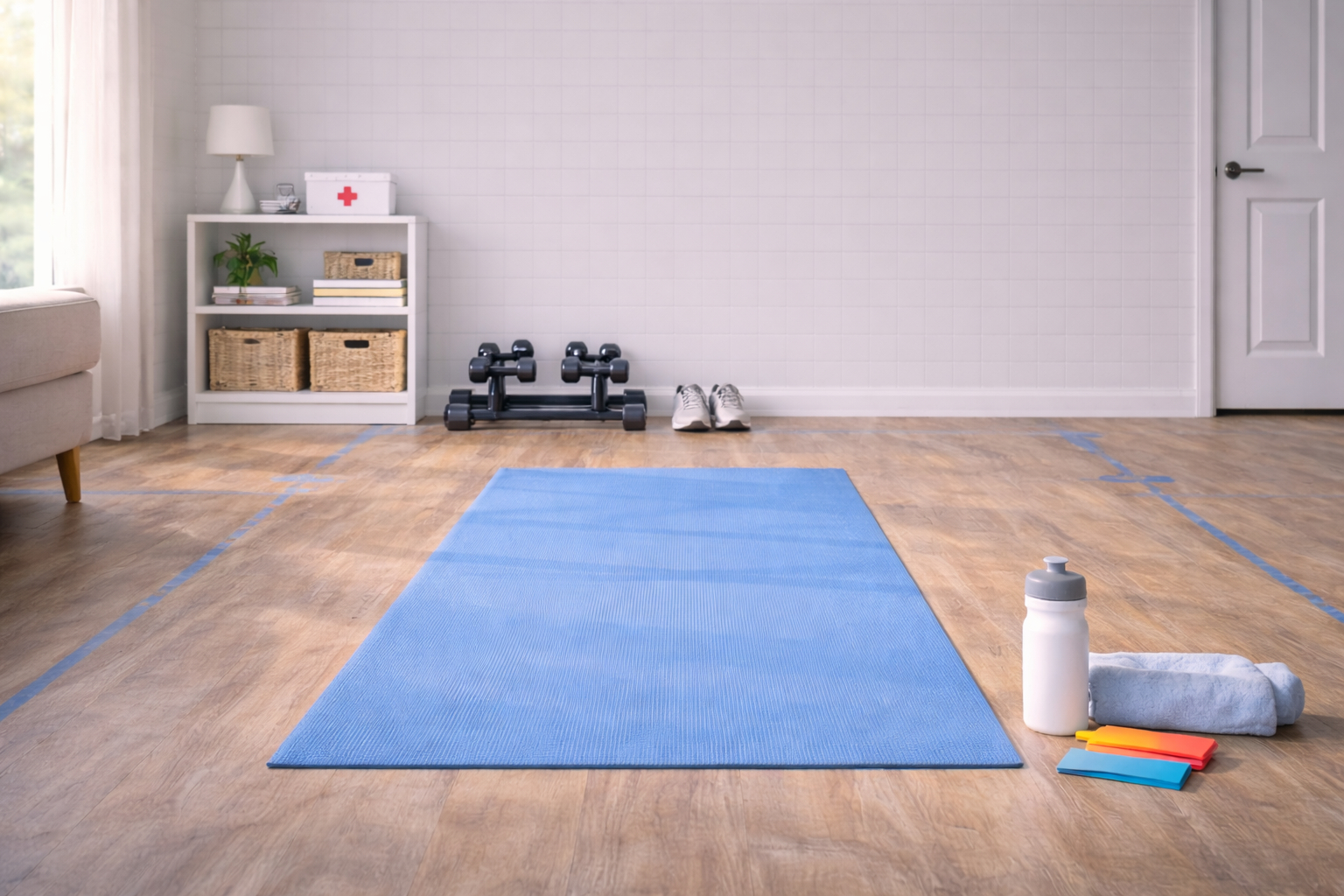
Start by scanning the area where you exercise for trip hazards and tight spaces. Clear clutter, secure loose rugs, and measure the floor area to ensure you can move freely. Check ceiling height for overhead movements and keep pathways to exits unobstructed. A consistent, dedicated spot reduces unexpected interruptions and lowers risk during high-intensity moves.
- Remove cables and small objects from the workout zone.
- Mark clear boundaries so exercises stay within a safe area.
- Keep the immediate area free of drink bottles and loose clothing.
Document changes and revisit them periodically. Small inspections before each session prevent common mishaps.
Choose Stable, Appropriate Equipment
Invest in a few key items that bring stability: a quality mat, supportive footwear, and reliable weights. Prioritize equipment that fits your space; adjustable dumbbells and compact benches are safer in small rooms. Test gear before use and replace worn straps, bands, or padding to avoid mid-exercise failures. Anchoring heavier equipment or using wall-mounted storage keeps gear from shifting unexpectedly.
Proper setup reduces both acute and overuse injuries. Know the load limits of items you rely on.
Prioritize Movement Quality and Warm-Ups
Warming up and focusing on movement patterns are essential injury-prevention tools. Spend five to ten minutes on dynamic mobility, joint activation, and light cardio before lifting or intense circuits. Practice exercises with reduced load to reinforce technique and build motor control. When fatigue sets in, reduce intensity rather than pushing through compromised form.
Consider filming a set occasionally to self-check alignment. Professional guidance can accelerate safe progress when needed.
Visibility, Footing, and Emergency Readiness
Good lighting and clear sightlines help you maintain balance and avoid obstacles during fast movements. Improve traction with non-slip mats, appropriate socks or shoes, and avoid wet surfaces after cleaning. Prepare for emergencies by keeping a phone nearby and a small first-aid kit accessible.
Know simple responses for strains or falls and stop activity if pain persists. A brief cooldown supports recovery and reduces delayed soreness.
Conclusion
Small, consistent adjustments make home workouts markedly safer.
Routine checks of space, gear, and movement quality prevent many common injuries.
Apply these steps to keep training effective and sustainable.