After a medical treatment or a period of limited activity, the first days at home matter more than many people expect. Small, deliberate changes in how you arrange rooms and approach movement reduce discomfort and lower the chance of setbacks. This piece focuses on practical, low-cost adaptations that help restore everyday motion without overwhelming recovery. Read on for straightforward steps you can try today.
Identify Where Movement Feels Risky
Start by walking through your living space and noting places that feel awkward, tight, or slippery when you move. Pay attention to transitions — steps, thresholds, rugs, cluttered hallways — and moments when you have to twist, reach, or balance uncomfortably. A quick checklist keeps observations concrete and helps you prioritize what to fix first. This initial audit prevents simple hazards from becoming recurring obstacles to progress.
- Entryways with poor lighting or loose mats
- Bathrooms without stable surfaces near the toilet or shower
- High shelves or low cabinets that force bending or reaching
Use these notes to decide which rooms to address first and which fixes can wait. Small adjustments often yield immediate benefits to comfort and confidence.
Make Small, Practical Home Adjustments
Invest in a few targeted items rather than a full home overhaul: a non-slip bath mat, a sturdy shower stool, a lamp for dark corners, and a chair at a comfortable height. Clear walking paths of shoes, cords, and loose rugs to reduce tripping risks. Rearrange everyday items so the things you use most often are within easy reach at waist level. These simple swaps limit awkward movements and make daily tasks less taxing while you heal.
- Place frequently used items on middle shelves
- Secure rugs with double-sided tape or remove them
- Add a night light for safer nighttime trips
Budget-friendly fixes can be surprisingly effective, and many are reversible once you no longer need them. Focus on functionality over aesthetics to keep the process simple.
Short Movement Habits That Help Daily Function
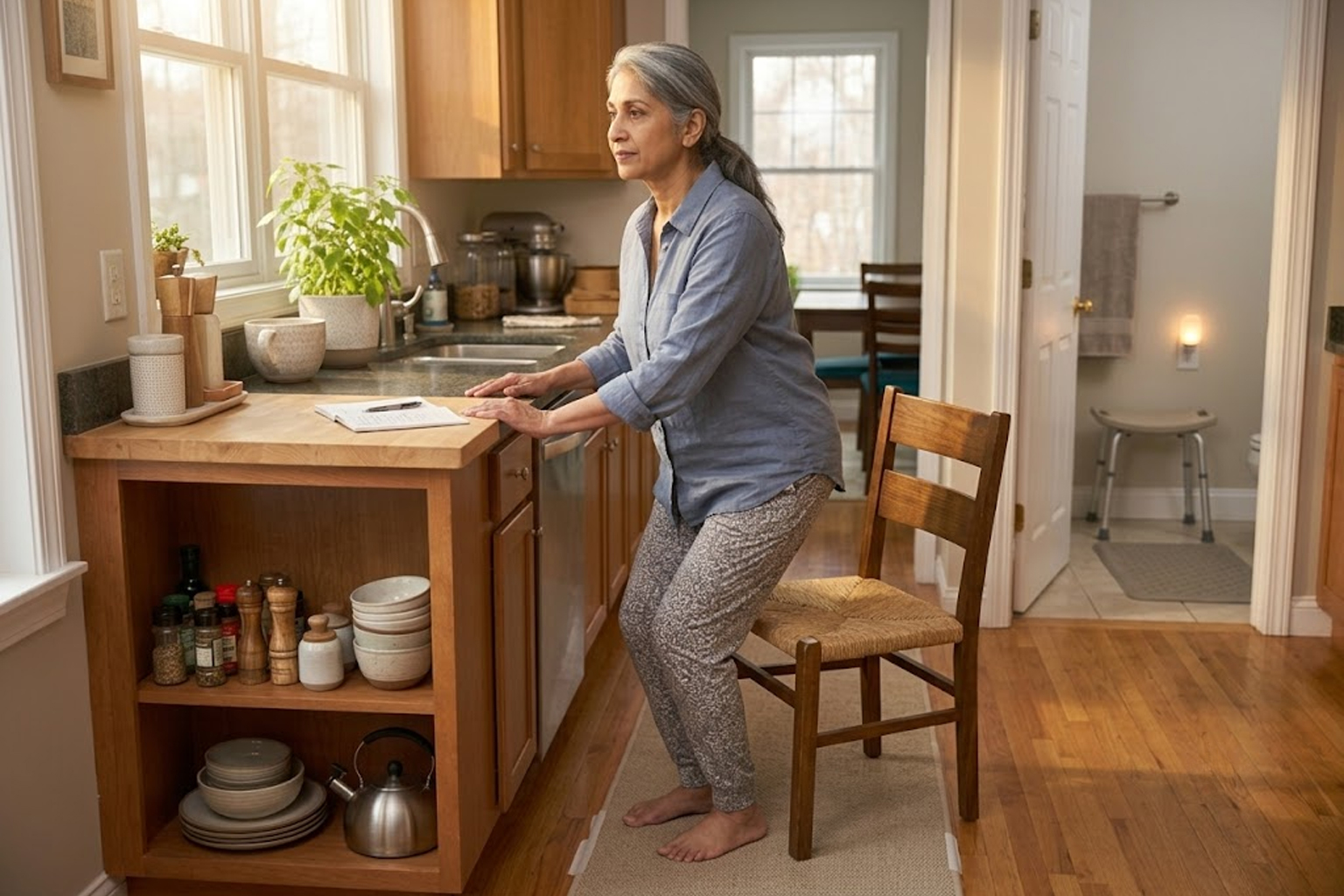
Rather than long exercise sessions, try micro-sessions that build endurance: a few sit-to-stand repetitions each hour, short balance holds while brushing teeth, or gentle walking laps around a room. These habits maintain joint mobility and reduce stiffness without creating fatigue. Consistency matters more than intensity at this stage, so pick tiny goals you can meet daily. Celebrating small wins keeps motivation steady and reduces the temptation to rush back into old routines.
Note how your body responds and scale activity gradually to avoid flare-ups. Pause and rest when needed; recovery is not linear, and small setbacks are normal.
Track What Improves and When To Ask For Support
Keep a simple log of what feels easier each day — stair tolerance, time standing, or pain during specific tasks — to spot patterns and adjust home changes accordingly. If balance problems persist, new swelling appears, or pain increases, contact a clinician or therapist for tailored advice. Professional guidance can refine your at-home plan and suggest safe progressions. Early consultation prevents frustration and helps you move forward with confidence.
Monitoring progress also highlights successful changes and shows where further adjustments will help. Use your notes to shape conversations with care providers.
Conclusion
Small, sensible adaptations at home can make a big difference in how comfortably you move after treatment. Focus on clearing hazards, adding a few practical aids, and building short, repeatable movement habits that respect your limits. Track progress and seek professional advice if problems persist to keep recovery steady and safe.