Managing chronic pain at home requires thoughtful, evidence-based movement that prioritizes safety and consistency.
This guide introduces practical strategies to reduce discomfort, build resilience, and improve daily function.
It emphasizes gentle progression, sensible exercise choices, and attention to posture and pain signals.
Use these principles to create a sustainable home routine that complements medical advice.
Overview
Chronic pain often benefits from regular, low-impact activity that maintains mobility and reduces deconditioning. Exercise choices should be tailored to pain type, current fitness level, and any physical limitations. Start with short sessions focusing on range of motion, low-resistance strengthening, and gentle aerobic activity. Consultation with a healthcare professional can clarify safe boundaries and any necessary modifications. Understanding individual triggers and daily pain patterns helps tailor activity selection and pacing. Keeping realistic goals prevents discouragement and supports steady improvement.
Benefits of gentle, progressive exercise
Consistent movement supports circulation, muscle tone, and mental well-being without exacerbating symptoms. Progressive loading—gradually increasing repetitions or resistance—builds tolerance and reduces flare-up risk. Mind-body techniques such as controlled breathing and pacing can improve pain coping and adherence. Tracking small improvements encourages confidence and helps identify which activities are most helpful. Exercise also contributes to improved sleep and mood, which can indirectly reduce pain perception.
Designing a safe home routine
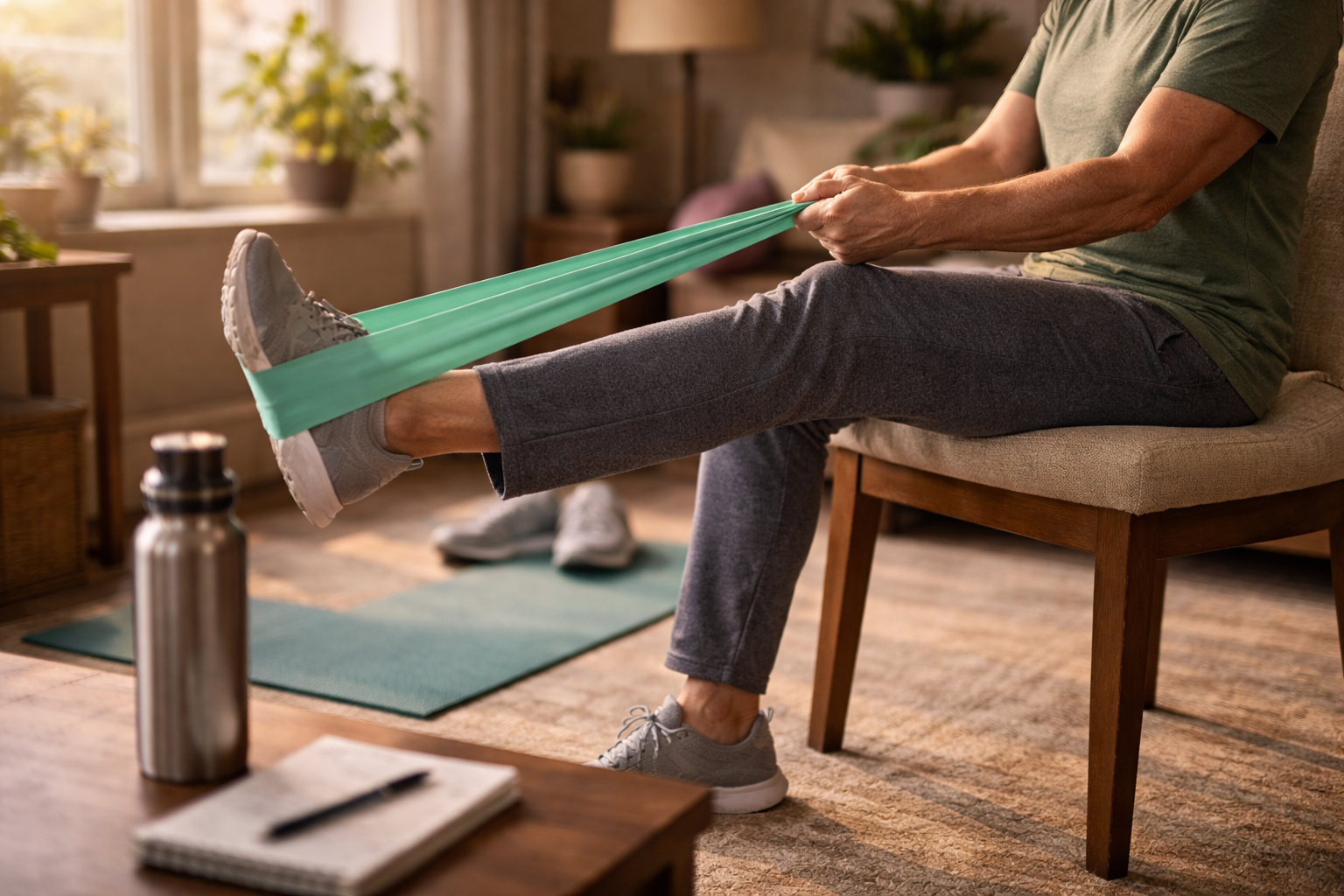
Begin sessions with a warm-up to increase flow and reduce stiffness; five to ten minutes of gentle marching or joint mobility is effective. Include three core elements: mobility drills, strength exercises with bodyweight or light bands, and low-impact cardio like cycling or brisk walking. Keep sessions brief but frequent—ten to twenty minutes several times daily can be more manageable than one long workout. Respect pain signals: distinguish between muscle effort and sharp or worsening pain, and reduce intensity if pain spikes. Adapt intensity using timers or perceived exertion and prioritize movements that maintain independence in daily tasks.
Monitoring progress and maximizing safety
Record activity, pain levels, and functional changes to spot patterns and guide modifications. Incorporate rest and recovery strategies such as sleep hygiene, hydration, and simple stretching. Use supportive equipment—cushioned footwear, a stable chair, or a mat—to minimize joint stress. Seek professional advice if pain suddenly changes, neurological symptoms appear, or function declines. If progress stalls, consider a referral to a physical therapy specialist for tailored programming and reassessment.
Conclusion
Adopting thoughtful, gradual exercise at home can lessen chronic pain and improve daily life when done safely.
Focus on consistency, appropriate intensity, and listening to your body while following any medical guidance.
Small, steady gains over time form a foundation for greater mobility and wellbeing.