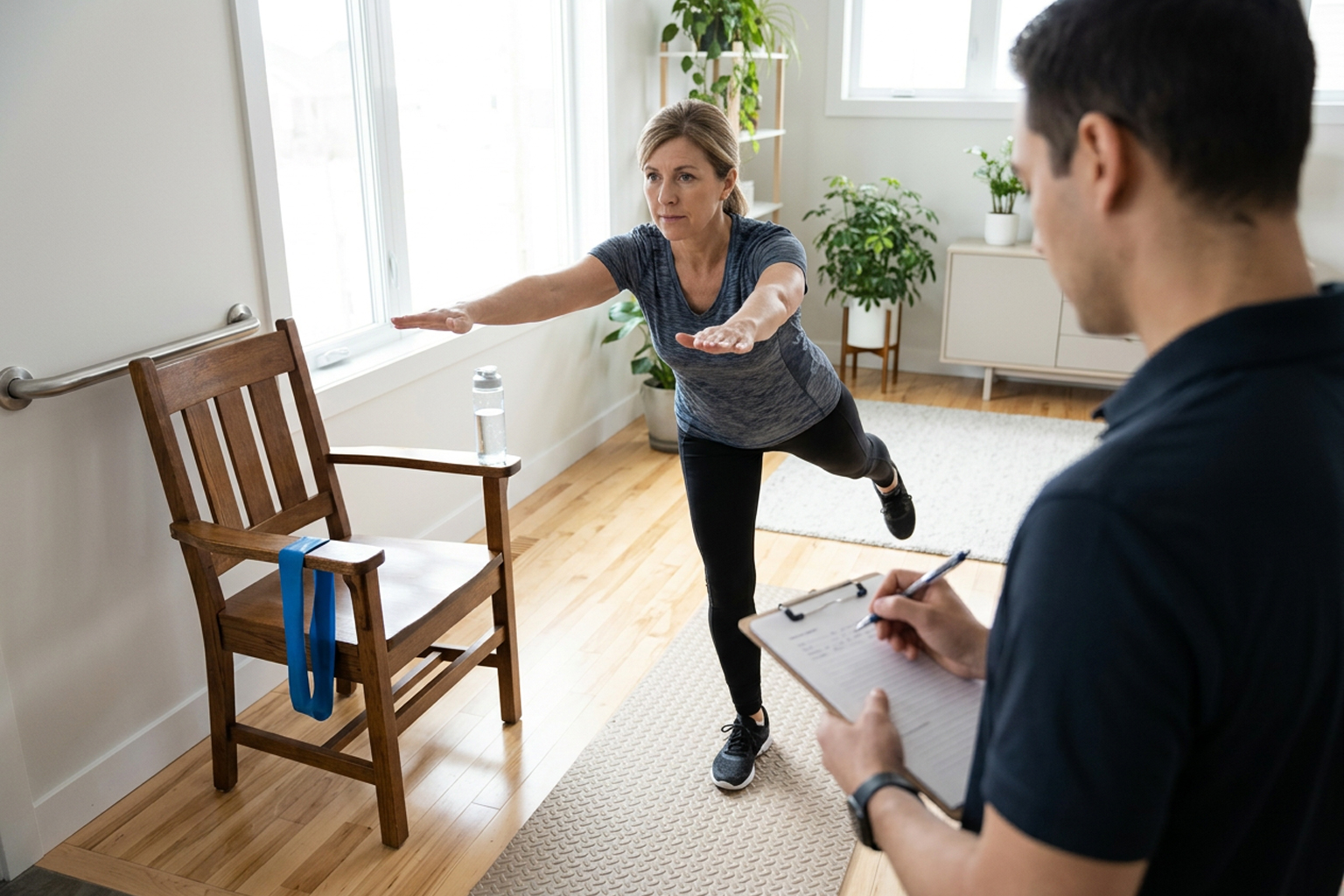
Recovering movement after medical treatment often relies on consistent, safe daily habits performed at home. Small, deliberate routines can rebuild strength, balance, and confidence without overwhelming the body. Emphasizing quality of motion, gradual progression, and attention to symptoms helps reduce reinjury risk. This guide outlines practical, rehab-focused approaches you can adapt to your condition and pace. Use these ideas alongside professional advice for a balanced home recovery plan.
Assess Readiness and Set Realistic Goals
Begin by checking medical clearance and understanding any movement restrictions specific to your recovery. Set short-term goals that focus on daily function—standing tolerance, stair confidence, or simple transfers—rather than ambitious performance targets. Break each goal into small, achievable steps scheduled across the day to avoid overexertion. Clear, measurable checkpoints make steady progress visible and motivating.
Record these steps in a simple log to guide daily choices. Revisit goals weekly and adjust based on how your body responds.
Prioritize Pain-Free Movement and Gentle Strength
Focus first on restoring pain-free range of motion with controlled, slow repetitions that feel manageable. Incorporate low-load strengthening—standing heel raises, seated leg extensions, or light resistance bands—to rebuild basic force production. Balance exercises such as single-leg stands or weight shifts enhance stability and proprioception without heavy impact. Start with low volume and increase reps or sets before adding resistance.
If pain increases, reduce intensity and consult a clinician. Prioritizing technique over speed prevents compensations that can slow recovery.
Adapt Your Environment for Safer Practice
Optimizing your home reduces risk and supports independent practice; clear walkways and ensure good lighting around transition zones. Use stable support options such as chairs with arms, grab bars by beds or in bathrooms, and non-slip mats where needed. Position frequently used items at reachable heights to avoid unsafe reaching or twisting. Small, inexpensive changes often yield the biggest safety gains.
- Clear loose rugs and cords from pathways.
- Add stable seating with armrests near common areas.
- Keep a phone and water within easy reach while exercising.
An environment that matches your current abilities makes daily repetition simpler and safer. Reassess setup as mobility improves to gradually remove supports.
Vary Movements and Pace Progression
Introduce variety across three domains: mobility, strength, and balance, rotating focus to prevent overuse and boredom. Use a paced progression—more repetitions first, then more challenging positions, then increased resistance—so tissues adapt gradually. Include short walking sessions if appropriate, interspersed with rest breaks to manage fatigue. Regular variability maintains engagement and promotes comprehensive recovery.
Document subjective effort and fatigue to guide progression. Celebrate small wins to maintain momentum.
Track Progress and Watch for Warning Signs
Keep a simple diary noting pain levels, fatigue, and functional gains to inform adjustments and conversations with providers. Red flags such as new sharp pain, increasing swelling, dizziness, or neurologic changes warrant prompt evaluation. Balance setbacks with rest days and reduced intensity rather than abrupt stops to preserve confidence. Telehealth check-ins or periodic therapist reviews can refine the program safely.
Sharing progress notes with your clinician helps tailor recovery pacing. Honest reporting prevents avoidable setbacks.
Conclusion
Consistent, rehab-focused daily habits restore safe movement by combining gentle progression, environmental support, and careful monitoring. Small, measurable steps and regular reassessment help build strength, balance, and confidence without undue risk. Use these strategies with professional guidance to create a sustainable home recovery routine.