Recovering movement after an injury or treatment often happens in small, steady steps at home. A few deliberate adjustments to daily habits and the layout of common rooms can reduce pain, lower fall risk, and make movement more comfortable. This piece focuses on simple, practical actions you can use without special equipment or medical intervention. None of these replace professional advice, but they can make day-to-day mobility safer and easier while you follow prescribed care.
Begin with gentle, measurable movements
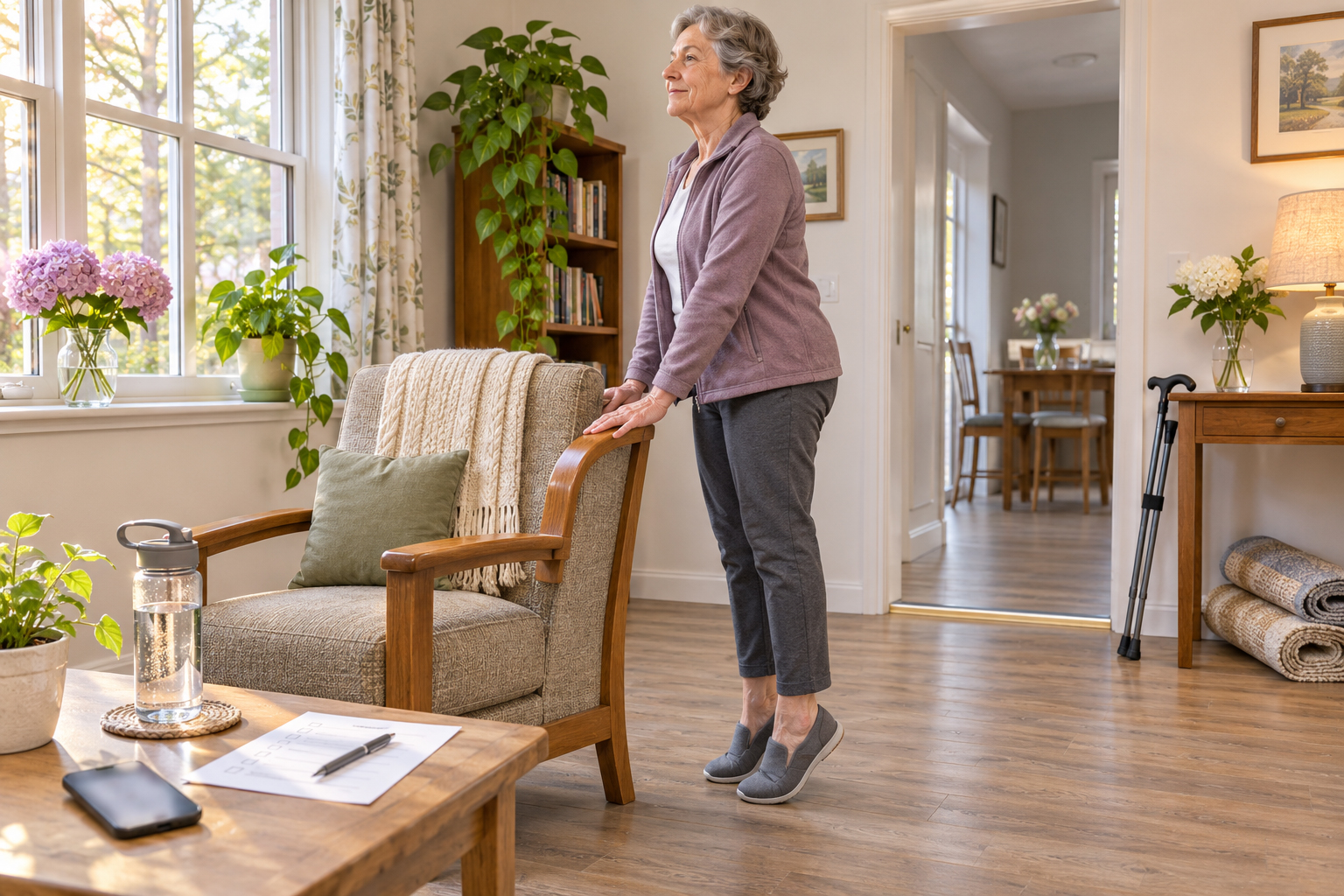
Early movement should be predictable and gradual, prioritizing control over intensity. Choose two to three small exercises—seated leg lifts, standing heel raises, or controlled sit-to-stand repetitions—that fit into normal routines. Aim for brief sets of repetitions spread through the day rather than long, tiring sessions that provoke soreness. Paying attention to steady breathing, comfortable range of motion, and pain thresholds helps keep progress steady.
- Seated leg lifts for hip and knee control
- Sit-to-stand repetitions from a stable chair
- Standing heel raises to strengthen ankles
Track how many repetitions feel comfortable and increase slowly when movements stay pain-free. Small, measurable gains build confidence and reduce the chance of setbacks.
Tune your space for safer daily movement
A few environmental changes make ordinary movement less risky and less exhausting. Clear high-traffic paths, remove loose rugs, and place frequently used items within easy reach to avoid unnecessary bending or twisting. Improve lighting so steps and thresholds are visible, and consider temporary supports—like a sturdy chair with arms—near activity areas. These adjustments lower cognitive load during transitions, letting focus stay on balance and technique.
- Clear pathways free of clutter
- Bright, even lighting for thresholds
- Storage that reduces bending and reaching
- Sturdy chairs with armrests in key spots
Revisit the layout as mobility changes; what was safe one week might need rethinking the next. Little refinements often have an outsized effect on daily comfort.
Short routines and realistic progress tracking
Consistency matters more than intensity when rebuilding everyday movement at home. Build routines around existing habits—after brushing teeth, do two minutes of balance practice; when making coffee, perform ankle circles. Use a simple checklist, phone reminder, or a marked calendar to note frequency rather than aiming for perfect performance. Celebrating steady adherence encourages repetition and reduces pressure to rush progress.
- Keep sessions short: one to five minutes each
- Log activity with a checklist or simple app
If movement brings increased pain or unexpected swelling, pause and consult the care team rather than pushing harder. Otherwise, keep routines brief, predictable, and slowly progressive.
Conclusion
Small, intentional changes to how you move and how your home is arranged make recovery more manageable. Focus on short, regular practices, clear pathways, and tracking habits that signal safe progress. These modest steps support steady recovery while you follow any clinical guidance.