Recovering from an injury or managing persistent joint pain becomes easier when your daily routine supports movement instead of fighting it.
Small, consistent choices at home — where most activity happens — can cut strain and reduce fall risk without dramatic changes.
This article lays out simple safety checks, short movement habits, and everyday tools that make moving easier and more comfortable.
Start with one or two adjustments and build from there; steady progress matters more than perfection.
Quick safety checks that prevent accidents
Begin with a short, systematic walk-through of the rooms you use most. Look for loose rugs, electrical cords across walkways, low furniture that creates awkward paths, and dim corners where depth perception fails. Swap incandescent or low-output bulbs for brighter, warm-toned lights and place night lighting along hallways. Secure grab points near steps and bathroom transitions and keep frequently used items within easy reach to avoid sudden bending or twisting.
Do this check weekly until the changes feel natural. Small fixes now—tacking down a rug, moving a chair—often prevent painful setbacks later.
Short movement habits to protect joints
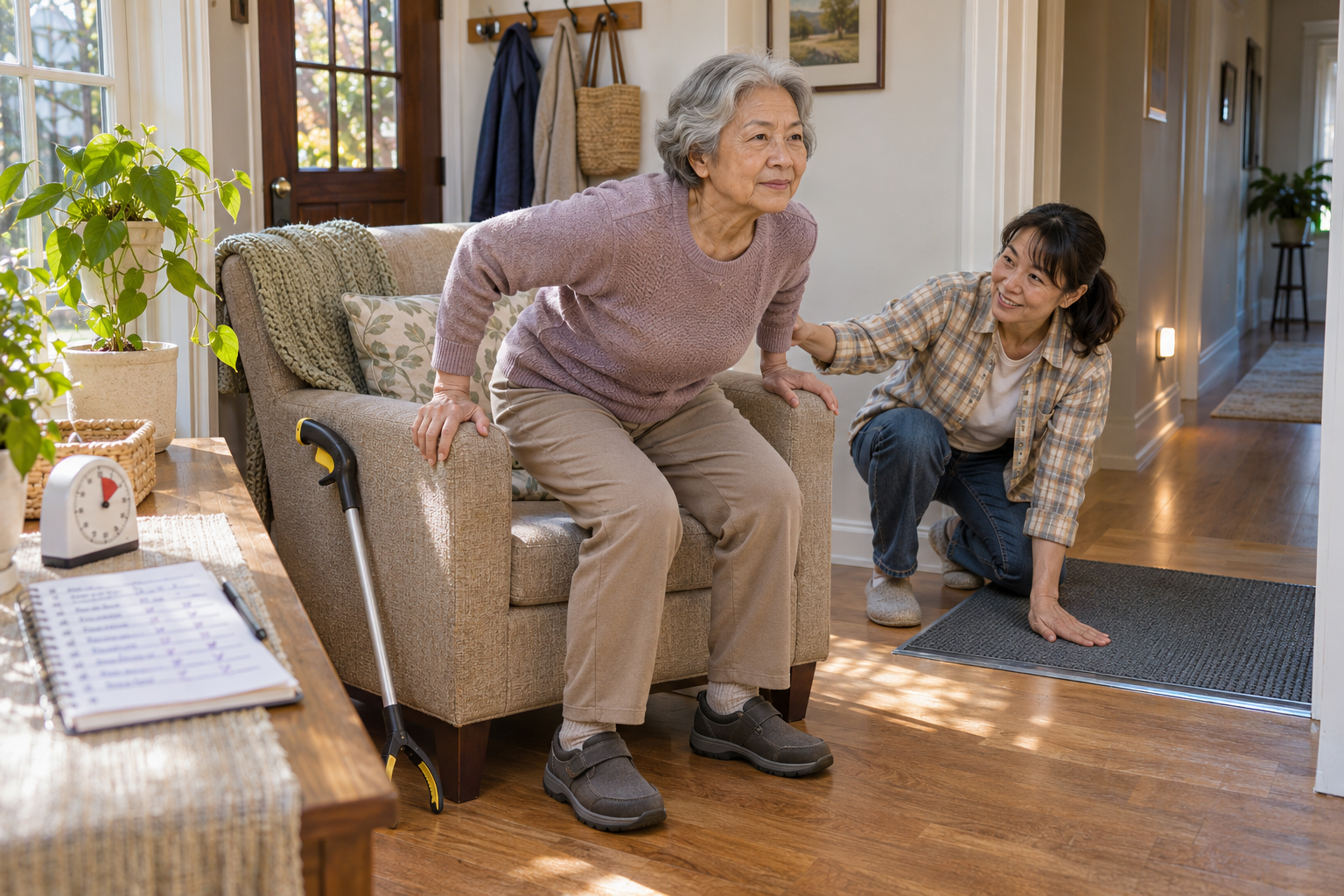
Micro-sessions spread through the day protect joints better than one long, intense bout of activity. Practice controlled sit-to-stand repetitions from a steady chair, march in place for 30–60 seconds a few times daily, and include gentle heel and toe raises to strengthen ankles and calves. Focus on steady breathing, slow transitions, and avoiding sudden reaches that twist the spine or hips. These short habits maintain blood flow, reduce stiffness, and build confidence for everyday tasks.
Set simple timers or link a movement to a regular activity like making tea so it becomes part of your routine. Consistency matters more than length—ten minutes several times daily adds up.
Smart use of everyday tools and furniture
Choose furniture and tools that reduce strain: a chair with arms helps push-to-stand motions, a raised toilet seat shortens the range needed to sit and stand, and non-slip mats in wet areas cut fall risk. Proper shoes with firm soles and good grip make walking safer indoors. For short-term needs, consider a light cane or reacher to avoid bending for low objects, and keep a small step stool with handholds for higher access that requires one-handed support.
- Raised chair or cushion
- Non-slip bath mat
- Lightweight grabber/reacher tool
Use tools to support independence, not as a permanent crutch; gradually reduce reliance as strength and balance improve. If unsure about an aid, check with a clinician or therapist for the right fit.
Schedule and track progress without pressure
Create a short, realistic plan: two safety checks per week, three micro-movement sessions daily, and one simple equipment swap this month. Keep a brief log of what you did and how your joints felt afterward to spot patterns—better or worse—so you can adjust activity and rest. Celebrate small wins like fewer stumbles, less morning stiffness, or easier stair use; these are meaningful signs of progress.
Be patient and expect fluctuations; healing and adaptation are rarely linear. Make gradual changes and revisit priorities every few weeks.
Conclusion
Small, consistent at-home adjustments cut strain and lower fall risk while respecting how your body feels.
Focus on safety checks, brief movement habits, and sensible tools you can live with day to day.
Over time those modest choices add up to more comfortable, confident movement around the house.