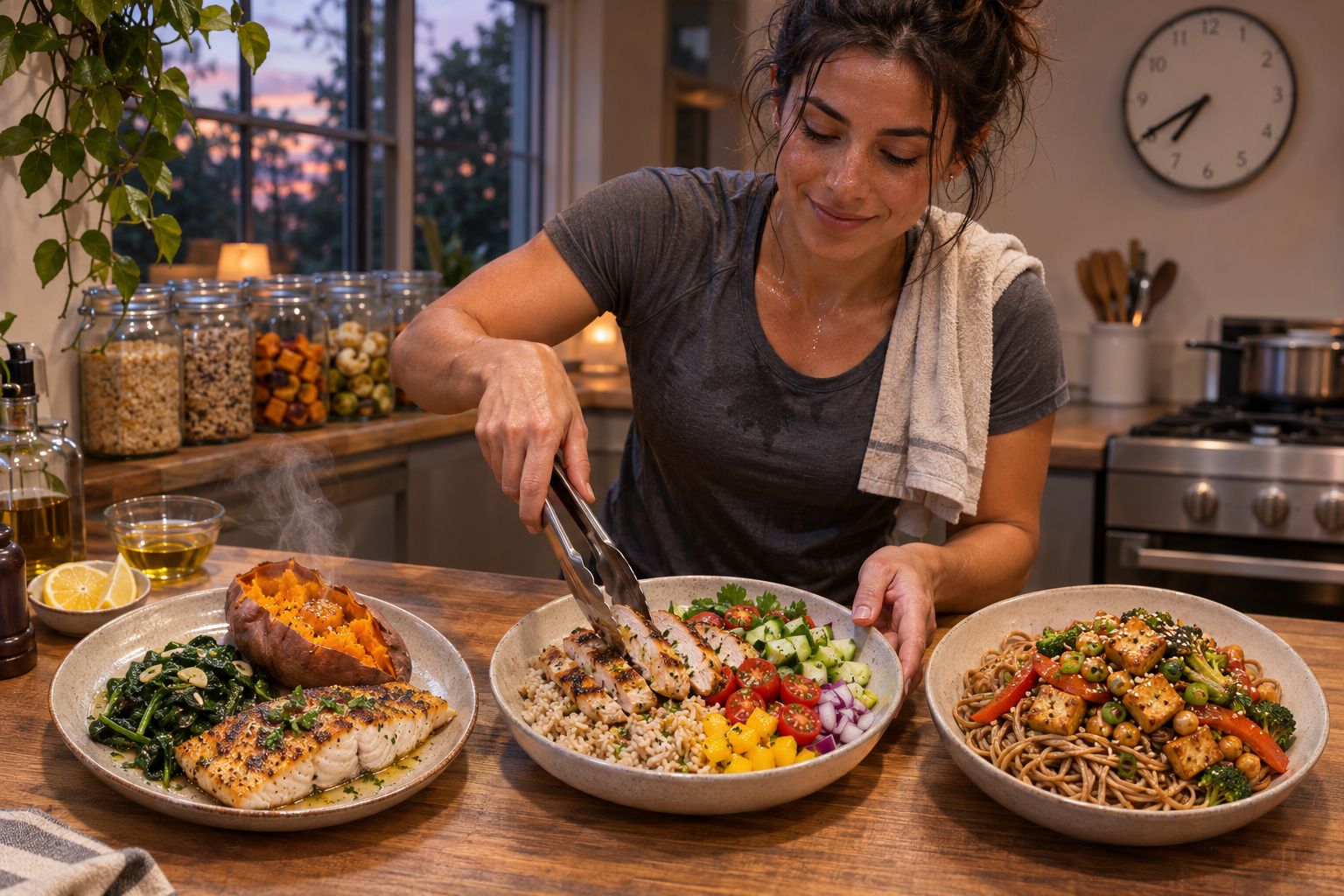
After a home workout the right evening plate can speed recovery and keep energy steady for the next session. Small shifts at dinner—more protein, some starch, and a serving of vegetables—often produce the biggest returns without extra cooking time. This article offers practical meal templates and timing tips you can use on busy weeknights. No fads, just straightforward plates that fit a typical kitchen and a realistic evening routine.
Why your dinner matters for recovery
What you eat after evening training affects muscle repair, glycogen restoration, and sleep quality. Protein provides the amino acids muscles need to rebuild, while carbohydrates refill depleted energy stores and support hormonal balance. Including vegetables or a salad improves nutrient density and helps digestion, which matters close to bedtime. Lastly, a modest amount of fat slows digestion and can make the meal satisfying without overloading your stomach.
Think of dinner as targeted maintenance rather than a reward meal. With a reliable template, you can hit key goals without thinking about recipes every night.
Three simple plate templates
These templates use a protein-first approach, paired with a modest starch and plenty of vegetables, so you get the right balance without measuring obsessively. Each plate aims for roughly a palm-sized portion of protein, a cupped-hand of carbs, and at least a fist of veg; adjust portions up or down based on appetite and workout intensity. They work with roasted leftovers, quick-cooked grains, or canned beans, and can be assembled in ten minutes with basic staples. Rotate these three frameworks across the week to keep meals interesting and nutritionally consistent.
- Fish + sweet potato + steamed greens: Roast or pan-sear fish, microwave a sweet potato, and wilt spinach with garlic.
- Chicken grain bowl: Sliced grilled chicken, cooked brown rice or quinoa, mixed raw veggies, and a drizzle of olive oil and lemon.
- Legume stir-fry: Tofu or chickpeas sautéed with mixed vegetables over whole-grain noodles or rice, finished with soy or tahini.
Each option is flexible: swap proteins, change the starch, and add herbs or a simple dressing to vary flavors without complicating cooking.
Timing, prep, and grocery basics
If your workout ends less than two hours before bed, keep the meal lighter and focus on protein with a small carbohydrate source to avoid digestive discomfort. Batch-cook grains and roasted vegetables once or twice a week to make assembly fast, and keep a few frozen portions of lean protein on hand for nights when you’re rushed. Pantry staples like canned beans, jarred tomato sauce, whole-grain pasta, and olive oil make it easier to follow templates without an elaborate shopping list.
Small planning steps—prepping a grain, portioning protein, and pre-washing greens—cut friction and increase the chance you’ll eat well after training.
Conclusion
Simple, repeatable evening plates that pair protein with a modest starch and vegetables are the most practical way to support at-home training. Use three templates to rotate meals, batch-prep key elements, and adjust portion size to match workout intensity and hunger. Over time these small habits maintain recovery, energy, and consistency without extra complexity.