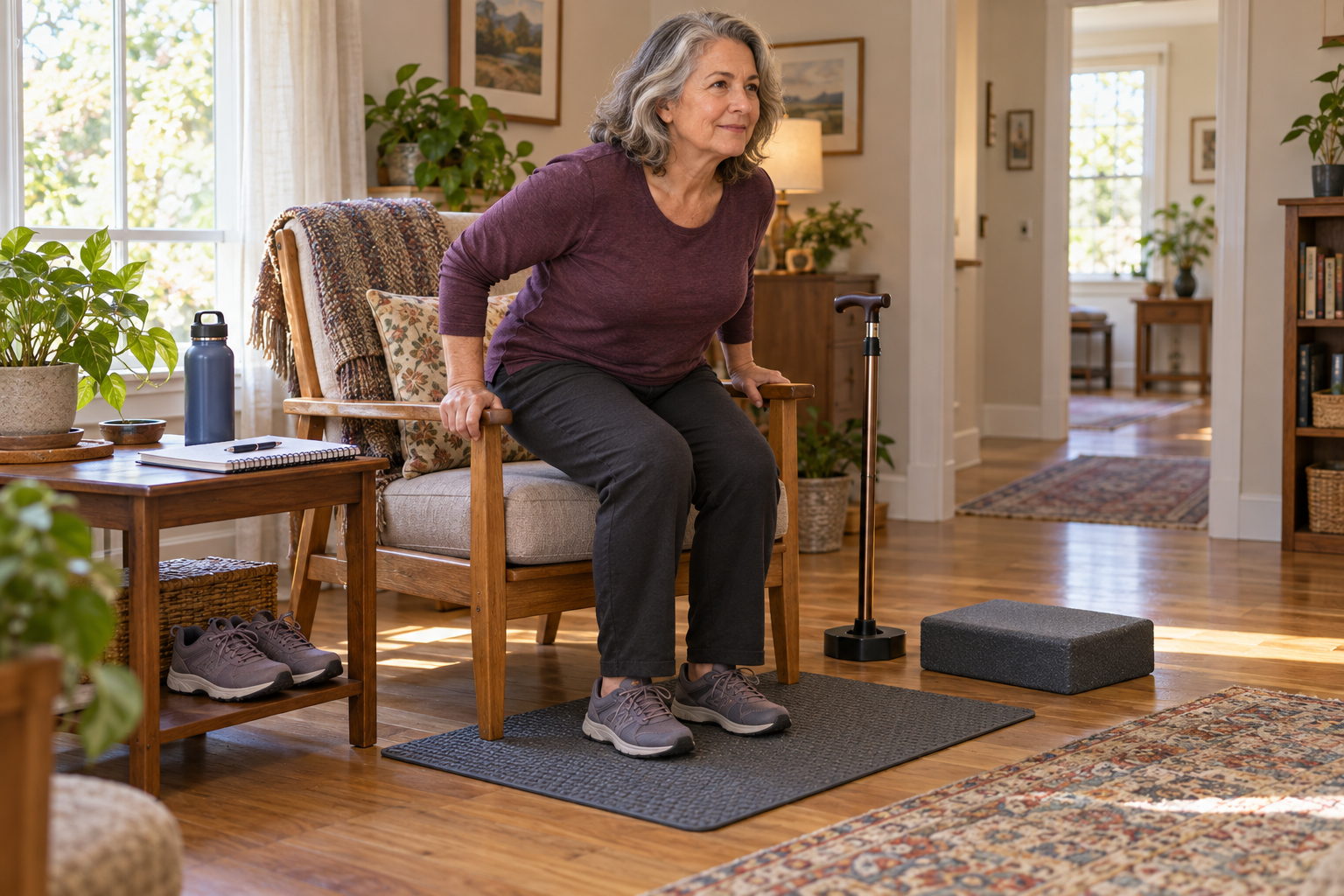
Recovering movement at home is more about steady habits than dramatic sessions. Short, intentional actions done often help rebuild strength without overtaxing tissues. Listening to your body and working just below sharp pain keeps progress reliable and safe. These small daily moves can preserve function while you heal.
Start Small and Prioritize Comfort
Begin each session with gentle breathing and a few range-of-motion repetitions to loosen stiff joints. Keep sessions brief — five to ten minutes several times a day — and stop if you feel sharp or worsening pain. Comfort matters: use cushions, supportive shoes, or a chair for stability while you practice. Regular, tolerable practice builds confidence without forcing the body.
Track what feels better over a week and repeat those safe patterns. Avoid pushing through severe discomfort; that slows recovery and undermines gains.
Make Your Home Movement-Friendly
Small environmental tweaks reduce risk and make practice easier to keep up with. Clear pathways, secure rugs, and stable seating encourage safer transitions and standing exercises. Good lighting and reachable frequently used items cut down awkward stretching or sudden movements that can trigger setbacks. Keeping essentials handy makes steady practice more likely.
- Place a sturdy chair in an open space for sit-to-stand practice.
- Use a non-slip mat in areas where you stand to exercise.
- Keep a small step or block to practice controlled stepping and balance.
Simple, inexpensive fixes often yield the biggest day-to-day benefits. When movement is easier and safer in your space, consistency follows.
Focus on Functional Strength and Balance
Prioritize exercises that match everyday tasks: sit-to-stand, heel raises, single-leg weight shifts, and gentle core engagement. Aim for slow, controlled repetitions rather than speed or quantity, emphasizing quality of movement. Use support when needed and reduce range if a motion causes discomfort. Over time, increase repetitions or reduce support in small increments to build real-world ability.
Functional gains translate directly to confidence when walking, climbing stairs, or rising from a chair. Small improvements compound into safer daily independence.
Plan Easy, Measurable Progress
Set clear, tiny goals: add two more repetitions, stand for an extra minute, or walk a slightly longer route in your home. Keep a simple log of sessions, pain levels, and what felt easier to spot trends. Rest and recovery are part of progress — schedule quieter days and avoid long, fatiguing sessions that can cause setbacks. Celebrate modest wins and adjust when something consistently hurts.
Consistent, measurable steps keep motivation steady and reduce the temptation to overdo it. Progress that fits into daily life lasts.
Conclusion
Small, intentional daily moves protect healing while rebuilding practical strength and balance. Simple home tweaks and short, regular sessions make steady progress likely and sustainable. With careful pacing and clear short-term goals, everyday movement becomes a reliable path back to confidence.