Healing at home often depends more on steady, careful habits than one big workout.
Small, deliberate movements reduce stiffness, keep blood flowing, and cut risk of setbacks.
The goal is consistency and safety—not intensity—so you can rebuild function without pain.
This article focuses on practical, low-risk habits you can use in everyday rooms.
Start with short sessions, watch your comfort, and adjust as needed. Keeping movement predictable helps recovery and confidence. If you have specific medical concerns, check with your provider to tailor adjustments.
Why Small Movements Matter
Gentle, frequent activity maintains joint range and prevents muscles from shortening. Even five minutes of targeted movement several times a day preserves function. Controlled pacing reduces pain flare-ups by avoiding sudden overloads and keeping tissues supplied with oxygen. The emphasis is on safe progress: small increases in range, load, or time that feel manageable.
That steady approach lowers the chance of setbacks and builds resilience. It also helps you trust your body again.
Practical Adaptations for Your Home
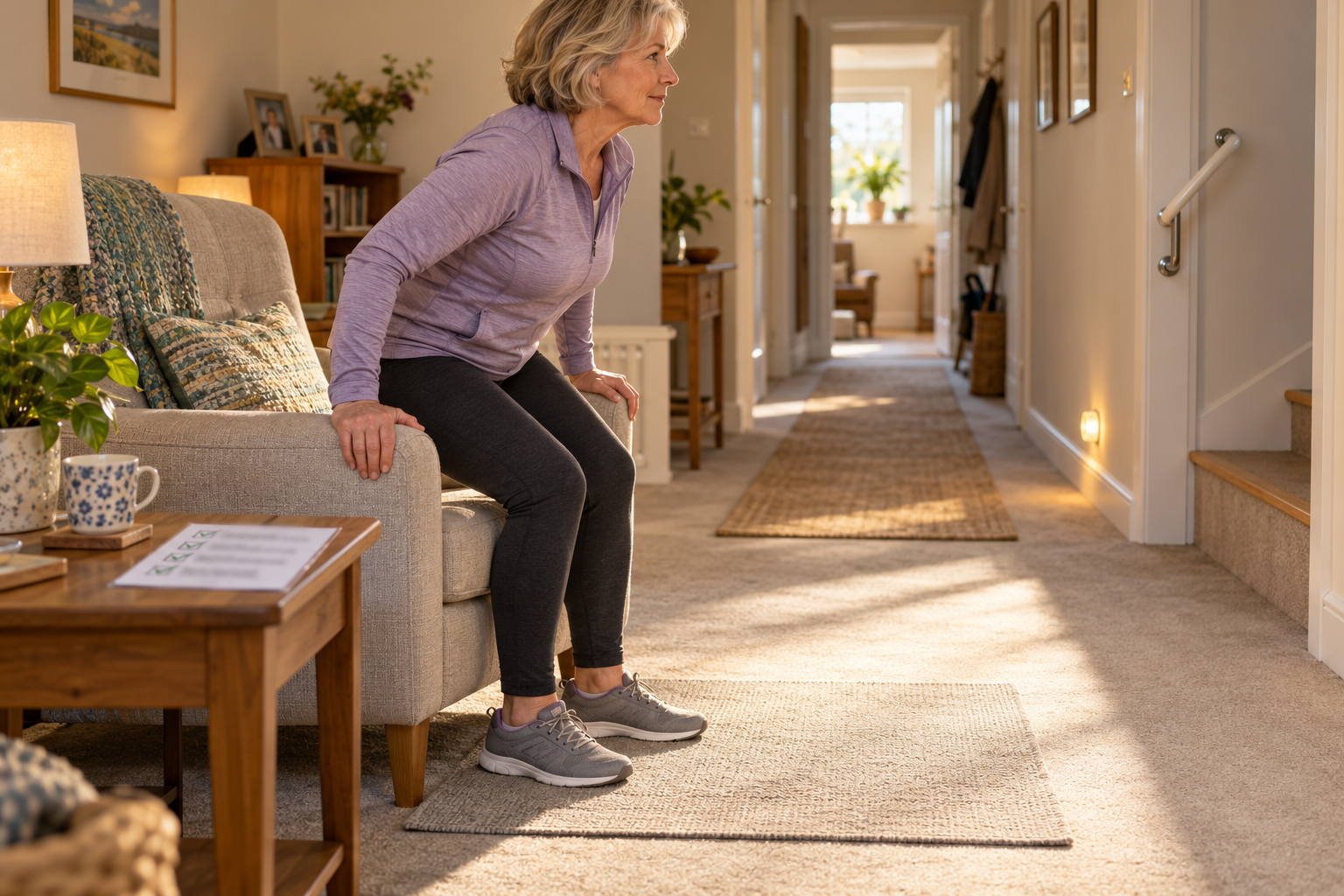
A few environment changes remove obstacles to movement and make safe choices the easy ones. Look for trip hazards, ensure consistent lighting, and keep frequently used items within comfortable reach. Stable seating at an appropriate height, simple grab railings near transitions, and non-slip surfaces often pay immediate dividends. These changes are low-cost and usually easy to install or arrange around existing furniture.
- Clear a 2-metre path through main rooms to reduce tripping.
- Use a firm chair with armrests for safer sit-to-stand actions.
- Place a non-slip mat in wet areas and add night lights in hallways.
Small adaptations make movement safer and less stressful. Start with one change and add more as you feel ready. Ask a family member to help test changes before relying on them.
Building Short, Safe Routines
Design short sessions that match your current capacity, like standing hip hinges, seated leg lifts, or gentle step-to-steps. Aim for several brief sets spread across the day rather than one long session; that reduces fatigue and improves learning. Use a chair or counter for support, focus on slow controlled motion, and breathe steadily. Track what you do in a simple checklist to notice small gains and keep motivation up. Celebrate tiny wins and avoid comparing progress day-to-day.
Progress by tiny steps: add a few more repetitions or an extra minute when things feel comfortable. If pain spikes or new symptoms appear, pause and consult your clinician.
Conclusion
Gentle, regular movement supports recovery in practical, measurable ways.
Prioritize small habits and a safer home layout to reduce setbacks.
Over weeks, tiny improvements add up to restored confidence and function.