Recovering movement after a medical event often depends as much on your environment as on the exercises you do. Small, targeted adjustments around the house can reduce pain, lower fall risk, and make daily tasks feel more manageable. This article describes practical changes you can make room by room and simple habits to build steady progress. No fancy equipment required—just clear, sensible steps to help you move with more confidence.
Room-by-room adjustments
Start with the places you use most: bedroom, bathroom, and kitchen. In the bedroom, raise bed height if getting up feels difficult and keep a clear path to the bathroom. In the bathroom, install non-slip mats and a sturdy grab bar near the toilet or tub; in the kitchen, store frequently used items at waist level to avoid excessive reaching or bending. These tweaks reduce awkward movements that commonly lead to setbacks.
- Remove loose rugs or secure them with tape.
- Improve lighting in hallways and stairways.
- Keep floor clutter off walking paths.
Small changes often have an outsized effect because they remove daily hazards and repeated strain. Tackle one room at a time to avoid feeling overwhelmed and to test what works for you.
Daily habits that rebuild confidence
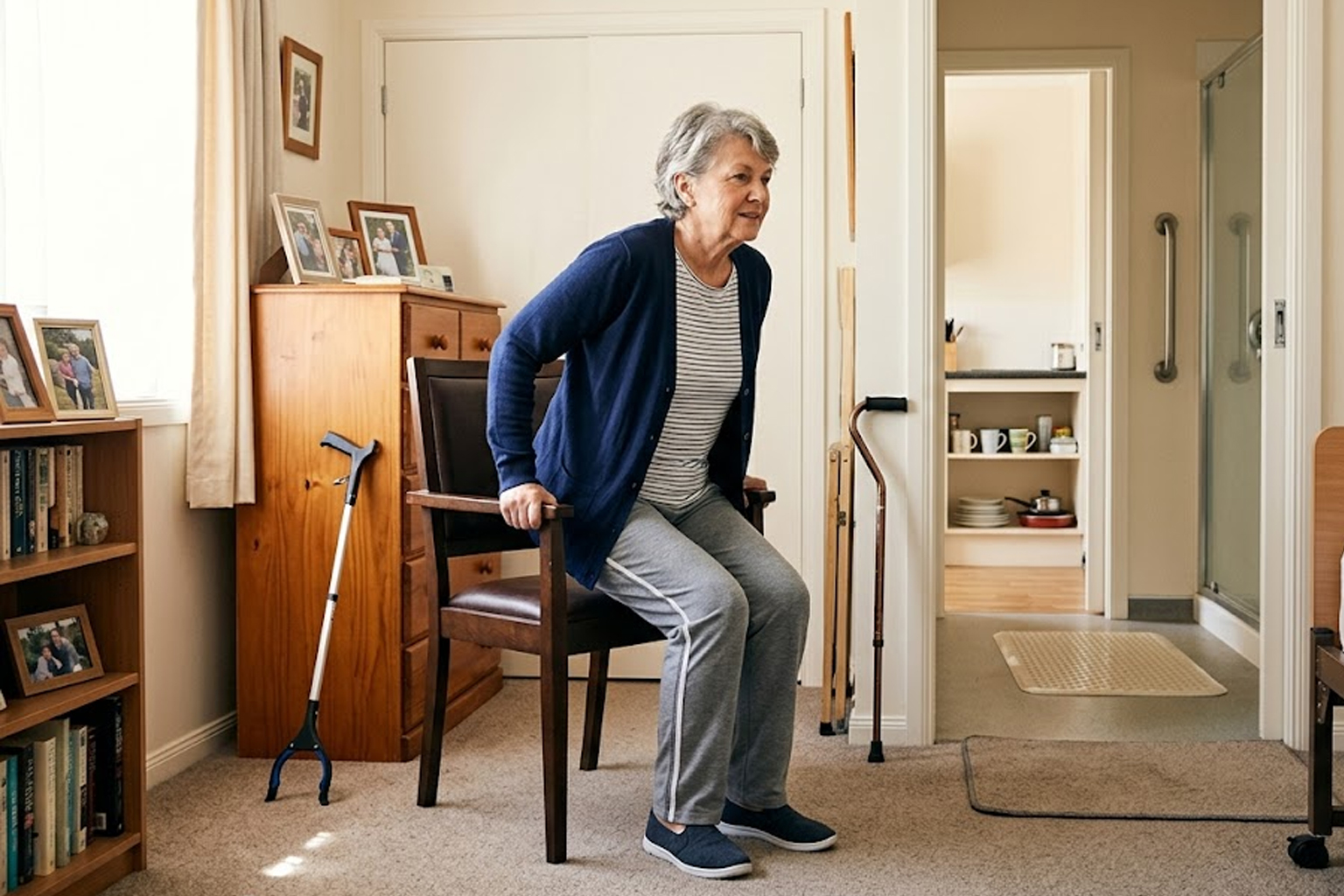
Consistency matters more than intensity during recovery. Short, regular movement sessions—five to ten minutes several times a day—help rebuild balance and strength without fatiguing you. Practice sit-to-stand motions, gentle weight shifts, and marching in place while holding onto a stable surface if needed. Focus on controlled breathing and steady pacing rather than speed.
Track small wins, like fewer stumbles or less stiffness, to stay motivated. Pair movement with an existing routine, such as standing during commercial breaks or doing a brief stretch after brushing teeth, to make it habitual.
Tools and when to ask for help
Useful, low-cost tools include a non-slip bath mat, a chair with armrests for safer standing, and a reacher for picking up small items. Mobility aids should fit you and be introduced with guidance from a clinician if possible. If pain increases, you experience frequent falls, or progress stalls for several weeks, contact the medical team for a reassessment and tailored plan.
Tools are bridges, not crutches—use them to build capacity until you can rely less on them. Professional input helps ensure adaptations match your recovery stage and long-term goals.
Conclusion
Small, practical home changes and brief daily habits make movement safer and less daunting. Start with one room and one habit, then build from there. Gentle consistency will repay you with steadier, more confident steps.