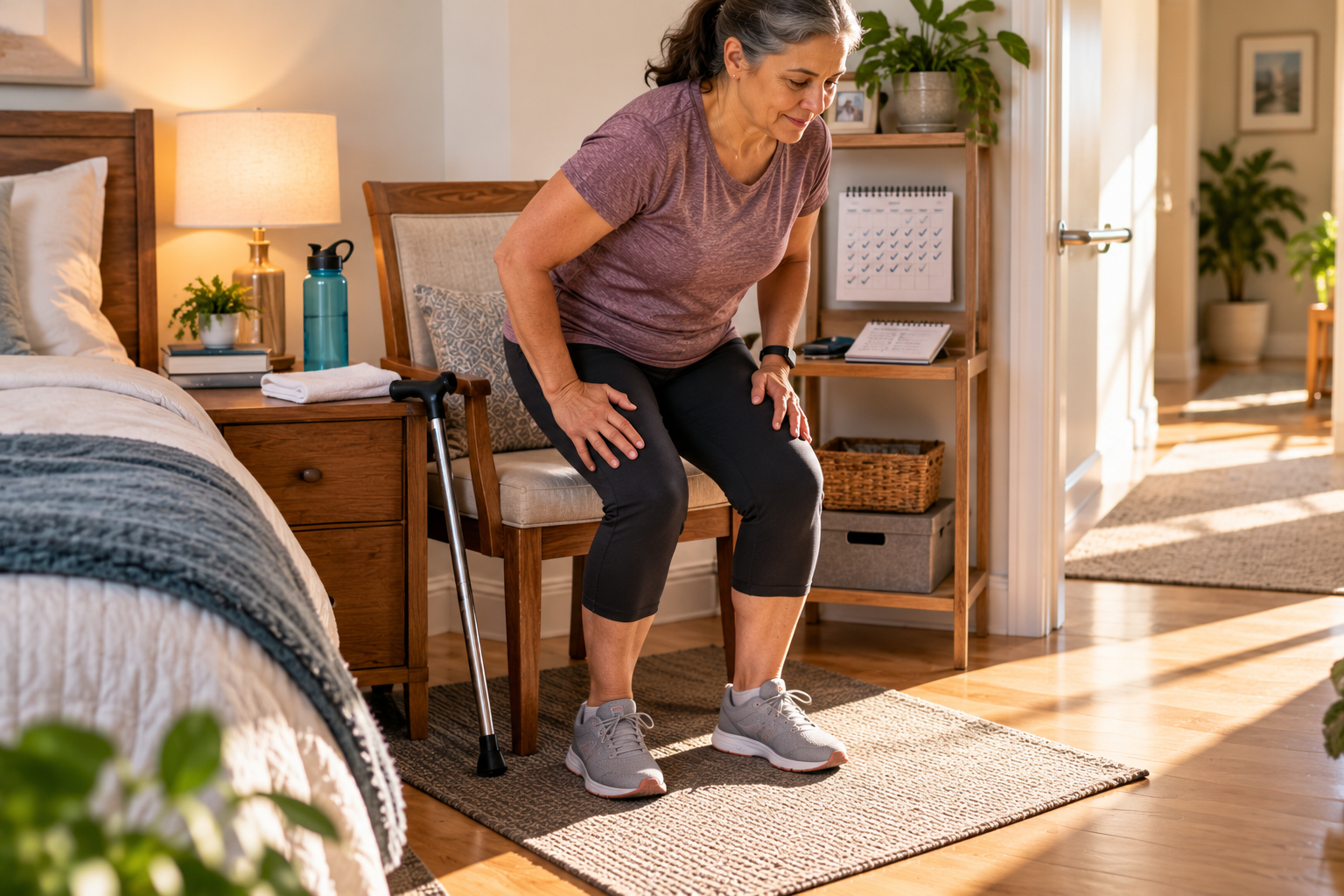
Small decisions during everyday life add up faster than any single workout. Choosing a steady five-minute routine, pausing to check posture, or swapping a chair for a firmer seat all influence how your body moves. These choices matter especially when you’re recovering from injury or managing ongoing discomfort. The trick is consistency and modest challenge — not grand gestures.
Start with tiny, specific steps
Pick one movement habit to repeat each day rather than a long, vague list. For example, stand up from your chair using your legs and sit back down slowly five times, or walk to the mail box and back once at a measured pace. Small targets remove decision fatigue and let you build confidence without flaring symptoms. Over two weeks you can add repetitions or a slightly longer walk, keeping changes gentle.
These micro-goals make progress visible and sustainable. They also reduce the temptation to do too much too soon, which often leads to setbacks.
Adjust your environment to make movement easier
Rearrange a few household items so safe movement is the path of least resistance. Place commonly used objects within comfortable reach, add a stable chair by the bed for safer transfers, and keep a clear path for walking without obstacles. Small supportive tools — a non-slip mat or a cane temporarily — can reduce fear and allow you to practice normal motions. Changes like these reduce strain and let you focus on steady improvement.
Environmental tweaks act like tiny nudges that encourage better habits. They also make it simpler to repeat the same helpful movements day after day.
Monitor progress, respect limits, and adapt
Keep a short log: a line a day noting what you did and how it felt. That record helps identify patterns — which activities ease stiffness and which cause pain. If a movement consistently provokes sharp pain, scale back or substitute it for something less provocative. Progress often looks like fewer bad days and more easy ones rather than a straight line up.
Adjusting load and duration based on honest feedback prevents overreach. Regular review of small wins keeps motivation steady and realistic.
Conclusion
Small, repeatable choices compound into meaningful improvement over weeks. Prioritize consistency, sensible changes to your space, and honest tracking of what helps. These modest habits restore comfort and confidence in daily movement.