Recovering mobility after a medical event or period of inactivity often depends on consistent, small habits practiced at home. Focusing on safe, progressive movement and realistic goals can speed functional return while reducing setbacks. This article outlines practical strategies you can integrate into daily life to rebuild strength, balance, and confidence. Emphasizing safety and gradual progression helps you stay active without overtaxing healing tissues.
Assess Your Home and Daily Routines
Begin by surveying common daily routes and tasks to identify obstacles and awkward movements that increase fall or strain risk. Note loose rugs, poor lighting, steep steps, and furniture arrangements that require twisting or reaching. Consider how you move when dressing, bathing, cooking, and transferring between sitting and standing to spot high-risk moments. Understanding these patterns helps prioritize simple changes that make everyday activities safer and more attainable.
Addressing small environmental barriers often yields immediate benefits in confidence and participation. Tackle one area at a time so changes feel manageable and sustainable.
Build Gradual, Purposeful Movement Sessions
Design short, frequent practice sessions rather than long workouts that risk fatigue. Aim for a mix of light strengthening, flexibility, and balance exercises tailored to your current abilities, and increase intensity in small steps. Prioritize movements that mimic everyday tasks—standing from a chair, reaching to shelves, or stepping over a threshold—to transfer gains into daily function. Track progress with simple markers like number of repetitions, time standing, or difficulty level to guide steady progression.
- Start with two to three 10–15 minute sessions per day.
- Increase repetitions or range every few days as tolerated.
- Pause and reassess if pain or excessive fatigue occurs.
Consistency is more important than intensity; regular practice reinforces neural and muscular adaptations needed for lasting change.
Use Simple Safety and Support Strategies
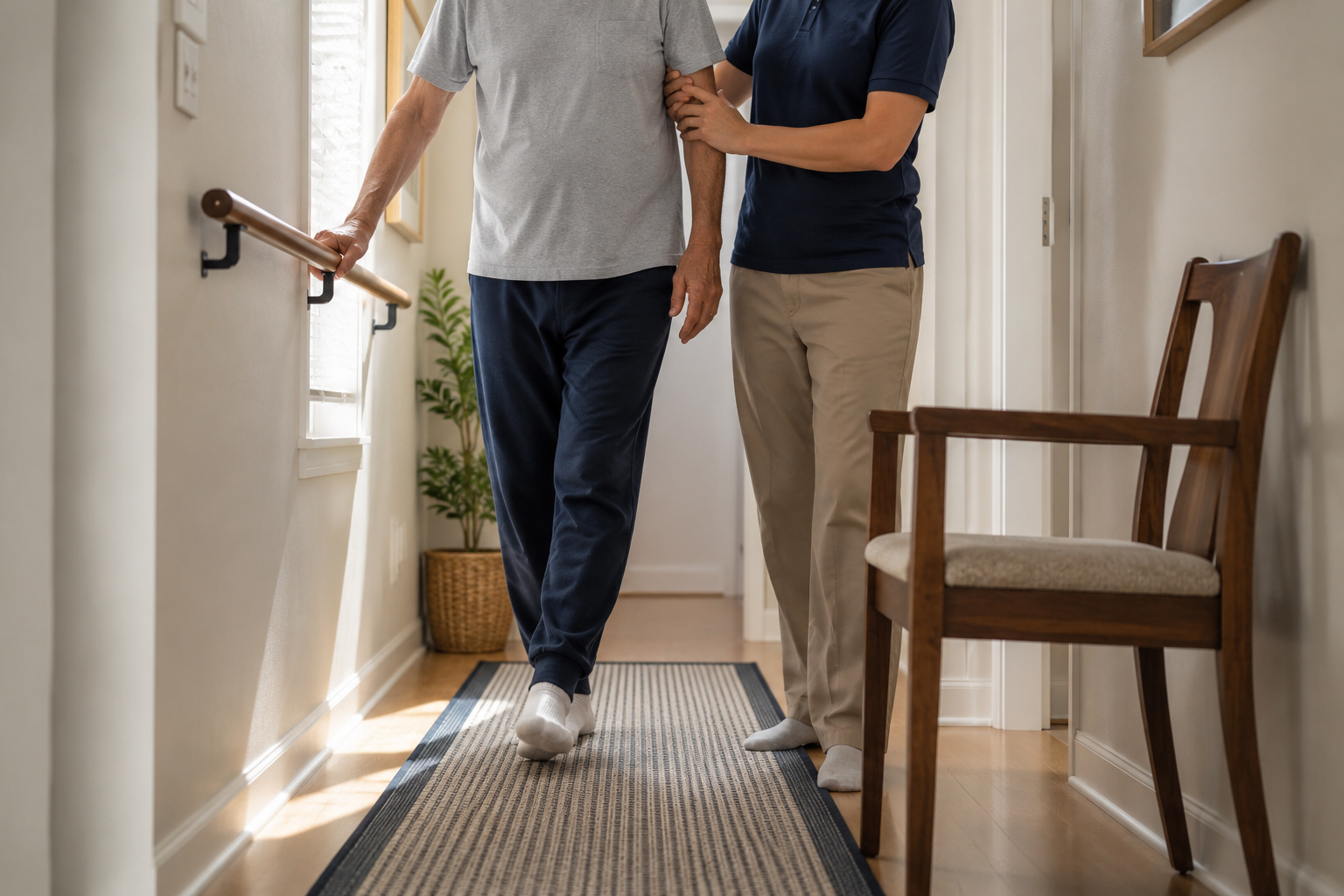
Enhance safety with practical supports: stable chairs, grab bars where transfers occur, non-slip mats, and well-fitting footwear. Good lighting and uncluttered pathways reduce trip risks during night-time or rushed movements. When necessary, enlist help from family, caregivers, or a therapist for tasks that exceed current ability while you regain capacity. These supports allow you to challenge movement safely while minimizing adverse events.
Combining environmental fixes with adaptive habits preserves independence and lets recovery progress with lower risk.
Conclusion
Small, consistent habits practiced in a safe home environment drive steady recovery of movement and balance. Focus on assessment, gradual progression, and sensible supports to make daily activities easier and safer. With patience and planning, you can rebuild functional confidence and reduce the chance of setbacks.