Creating a weekly menu that supports at-home workouts doesn’t have to be complicated. Focus on whole foods, straightforward combinations, and consistent portions to keep energy steady and recovery efficient. Small adjustments to breakfasts, lunches, dinners, and snacks add up quickly over a week. This approach helps you stay on plan without sacrificing variety or taste.
Planning a Weekly Menu
Start by mapping training days and lighter activity days so your meals match energy needs. On heavier session days, emphasize carbohydrate-rich meals combined with a solid protein source to support performance and repair. For easier days, shift to more vegetables, healthy fats, and moderate protein to aid recovery without excess calories. Aim for three balanced meals and two planned snacks to minimize impulsive choices.
Batching templates simplifies decision-making and reduces cooking time later in the week. Keep a shortlist of 3–4 breakfast, lunch, and dinner options that rotate easily.
Balancing Macros with Simple Meals
Build each plate around a protein, a carbohydrate, and colorful vegetables to cover macronutrient needs. Proteins like eggs, lean meat alternatives, or dairy provide repair; carbohydrates from whole grains or starchy vegetables fuel sessions; and vegetables add micronutrients and fiber. Portioning is more effective than obsessing over exact grams for most people pursuing general fitness goals. Adjust portions up on high-volume training days and down on recovery days to fine-tune energy balance.
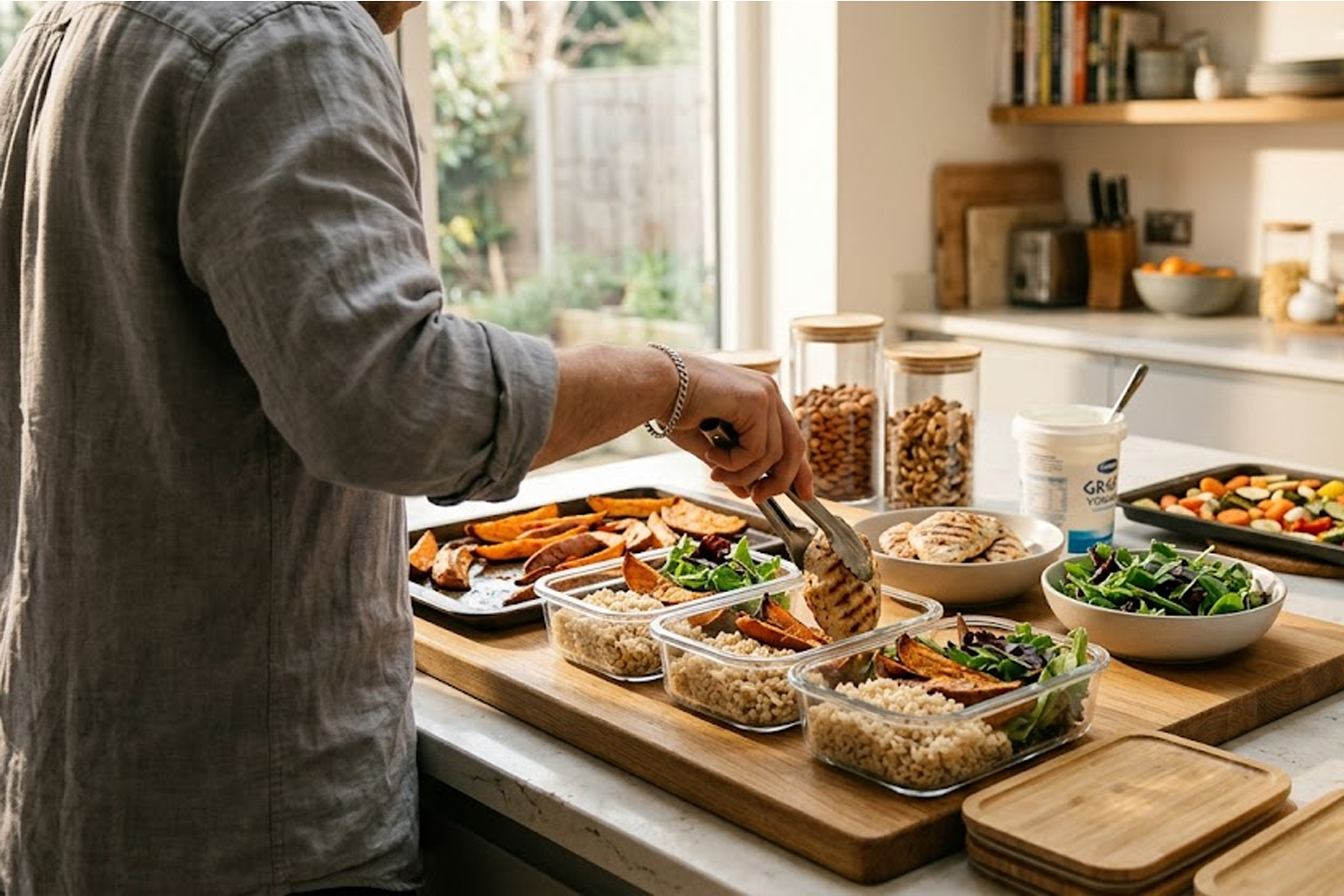
- Sample combo: grilled protein, roasted sweet potato, mixed greens.
- Snack idea: Greek yogurt with fruit and a small handful of nuts.
Using these building blocks keeps meals flexible and ensures you hit essential nutrients without rigid meal plans.
Quick Grocery and Prep Tips
Organize your shopping list by category: proteins, grains, produce, and staples to speed trips and prevent forgotten items. Pick versatile ingredients that appear across multiple meals so you use everything you buy and reduce waste. Prep basics like cooked grains, roasted vegetables, and a protein batch on one or two days to cut daily cooking time. Store prepped items in clear containers so assembling meals becomes a simple, five-minute task.
Keeping a stocked pantry and a short recipe list prevents decision fatigue during busy weeks. Simple consistency in preparation yields reliable nutrition results.
Conclusion
Design menus around whole-food templates that match workout intensity and recovery needs. Batch prep and versatile ingredients save time and reduce waste while ensuring balanced nutrition. Small, consistent choices across a week lead to better performance and easier meal routines.