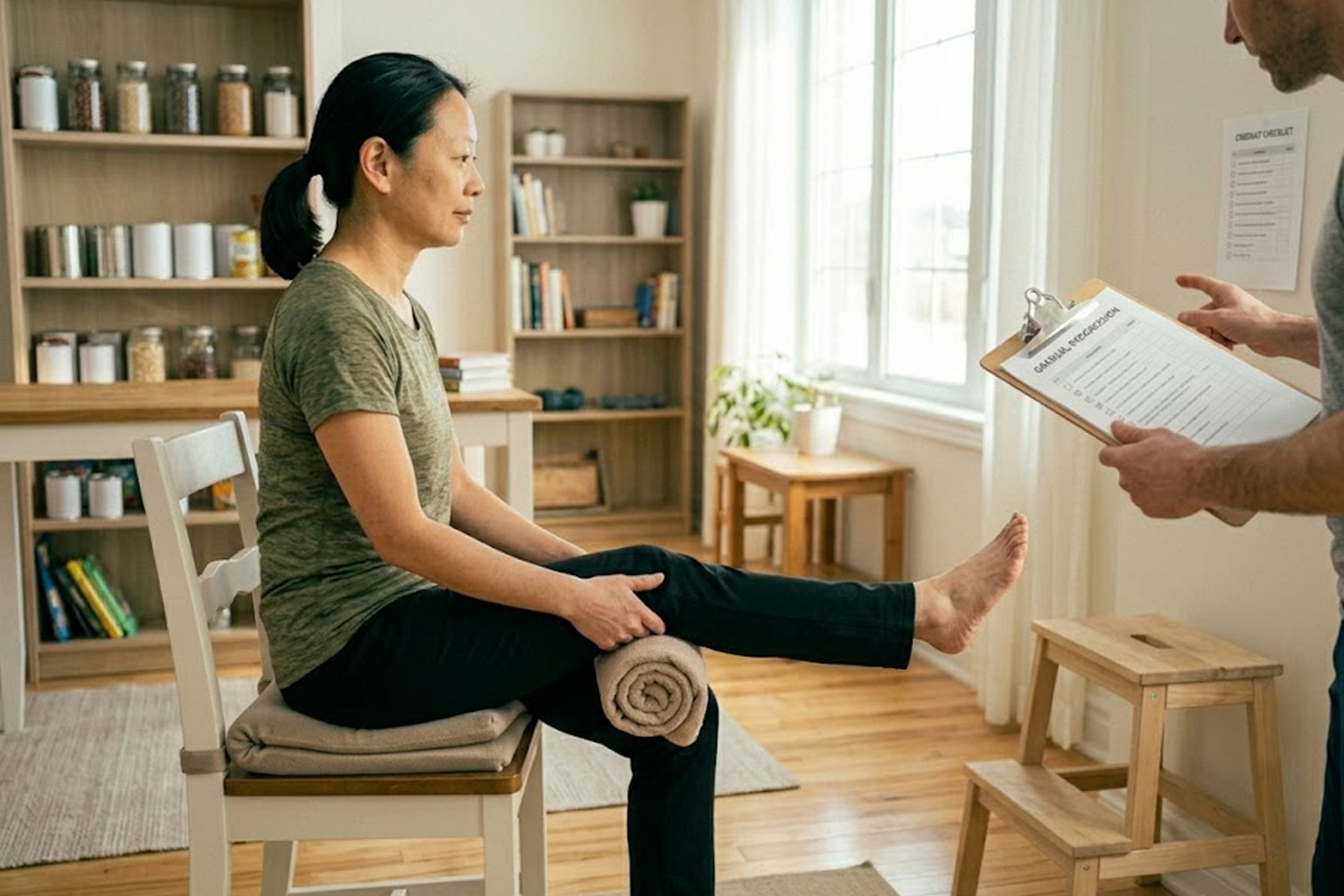
Managing recurring joint and muscle irritation often starts with small, consistent changes at home. This article outlines practical movement and setup strategies you can apply without specialist equipment. The emphasis is on reducing cumulative strain while supporting gradual gains in function and comfort. These ideas prioritize pacing, simple progressions, and environmental adjustments you can maintain.
Assess Your Baseline
Begin by noting which activities produce the most discomfort and when symptoms typically flare. Keep a simple log for a week to capture movement patterns, positions, and tasks that increase irritation. Observing patterns helps prioritize which tasks to change first and which movements to preserve. This quick assessment gives actionable insight before changing routines.
Use that information to set modest, measurable goals like reducing the number of heavy lifts per day or adding short movement breaks. Small targets make it easier to track progress and avoid sudden overload. Clear, achievable goals promote consistency.
Design Low-Load Progressions
Introduce movement progressions that challenge the system without triggering a flare. Start with low-load, controlled exercises that focus on range, coordination, and endurance rather than heavy strength work. Aim for multiple short sessions instead of one long session to reduce cumulative stress. Progress by a single variable at a time: repetitions, range, or frequency.
- Begin with seated or supported movements to control load and feel safe.
- Add gentle standing transitions and balance drills as control improves.
- Increase repetitions gradually before introducing added resistance.
Pacing progressions this way builds capacity and confidence while lowering the risk of setbacks. Tracking slight improvements encourages continuation.
Make Your Home Environment Supportive
Small environmental changes reduce unnecessary strain during daily activities. Adjust chair heights, store frequently used items at comfortable reach, and create clear walking paths to avoid awkward reaches and twists. Use supportive seating and simple aids like a step stool or long-handled tools when needed. A thoughtfully arranged space reduces the number of high-load moments each day.
These adjustments also reinforce new movement habits by making safer options the default. Consistency in the environment helps maintain gains so daily life becomes less triggering.
Monitor and Adjust
Regularly review how changes are affecting comfort and function. If symptoms increase, step back to the previous level of activity and reassess factors like frequency and technique. Reliable metrics include task tolerance, sleep quality, and ability to perform daily roles. Use these indicators to guide further tweaks rather than pushing through discomfort.
Gradual adjustments and honest monitoring create a feedback loop that supports steady improvement. Patience and small iterations usually yield the most sustainable outcomes.
Conclusion
Reducing joint irritation at home is about consistent, low-load progress and smart environmental tweaks. Track what provokes symptoms, set small goals, and progress one variable at a time while monitoring responses. Over weeks, these steady steps can improve function and reduce flare-ups.