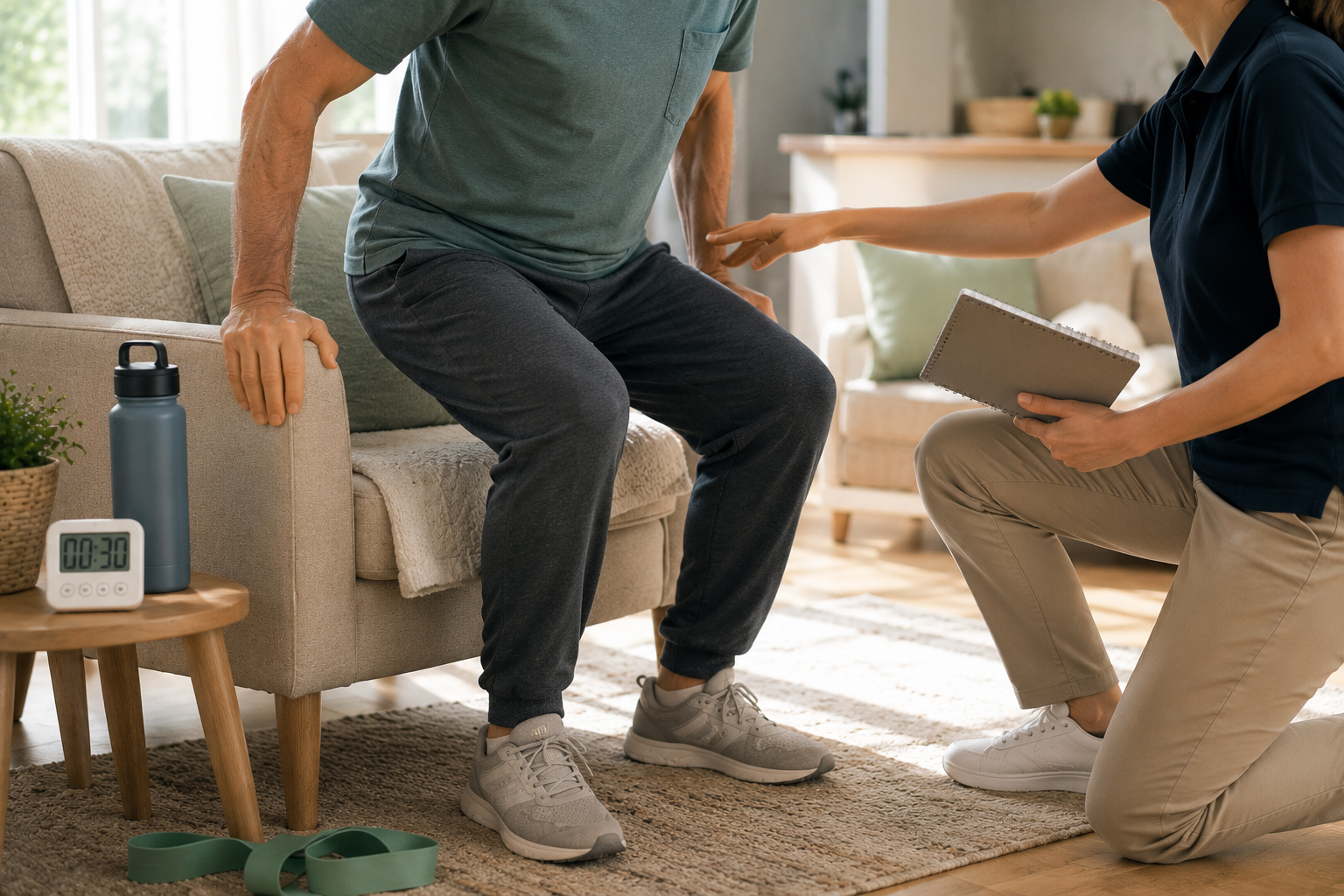
Living with persistent muscle or joint discomfort makes everyday tasks feel uncertain. Small, consistent adjustments at home can rebuild capacity without provoking setbacks. This approach focuses on movement quality, pacing, and environment rather than quick fixes. Over weeks and months those steady habits often translate into more reliable function.
Assessment and planning
Start by noting activities that worsen or ease symptoms and pick achievable goals tied to daily life. Use brief, frequent checks — a three-minute walk, a light lift, or a sit-to-stand — to gauge tolerance and progress. Aim to increase volume or complexity only when baseline tasks feel easier and pain does not spike afterward. Recording responses helps guide gradual progression and keeps changes conservative.
A simple plan reduces guessing and protects against overdoing it. Progress is about consistency rather than intensity.
Gentle strength and mobility
Combine low-load strengthening with controlled mobility exercises to support joint mechanics and muscle endurance. Prioritize multi-directional movement and functional patterns such as controlled squats, hip hinges, and shoulder reaches done slowly with attention to breathing. Start with few repetitions and rest often, increasing sets or range first before adding resistance. Consistent practice builds capacity that supports daily tasks.
Quality of movement matters more than heavy loads early on. If technique degrades, reduce the challenge and rebuild control.
Pacing, posture and setup
Structure tasks with planned rest and micro-breaks to prevent cumulative strain across the day. Adjust chairs, counters, and work surfaces so joints sit in comfortable, neutral positions during common activities. Use simple timing rules like a 10-minute work, 2-minute break cycle when starting a new routine, and lengthen activity gradually. Awareness of posture during routine chores can substantially lower flare risk.
- Break longer chores into shorter segments.
- Alternate heavy and light tasks across the day.
These small environmental and timing tweaks reduce load without removing needed activity. They make slow progress sustainable.
When to get professional help
While many habits can be safely taught and practiced at home, persistent worsening pain, new neurological signs, or loss of basic function warrant professional assessment. A therapist or clinician can tailor progression, identify contributing factors, and introduce manual techniques or modalities when self-management stalls. They can also rule out conditions that require targeted interventions and help adjust goals to realistic timelines. Seeking input early when progress plateaus often prevents avoidable setbacks and shortens recovery time.
Use professional guidance to refine techniques and advance safely. Collaboration between at-home practice and occasional supervised care often yields the best long-term results.
Conclusion
Long-term improvement comes from steady, manageable practices that respect current limits. By assessing responses, emphasizing controlled movement, and arranging daily tasks thoughtfully, people can rebuild comfort and function. Consistency and gradual progression are the core principles to guide recovery at home.