Recovering movement and balance at home requires a clear, measured approach that prioritizes safety and consistency. Small, purposeful steps build capability without overwhelming the body or increasing risk. This article outlines practical strategies to assess ability, structure progressions, and adapt living spaces to support steady improvement. The aim is to offer an accessible framework that helps people regain confidence in everyday movement.
Assessing Current Abilities
Begin by taking stock of functional strengths and limitations through simple, observable tasks. Note how you rise from a chair, navigate stairs, or maintain balance while standing with minimal support. Keep a short daily log to track pain, endurance, and confidence during routine activities. This baseline information guides safe goal setting and helps recognize meaningful gains over time.
Use objective cues like time able to stand, number of unassisted steps, or ability to perform single-leg balance for a few seconds. Share results with any supervising clinician to ensure progressions are appropriate. Regular rechecks prevent advancing too quickly and reduce setbacks.
Designing Gradual Movement Progressions
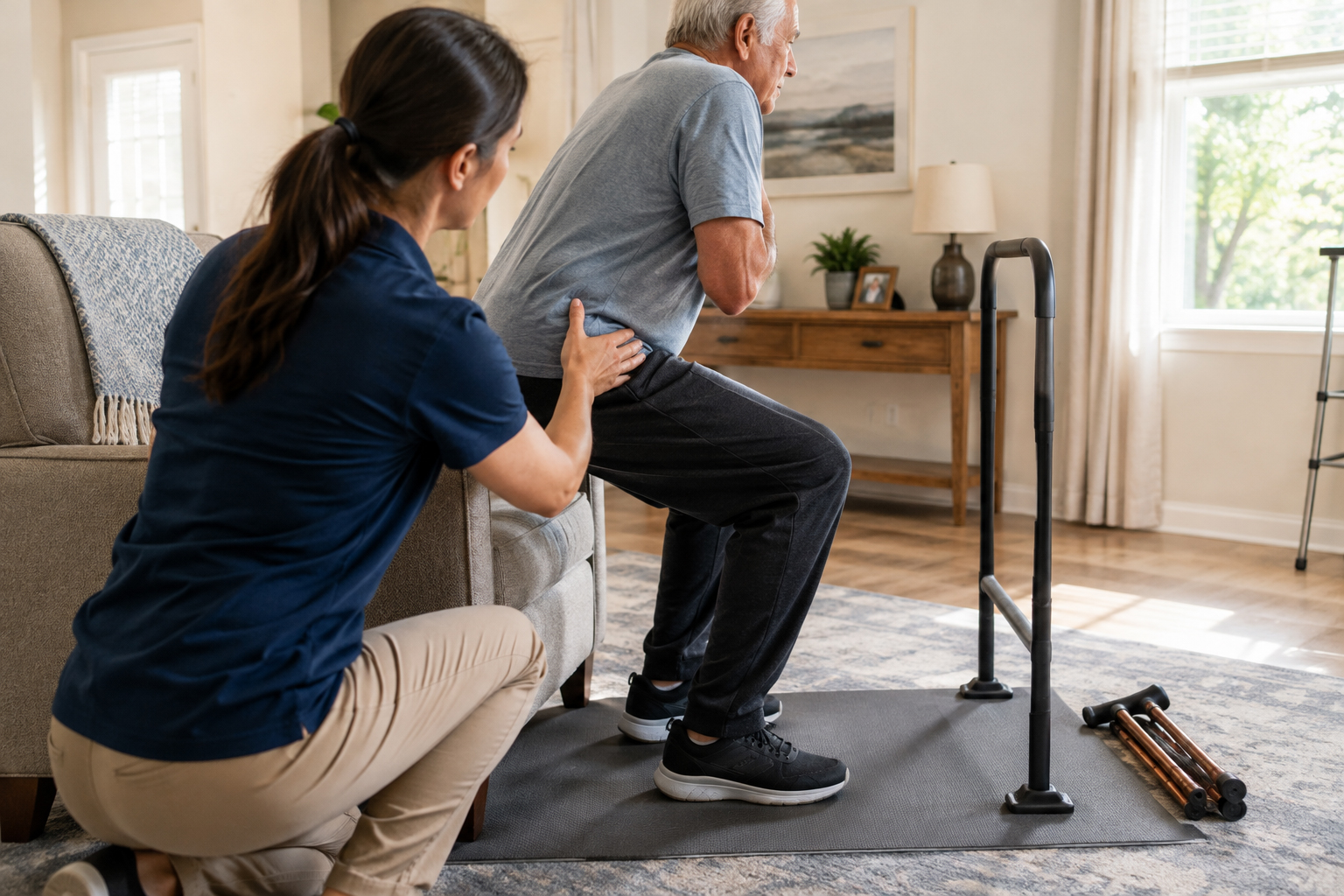
Create short practice sessions that emphasize repeated, controlled movements rather than prolonged exertion. Start with low-intensity tasks such as sit-to-stand repetitions, gentle weight shifts, and walking short, supported distances. Increase complexity slowly by adding range, time, or reduced support as comfort allows. Prioritize quality of movement to reinforce safe mechanics and reduce compensatory patterns.
- Example progression: supported sit-to-stand → unaided sit-to-stand → walk 10–20 steps → turn and step practice.
- Increase repetitions or reduce assistance every 3–7 days if pain and fatigue remain controlled.
Consistency matters more than intensity in early recovery phases. Regular, short practice sessions yield better neuromuscular adaptation than sporadic high-effort attempts.
Adapting the Home Environment
Small modifications make movement safer and reduce the risk of falls during recovery. Improve lighting, remove loose rugs and clutter, and create clear paths between frequently used areas. Add stable handholds in bathrooms and near stairs, and position chairs at comfortable heights to assist transfers. Thoughtful setup encourages independence while reducing reliance on risky compensations.
- Consider non-slip mats, night lighting, and a stable chair with armrests.
- Keep commonly used items within easy reach to minimize unnecessary bending or reaching.
These changes are inexpensive and often reversible, yet they provide meaningful support during the recovery period. Reassess needs as mobility improves and remove adaptations when appropriate.
Incorporating Recovery Habits
Integrate brief movement opportunities into daily routines to build endurance and confidence. Examples include standing during phone calls, doing balance checks while brushing teeth, or taking short corridor walks after meals. Pairing practice with existing habits increases adherence and reduces the perceived burden of rehabilitation. Rest and pacing remain essential to avoid fatigue-related setbacks.
Track small wins and adjust targets gradually to maintain motivation. Celebrate improved stability and increased independence as tangible markers of progress.
Conclusion
Safe recovery at home blends careful assessment, gradual progression, and environmental support to rebuild movement and balance. Regular, focused practice tied to daily life fosters steady improvement while minimizing risk. With simple adaptations and realistic goals, many people can regain confidence and functional independence.