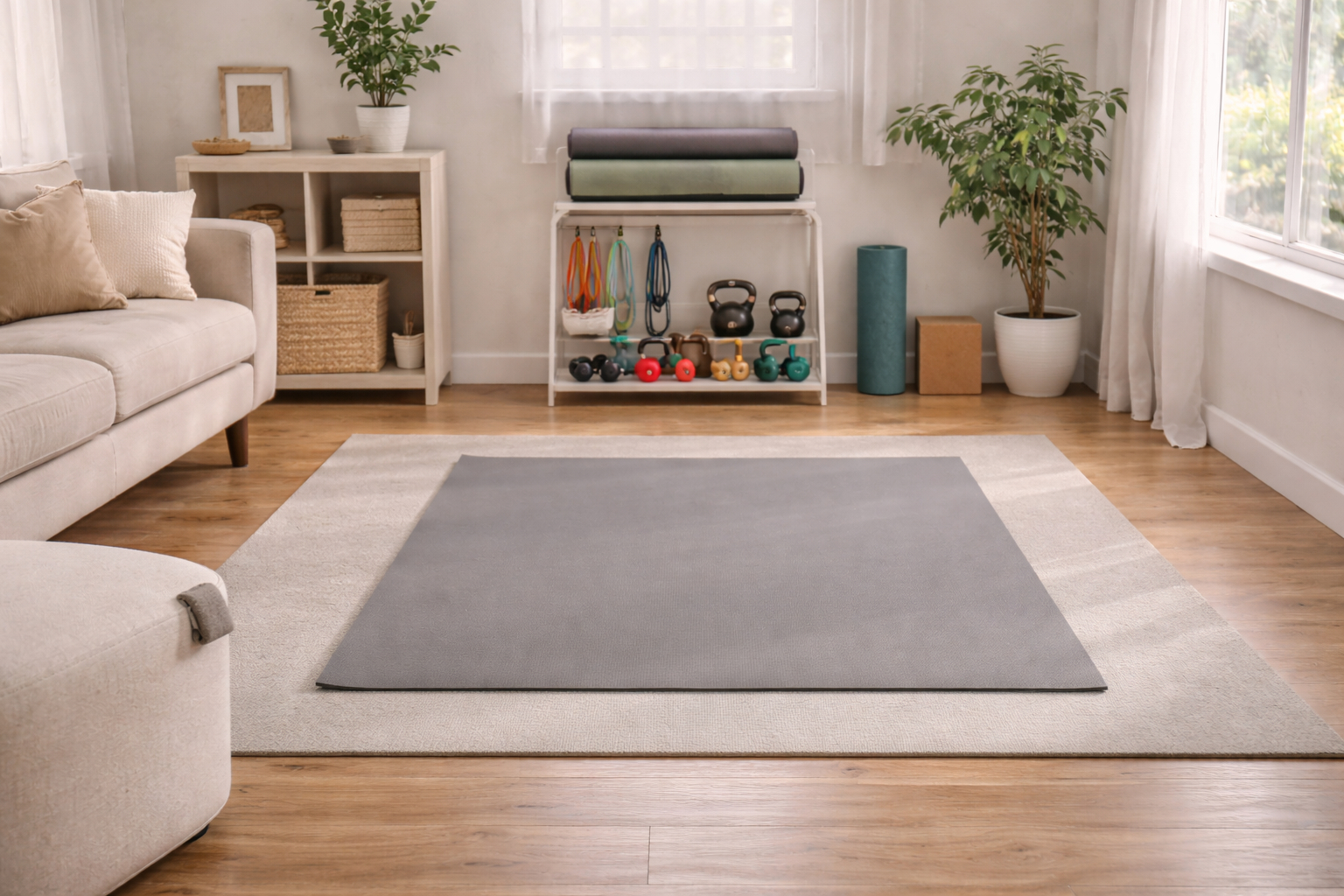
Working out at home brings convenience but also specific injury risks that are easy to overlook. Small hazards such as inadequate lighting, slippery floors, or cramped furniture placement can increase the chance of trips, falls, and soft-tissue strains. Implementing simple, consistent safety practices reduces those risks while preserving workout quality and long-term progress. The tips below are practical, adaptable to different fitness levels, and designed to build a safer home exercise habit.
Assessing Your Space and Surfaces
Begin by evaluating the area where you exercise for clear traffic paths and stable, non-slip surfaces. Ensure there is enough overhead and lateral clearance for the movements you plan to perform, and remove or pad sharp edges and low furniture. Pay attention to lighting and ventilation so you can move confidently and avoid overheating or visual missteps. Regularly recheck the layout after moving items or changing your routine to maintain a safe environment.
Simple layout changes often prevent common accidents. Prioritize a dedicated zone that stays consistent between sessions to build predictable, safer habits.
Selecting and Maintaining Equipment
Choose equipment that suits your current strength and skill level, and avoid improvising with unstable alternatives that increase injury risk. Check mats for wear, confirm that weights have secure collars, and inspect resistance bands for tears before each use. Store items neatly to prevent tripping, and replace any gear that shows significant deterioration to maintain reliable performance. For larger equipment, verify that assembly instructions were followed and that items sit level on the floor.
- Inspect bands and straps for fraying.
- Keep small weights off walkways.
- Clean and dry sweat-prone surfaces.
Routine maintenance extends equipment life and preserves safety. A modest schedule of checks reduces unexpected failures during workouts.
Warm-Up, Technique, and Recovery
Begin each session with an active warm-up that raises heart rate and mobilizes joints to prepare tissues for load. Focus on controlled movements and learn proper technique before increasing intensity or volume to limit stress on tendons and ligaments. Incorporate rest days, progressive overload principles, and mobility work to support recovery and long-term resilience. When in doubt about form, use mirrors, slow the tempo, or consult reliable instructional resources to refine movement quality.
Recovery and mindful progression are as important as the workout itself. Treat small aches as signals and adjust training rather than pushing through persistent pain.
Conclusion
Reducing injury risk at home relies on thoughtful space setup, appropriate equipment choices, and consistent movement habits. Small, regular checks and gradual progression keep workouts both effective and safe. Implementing these strategies helps make home fitness sustainable over the long term.