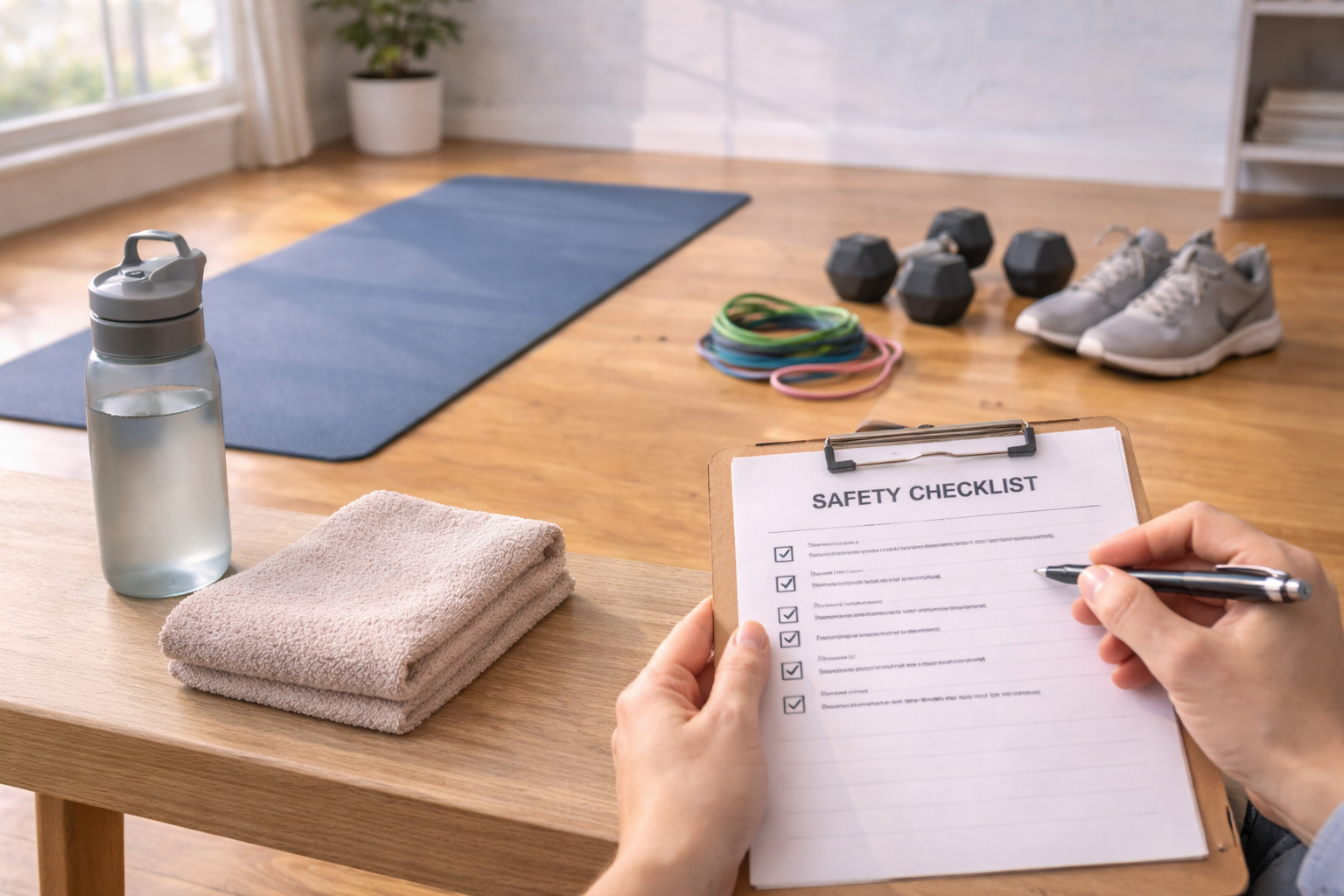
A concise safety checklist helps you maintain consistency and reduce the chance of injury during home workouts.
Preparing your space, equipment, and routine makes sessions more effective and sustainable.
This guide outlines practical actions to improve stability, preserve joints, and prevent avoidable accidents.
Read on to adopt simple habits that support safe, long-term exercise at home.
These introductory steps form the foundation for every session and apply to most exercise styles.
Setting Up a Clear, Stable Space
Start by designating a dedicated area free from clutter, tripping hazards, and fragile objects. Ensure flooring is even and offers appropriate grip for your chosen activity, using mats only when needed to avoid unstable surfaces. Check lighting so you can see movement and maintain safe alignment, and allow enough room to move through full ranges without obstruction. Good ventilation and a comfortable temperature also support focus and reduce fatigue.
Consistently returning to the same prepared space makes setup faster and lowers the chance of skipping safety checks. A tidy environment also supports better concentration and technique.
Choosing and Maintaining Equipment
Select equipment that suits your current fitness level, available space, and exercise goals, prioritizing items rated for home use. Inspect tools regularly for wear, frayed straps, loose bolts, or torn padding and replace or repair anything compromised. Avoid improvised substitutes that can fail under load, and store equipment safely to prevent damage or accidental tipping. Awareness of weight limits and proper anchoring reduces mechanical risks during use.
- Check resistance bands for cracks before each use.
- Confirm padding and handles are intact on benches and machines.
- Keep small accessories organized to prevent tripping hazards.
Routine equipment care extends product life and protects you from sudden failures. Simple inspections take only a few moments but pay off in safety.
Warm-Up, Progression, and Movement Quality
Always begin with a dynamic warm-up that raises heart rate and prepares joints for the session ahead, focusing on movement patterns you will use. Progress load and complexity gradually—increase repetitions, resistance, or duration in small increments to allow tissues to adapt. Prioritize controlled technique over heavier loads to reduce joint and soft-tissue strain. Use mirrors or video to monitor form if possible, and consider occasional professional feedback to correct persistent issues.
Thoughtful progression preserves long-term capacity and prevents common overuse problems. Building consistency with good technique will yield better results than erratic, high-intensity efforts.
Monitoring Discomfort and Recovery
Distinguish between normal workout discomfort and pain that signals injury; sharp, persistent, or worsening pain warrants pausing the activity and seeking assessment. Track sleep, hydration, and nutrition as part of recovery, and schedule rest or active recovery days to allow repair and adaptation. Modify movements around sensitivities rather than pushing through significant pain, and use ice, compression, or gentle mobility work as short-term aids when appropriate. Keeping a simple log helps identify patterns that precede setbacks.
Prioritizing recovery reduces cumulative risk and keeps training sustainable over time. Listening to your body supports steady progress without unnecessary interruptions.
Conclusion
Apply these checks before each session and make small improvements over time.
Consistent setup, equipment care, and measured progression greatly lower injury risk.
A mindful approach to discomfort and recovery keeps your home workouts safe and effective.