Recovering at home requires a balance of consistency, safety, and realistic goals.
Small daily checkpoints help keep progress measurable without overwhelming the person in recovery.
This approach reduces risk by breaking larger objectives into manageable actions.
Clear, repeatable routines make it easier to track improvements and spot setbacks early.
Assess your space and remove barriers
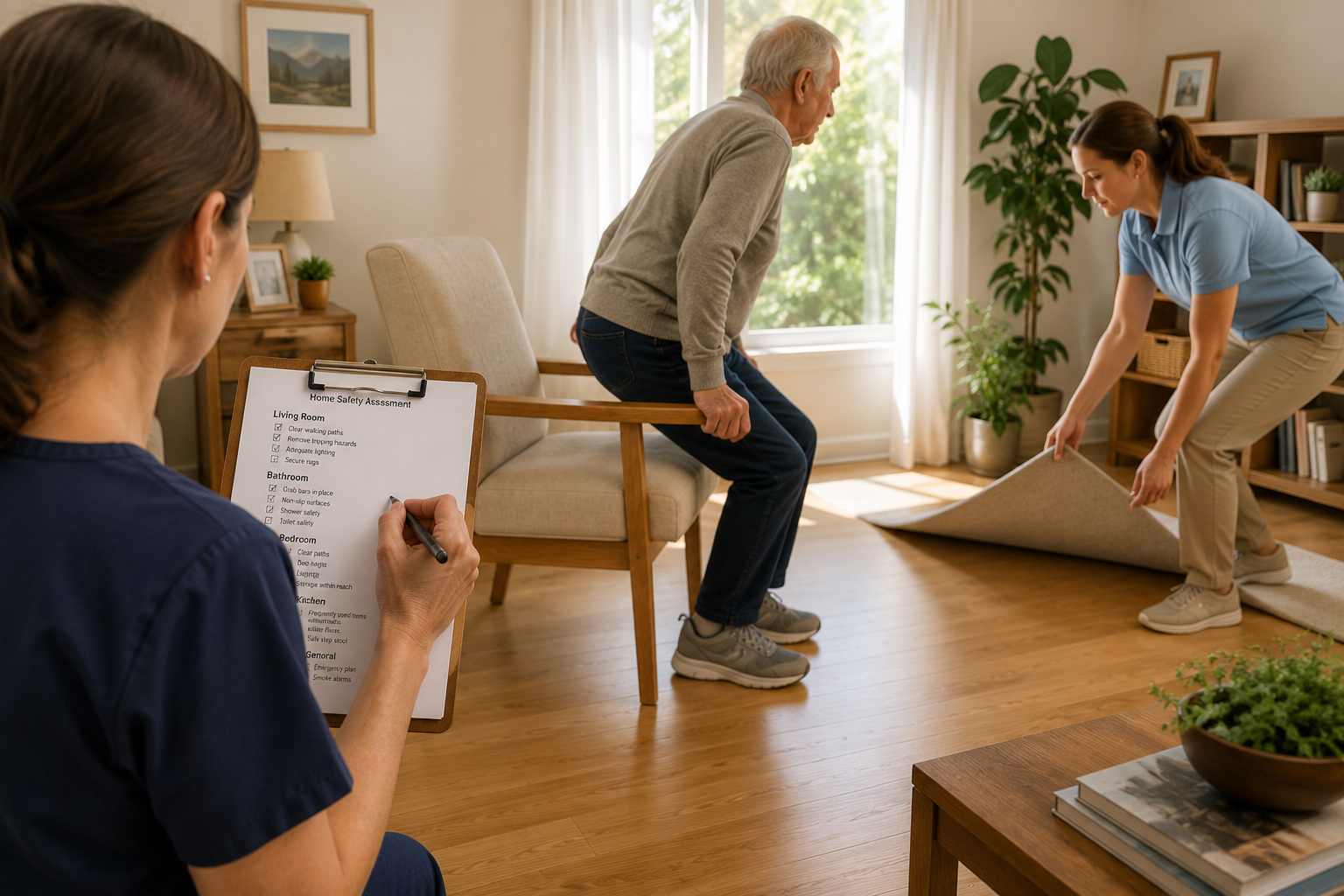
Start by walking through living areas with a critical eye toward trip hazards and restricted access.
Pay attention to loose rugs, poor lighting, and items stored at floor level that could impede movement.
Prioritize clear paths between bedroom, bathroom, kitchen and common areas so transfers are safe and predictable.
Consulting a therapist or using a checklist can reveal small changes that create big safety gains.
- Loose rugs, cords, and cluttered walkways.
- Poor night lighting and blocked stair areas.
- High shelves and hard-to-reach essentials.
Implement the simplest, most immediate fixes first.
Small adjustments often have an outsized impact on everyday independence.
Build a simple, measurable movement plan
Translate clinical recommendations into short, daily actions that fit the home schedule.
Choose two to four exercises focusing on strength, balance, and flexibility and define clear repetitions or time limits.
Progress should be incremental: increase repetitions or duration in small, weekly steps to avoid setbacks.
Logging sessions makes the progression visible and motivates adherence.
- Strength: sit-to-stand or chair squats.
- Balance: single-leg stands or tandem heel-toe.
- Mobility: short, timed walks and gentle stretches.
Keep instructions concise and time-limited so practice becomes habitual.
Involve a caregiver or family member to support consistency when possible.
Track progress and prioritize safety
Use simple checkpoints such as ability to stand from a chair without support, number of steps walked, or time balancing on one foot.
Record these measures daily and review them weekly to identify trends or plateaus.
If pain or new symptoms develop, pause progression and consult a clinician rather than pushing through.
Safety planning also includes emergency preparedness and easy access to communication devices.
Regular review of checkpoints encourages early intervention when progress stalls.
Celebrate small wins to maintain motivation and a positive recovery mindset.
When to involve clinicians and adapt plans
While many checkpoints are suitable for independent monitoring, knowing when to seek professional guidance is essential.
Schedule a check-in if pain increases, mobility declines, balance becomes unreliable, or new symptoms appear.
Professionals can adapt exercises, advise on assistive devices, and recommend home modifications beyond simple fixes.
Telehealth or brief clinic visits can provide targeted adjustments that prevent prolonged setbacks.
- New or worsening pain or unexplained numbness.
- Sudden increases in falls or loss of balance.
- Inability to perform daily tasks previously managed safely.
Err on the side of caution when unsure.
Timely professional input keeps recovery on course.
Conclusion
Daily checkpoints create structure without adding burden.
They connect small actions to measurable recovery gains.
Consistent review and safety awareness support steady, safer progress.