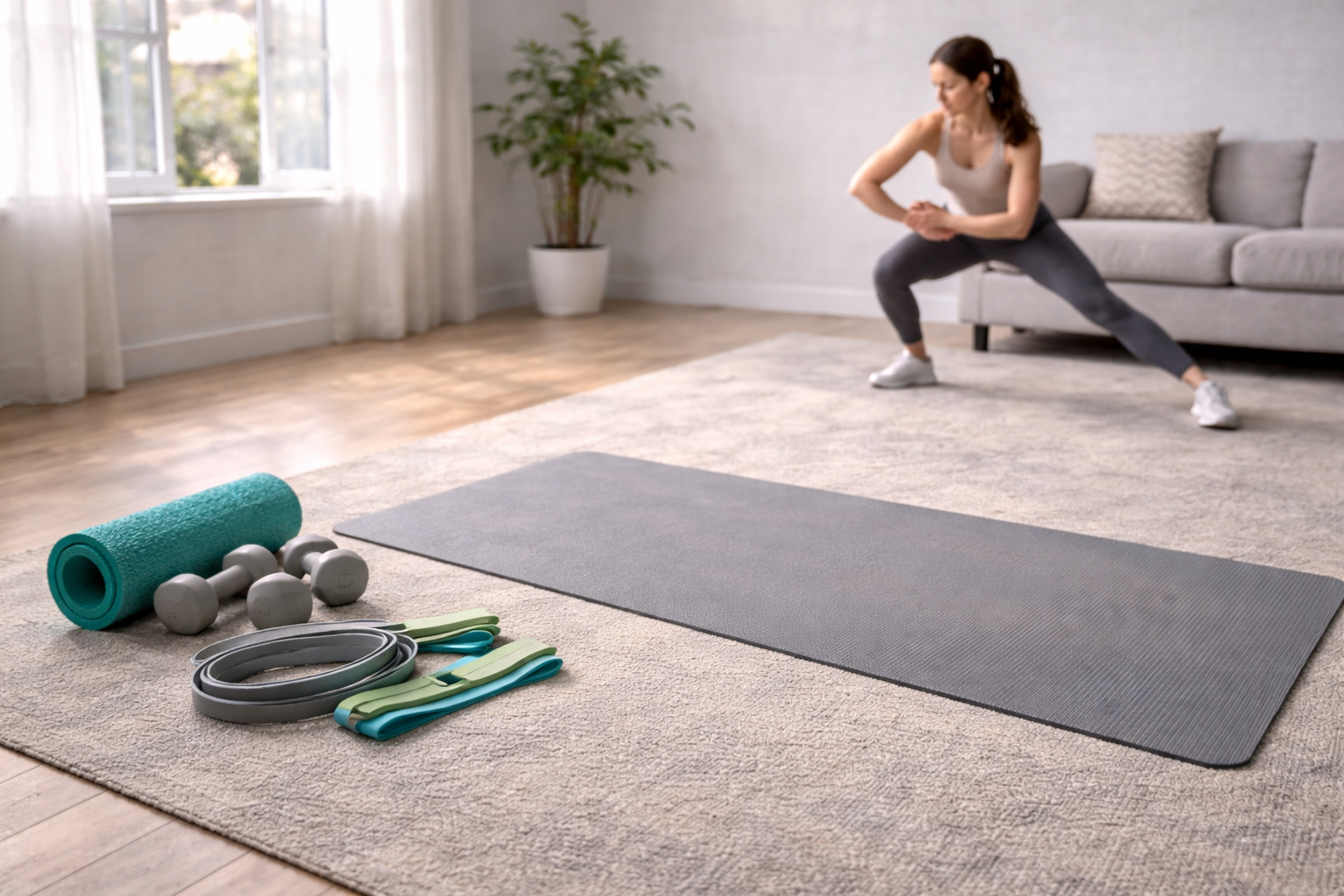
Working out at home offers flexibility and convenience, but it also requires careful planning to reduce injury risk. A balanced routine combines mobility, strength, and cardiovascular work while respecting individual limits and available space. Prioritizing technique, gradual progression, and recovery helps sustain long-term results without setbacks. This article outlines practical steps to design safe, effective home workouts that support consistency and wellbeing.
Assessing Your Exercise Space
Before you start any program, evaluate the area you intend to use to ensure it is safe and functional. Check floor stability, ceiling height, furniture placement, and any potential trip hazards so movements can be performed without obstruction. Consider lighting and ventilation to maintain focus and comfort during sessions. Planning the layout reduces surprises and creates a reliable environment for regular exercise.
Identify a primary workout zone and a backup space for different activities. Having a clear place for warm-ups, strength moves, and cooldowns simplifies transitions and helps protect joints and posture.
Choosing Appropriate Equipment
Not every home requires extensive gear; a few versatile pieces can support a wide range of exercises. Options such as resistance bands, a pair of dumbbells, and a stable mat provide progressive loading and protect contact points. Invest in equipment that matches your current level and can be adjusted as strength improves to avoid abrupt jumps in intensity. Quality over quantity reduces clutter and lowers the chance of using unsuitable items that might cause injury.
- Start with lightweight options and progress gradually.
- Avoid improvised equipment that may be unstable or unsafe.
Proper storage and inspection of equipment should be routine. Replacing worn items and maintaining a tidy area are simple steps that contribute to safer workouts.
Structuring Workouts and Progressions
Design sessions that alternate exertion and recovery while balancing muscle groups to prevent overuse. Begin every session with a focused warm-up that mobilizes joints and activates key muscles, and finish with a cooldown that includes stretching and controlled breathing. Progress by increasing volume or load incrementally, tracking changes to avoid sudden overload. Incorporating rest days and varied intensities supports adaptation and reduces cumulative stress.
Listen to your body and adjust plans when soreness or fatigue persist. Consulting reputable guidance can help refine progressions without resorting to risky shortcuts.
Conclusion
Thoughtful design and steady progression make home workouts both effective and safe. Small investments in space, technique, and appropriate gear yield large benefits over time. Consistency and attention to recovery are key to minimizing injuries and achieving long-term fitness goals.