Consistent, sensible eating supports energy, recovery, and progress for people training at home. Small adjustments to meals and snacks can improve stamina, reduce mid-day crashes, and speed post-workout repair. This article outlines practical, easy-to-adopt food patterns that fit busy lives and modest kitchens. Use these ideas to make nutrition a reliable part of a home fitness routine.
Why balanced meals matter for at-home workouts
Balanced meals provide steady fuel for workouts and steady building blocks for recovery afterward. Combining protein, carbohydrates, and healthy fats helps maintain energy during sessions and supports muscle repair in the hours that follow. Micronutrients from vegetables and whole foods also play a role in immune function and overall wellbeing. Prioritizing real foods over highly processed options reduces inflammation and supports consistent training.
Think of each meal as an opportunity to include at least two macronutrient groups. Small, consistent choices add up across a week to support fitness goals.
Simple swaps to increase protein and fiber
Making a few straightforward swaps can elevate most meals without much extra effort. Swap refined grains for whole grains, choose Greek yogurt or cottage cheese instead of sugary snacks, and add legumes or nuts to salads. Increasing protein at each meal preserves lean mass and promotes fullness, while fiber improves digestion and blood sugar stability. These swaps are easy to batch-cook or keep in the pantry for quick assembly.
- Swap white rice for quinoa or brown rice.
- Replace sugary breakfast cereal with oats plus nuts.
- Add a scoop of protein to smoothies or soups.
Small, repeatable swaps reduce decision fatigue and help meals consistently support performance.
Timing and portion suggestions for busy days
Meal timing should match your routine: aim to eat a balanced meal two to three hours before training and a protein-rich snack within an hour after. On days with limited time, prioritize protein and easy carbs around workouts for quick energy and recovery. Portion control matters more than perfection; use simple cues like filling half your plate with vegetables, a quarter with lean protein, and a quarter with whole grains. Hydration is also critical—drink water before, during, and after a session.
Flexible timing that fits your schedule encourages consistency and reduces stress around eating for exercise.
Meal prep and pantry habits that simplify eating
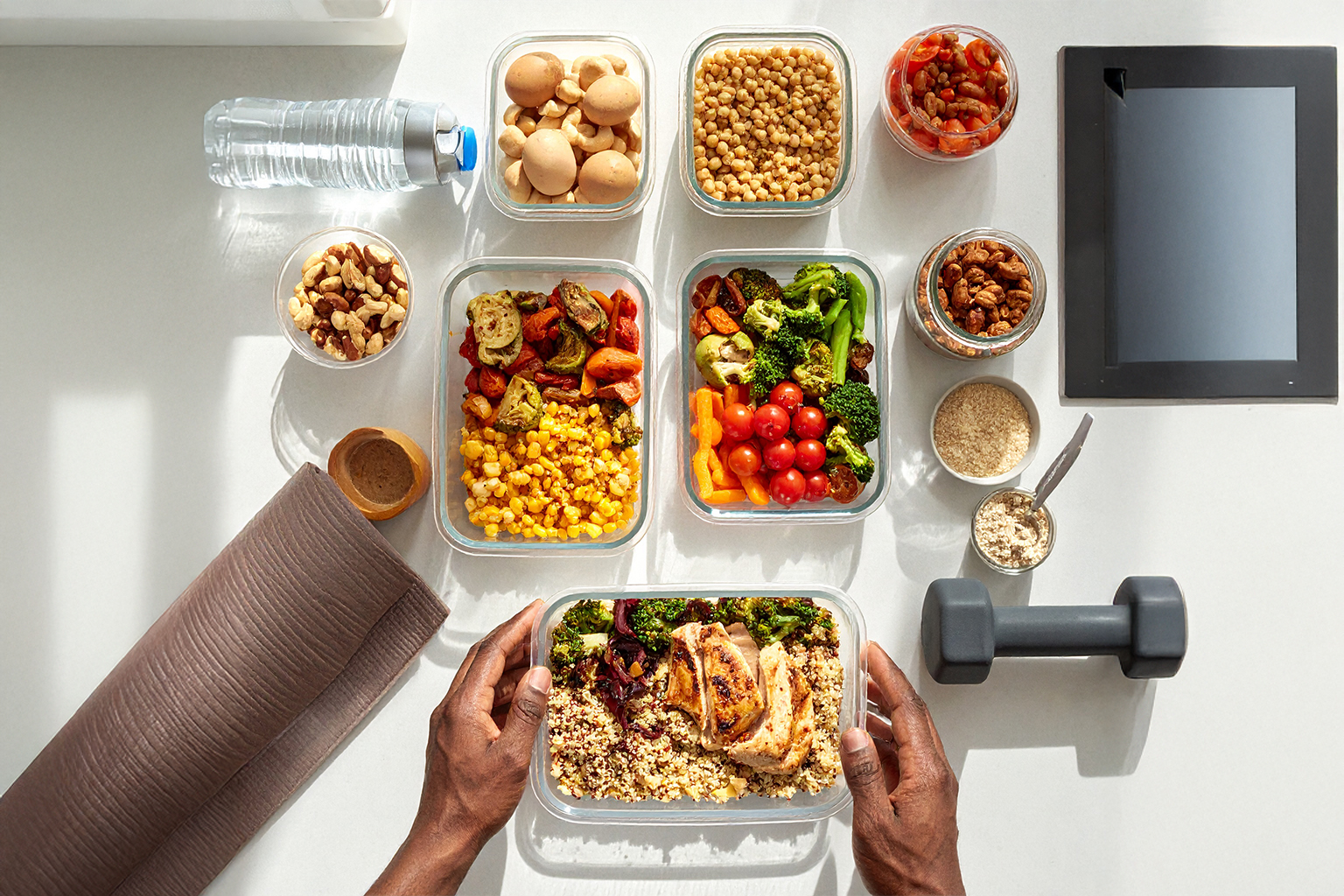
Organized meal prep reduces reliance on convenience foods and makes balanced choices more accessible. Keep staples like canned beans, frozen vegetables, whole grains, and shelf-stable proteins on hand. Prepare a few protein portions and vegetable sides on a weekend or an evening, and assemble meals quickly during busy mornings. Simple containers and basic recipes lower barriers and save decision-making energy.
- Cook a grain batch and roast vegetables once or twice weekly.
- Pre-portion mixed nuts and sliced fruit for snacks.
- Keep a list of quick meal templates to rotate through.
Consistent pantry habits create a foundation that supports training without requiring constant planning.
Conclusion
Small, consistent meal choices have a big impact on home training outcomes. Prioritize balance, simple swaps, and minimal prep to support energy and recovery. Over time, these habits become the backbone of reliable fitness progress.