Recovering after medical treatment requires practical adjustments to daily life that encourage steady progress without overwhelming the body. Small, consistent changes in routine often lead to better long-term outcomes than sudden, intense efforts. This article outlines approachable habits and home modifications that prioritize safety, independence and measurable gains. Implementing these steps can help you regain function while reducing the risk of setbacks.
Set Realistic Daily Goals
Clear, attainable goals structure recovery and make progress visible. Start by identifying two or three manageable tasks each day — for example, short walking intervals, gentle range-of-motion exercises, or self-care activities that were previously challenging. Track duration, repetitions, or perceived effort to monitor improvements over time. Celebrate small wins to maintain motivation and prevent discouragement.
Adjust goals weekly based on feedback from how your body responds. Incremental increases keep progress steady without increasing injury risk.
Modify Your Environment Safely
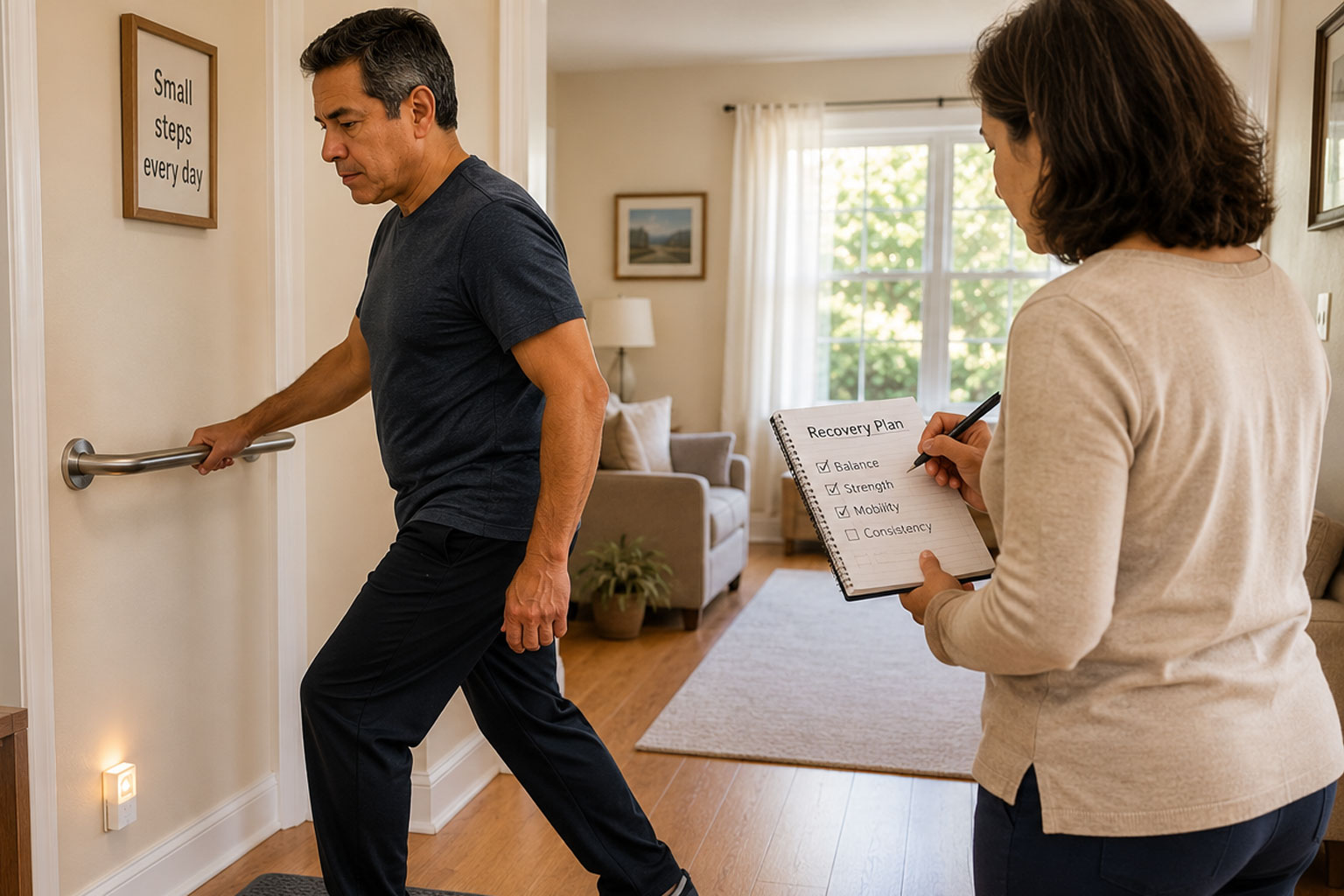
A few thoughtful changes around the home reduce barriers and increase confidence when moving independently. Rearrange commonly used items within easy reach, install non-slip mats in wet areas, and ensure adequate lighting along pathways and stairs. Seek temporary aids such as shower seats, grab bars, or supportive footwear to improve stability during early recovery. These adaptations are often simple yet highly effective at preventing falls and conserving energy.
- Place frequently used items at waist height.
- Remove loose rugs and secure cords.
- Create clear, obstacle-free walking routes.
Small investments in safety pay off by reducing strain and anxiety during movement. Revisit your setup as abilities improve to phase out temporary aids.
Build Gradual Movement Habits
Consistent, progressive movement forms the core of restoring mobility and strength. Focus on low-impact activities like seated exercises, short walks, or gentle stretching before advancing intensity. Incorporate movement into daily tasks — stand during phone calls, break sitting periods into short walks, or perform simple strengthening routines while watching television. Use timers or reminders to create regular practice without overexertion.
Listen to pain signals and differentiate between soreness and harmful pain. When in doubt, scale back and consult a healthcare professional for personalized guidance.
Leverage Support and Track Progress
Engaging family members or caregivers in simple routines can make daily tasks safer and more consistent, and communicating clear expectations helps everyone contribute effectively. Keep a recovery journal or a simple checklist to record functional tasks, pain levels, energy, and sleep; this documentation highlights trends and informs adjustments. Consider periodic virtual or in-person check-ins with a therapist or nurse to review goals and refine strategies, especially when progress plateaus. Technology can help: alarms, apps, or activity trackers provide reminders and objective measures without adding complexity. Encouraging social support preserves motivation and provides practical help when needed.
Regularly review your notes to celebrate gains and identify small changes. This collaborative approach keeps recovery aligned with functional goals while fostering confidence.
Conclusion
Recovery is a process of steady adjustments rather than dramatic change. By setting realistic goals, improving home safety, and building consistent movement habits you support lasting improvements. Small, deliberate steps lead to greater independence and confidence over time.