Understanding how your health plan responds to injuries sustained during home exercise helps you avoid surprises and manage costs. Policies differ in covered services, provider networks, and claim requirements, so a brief review before an incident can save time and stress. This article breaks down common policy elements and practical steps to document and submit claims. Read on to learn how to verify benefits and reduce financial risk related to at-home workouts.
Decoding policy language
Insurance documents often use specialized terms such as deductible, coinsurance, in-network, and preauthorization, which affect whether a visit or treatment is covered. Look for explicit language about accidental injury, emergency care, and outpatient rehabilitation to determine typical coverage. Pay attention to exclusions and limits that may apply to non-workplace or non-sports-related incidents. Understanding these definitions clarifies how a provider’s bill will be processed and what your out-of-pocket exposure might be.
After reading key sections, call your insurer to confirm anything that is unclear. Keeping a short list of questions ensures you get consistent answers and a reference for future claims.
Typical coverage gaps to watch
Some plans exclude care for injuries resulting from high-risk activities, while others limit coverage for remote or virtual consultations. Durable medical equipment, like braces or support devices, may require prior authorization or fall under separate benefit limits. Rehabilitation services such as physical therapy might have session caps, and prescriptions can be subject to formulary restrictions. Identifying these gaps ahead of time helps you plan alternatives or supplemental coverage.
- Check limits on therapy visits and durable equipment.
- Ask whether telehealth visits qualify for the same benefits as in-person care.
When a potential gap exists, discuss options with both your provider and insurer to find the least costly care pathway.
Documenting events and filing claims
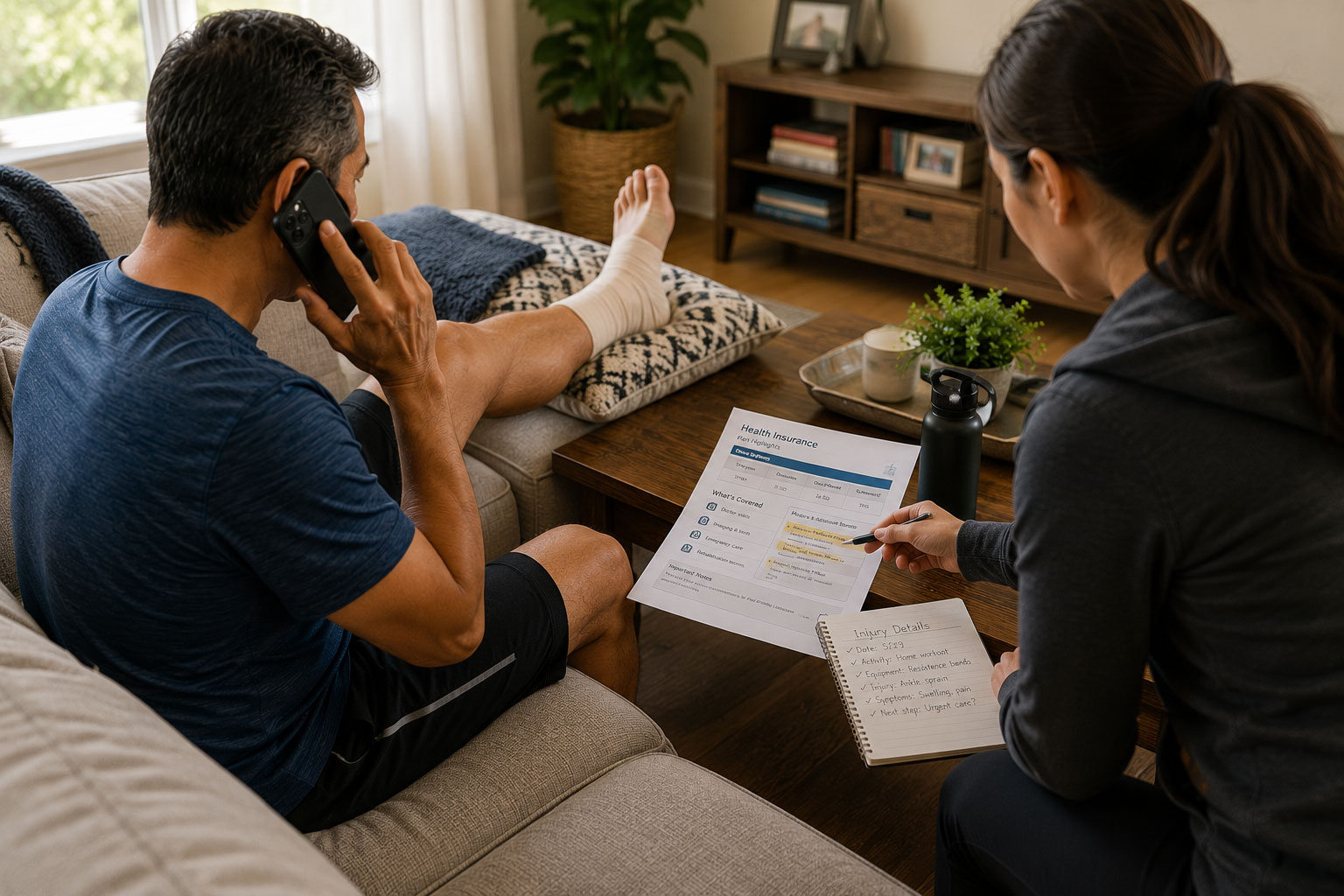
Clear documentation improves the odds of a successful claim: note the date, activity, witnesses, and any immediate first aid or emergency care received. Keep copies of medical records, diagnostic tests, prescriptions, and invoices from providers and suppliers. When you contact the insurer, reference claim numbers and provide consistent, factual statements about how the injury occurred. Timely submission often prevents denials based on late filing.
If a claim is denied, request a written explanation and follow the insurer’s appeal process with supporting records. Persistence and organized documentation are key to resolving disputes.
Practical steps to align care and coverage
Start by reviewing your policy’s summary of benefits and calling customer service to confirm coverage specifics for home exercise incidents. Develop a simple checklist that includes verifying network providers, obtaining preauthorization when required, and confirming referral requirements for specialists. Consider a short telehealth visit after minor injuries to document the event and receive timely advice on next steps. For frequent exercisers, exploring supplemental coverage or an out-of-pocket safety fund can provide extra protection.
Proactive communication with providers and insurers reduces surprises and helps you focus on recovery rather than paperwork. Small steps taken in advance pay off when an incident occurs.
Conclusion
Clarifying benefits before an incident and keeping concise documentation are the most effective ways to manage costs related to home exercise injuries. Regularly review policy updates and ask targeted questions to customer service to stay informed. With a little preparation, you can access appropriate care while minimizing unexpected expenses.