Recovering movement after a medical event can feel overwhelming when handled at home.
A clear, staged approach reduces risk and accelerates meaningful progress.
This article outlines practical steps for planning, adapting your environment, and resuming activity safely.
Followable guidance and small milestones help rebuild strength, balance, and confidence.
Assessing needs and making a plan
Begin by taking a realistic inventory of current abilities and daily challenges to create a focused plan. Assess walking distance, ability to stand from a chair, stair navigation, and any pain or fatigue that limits activity. Set measurable short-term goals such as increasing walking time or improving sit-to-stand repetitions. Include rest and symptom-monitoring rules so progression is sustainable and safe.
Share the plan with any caregivers or household members to ensure support and consistency. Regularly revisit goals and adjust based on progress or setbacks.
Preparing a safer home environment
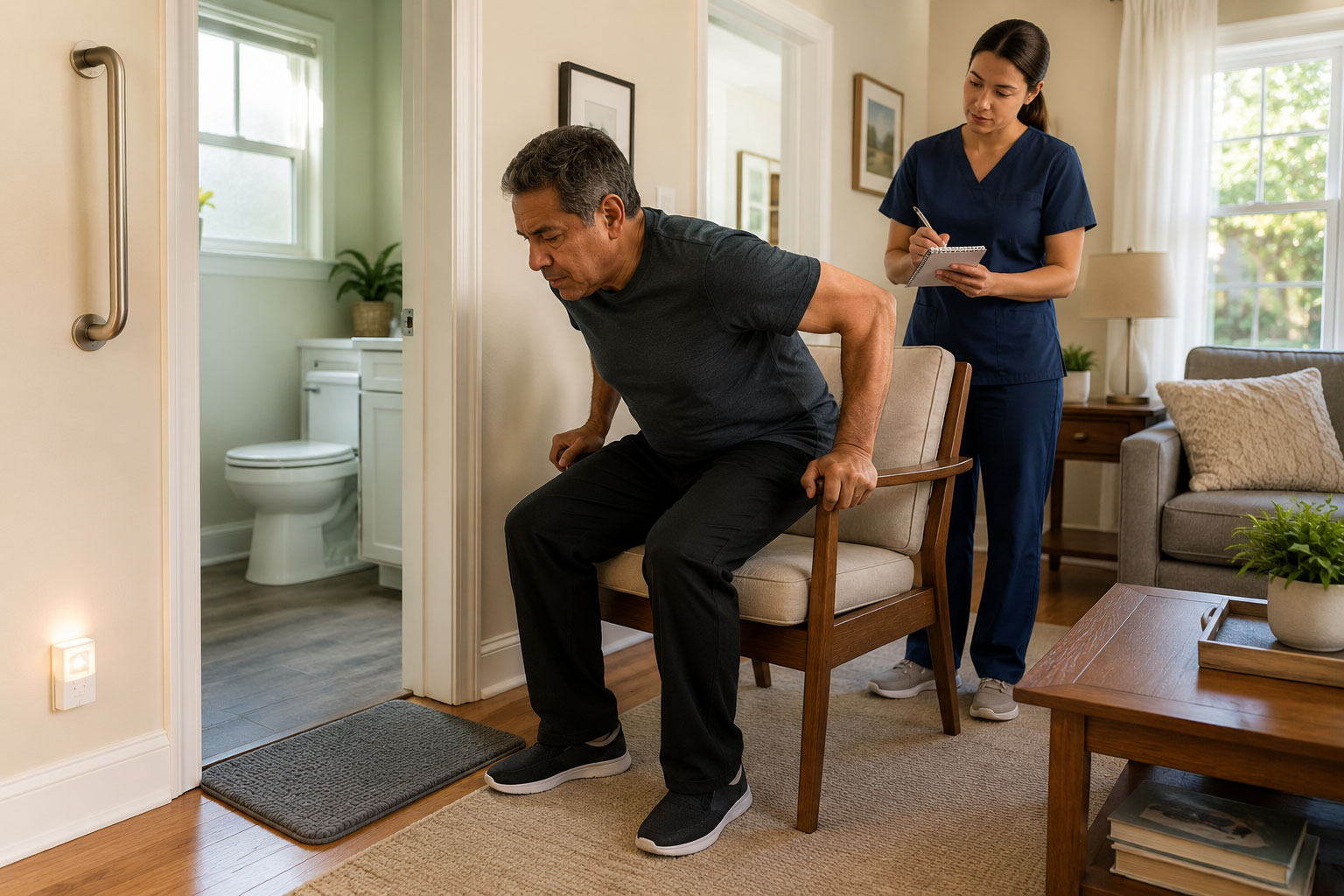
A well-prepared environment reduces preventable setbacks and supports independence. Remove tripping hazards, ensure clear pathways, and position frequently used items within easy reach. Good lighting and stable seating with armrests make transfers and tasks safer for daily routines. Small changes often have a big impact on confidence and fall risk.
- Non-slip mats in bathrooms and kitchens
- Grab bars near toilets and in showers
- Stable chairs with armrests and appropriate height
- Night lights along common routes
Prioritize changes that address your most frequent challenges and add further modifications as needs evolve. Simplicity and reliability matter more than extensive renovation.
Progressive movement and exercise strategies
Start with gentle, frequent movements that mirror daily tasks to rebuild neuromuscular patterns. Emphasize repetitions for sit-to-stand, heel-to-toe walking, and seated leg and arm strengthening using body weight or light resistance. Gradually increase duration and complexity, introducing balance tasks and mild resistance as tolerated. Maintain a routine and focus on controlled movements rather than speed.
Monitor symptoms during and after activity and reduce intensity if pain or excessive fatigue appears. Small, consistent gains compound into meaningful functional improvement over weeks.
Monitoring progress and seeking professional input
Track progress with simple measures such as timed walks, counts of repetitions, or a daily activity log. Regular monitoring reveals trends and highlights when to push or scale back. Seek input from a physical therapist or clinician if progress stalls, new symptoms emerge, or specialized strategies are needed. Professional guidance can personalize exercises and recommend assistive devices when appropriate.
Use telehealth or in-person visits to refine technique and ensure safe advancement. Early consultation can prevent complications and support steady recovery.
Conclusion
Recovery at home is achievable through careful planning, a safe environment, and progressive activity.
Track small wins, adjust plans thoughtfully, and involve professionals when needed.
Consistent, cautious effort rebuilds movement and restores confidence over time.